
Livraison le jour même ou le lendemain

Qualité garantie

Débloquez vos offres de bienvenue: Livraison GRATUITE | Jusqu'à -80 % | 30 jours d'essai gratuits à JoyPlus
Téléchargez l'application
A well-organised wardrobe starts with hangers that suit each garment. Yet two models that look similar in a photo can perform very differently day to day. A hanger that is too narrow will distort the shoulders of a jacket, a poorly designed bar will let trousers slip, and an uneven finish can snag delicate fabrics.
Before you buy a set of wooden hangers, take a moment to check three points that are often overlooked:
In a family wardrobe, a professional rail or a shop, the right choice depends on the weight of the clothes, their cut and the space you have available.
Solid wooden hangers generally offer a more rigid structure than slim plastic models. They are suitable for shirts, jackets, dresses and winter clothes, as long as you stick to the maximum load stated by the manufacturer.
Some product listings indicate a maximum static load of 5 kg per hanger for maple wood models. Reinforced suit hangers sometimes claim up to 12 or 15 kg, thanks to a central bar with a double joint. These figures don’t mean you should cram your rail to the brim: spread the weight and make sure your rail is strong enough.
For a jacket or a suit, choose a width between 40 and 45 cm. A 42 cm model with curved shoulders will support a structured jacket better, while a 35 cm children’s hanger is more suited to clothes for ages 7 to 12.
A slightly curved shape distributes pressure more evenly across the fabric and reduces marks. This is especially useful for coat hangers, blazers and dresses. For lightweight shirts, however, too much width can take up unnecessary space.
Non-slip hangers can combine several features:
A rotating hook makes it easier to access your clothes, but it won’t make up for an unsuitable shoulder width or a poorly fixed bar. Also check that the bar is far enough from the body of the hanger to hold folded trousers without creating a sharp crease.
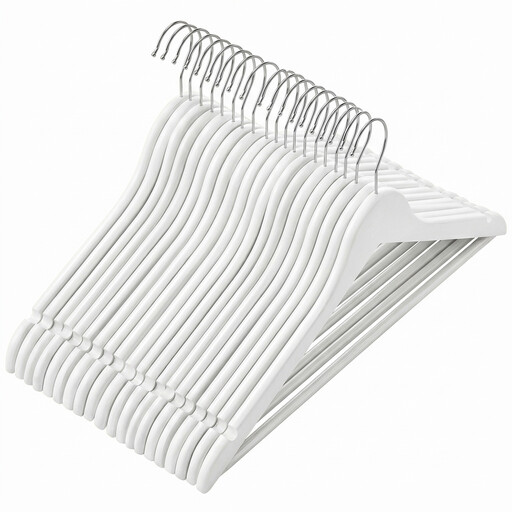
Why this choice suits this profile: This 20-piece set makes it easy to organise a first wardrobe, with hangers suitable for shirts, jackets and trousers.
The shoulder notches and non-slip bar reduce slipping, while the curved shape minimises marks on clothes.
Maple wood, 360° swivel hook and a stated static load of 5 kg per hanger.
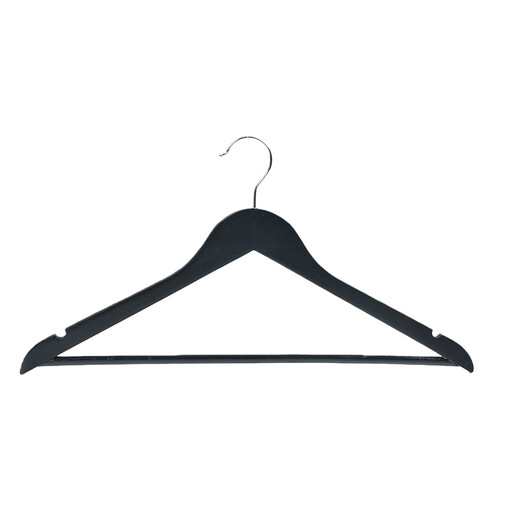
Why this choice suits this profile: With a width of 42 cm and contoured shoulders, these hangers are designed for suits, formal jackets and coats that need to keep their shape.
The reinforced structure and central bar with a double joint reduce the risk of the hanger bending under the weight of a heavy garment.
Lacquered hardwood, non-slip bar, chrome 360° swivel hook and a stated maximum load of 15 kg.
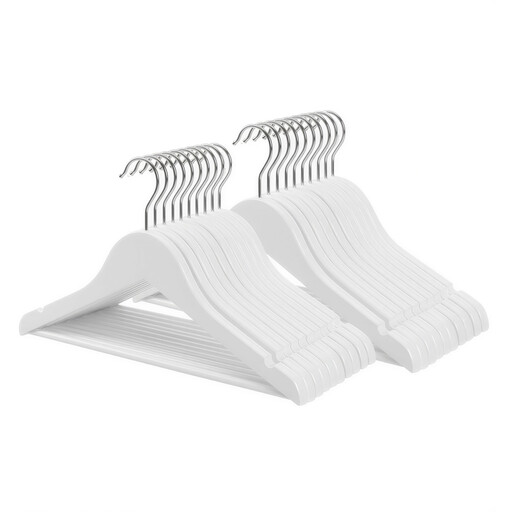
Why this choice suits this profile: Their 35 cm width is ideal for children’s clothes and makes daily storage of coats, jackets and trousers much simpler.
The child-friendly size stops clothes from hanging loosely on an adult hanger, while the notches and integrated bar keep items in place.
Maple-type wood, sanded edges, 360° swivel hook and trouser bar.
We’ve put together a comprehensive list, updated in real time, of products that meet these demanding selection criteria and European safety standards.
Before you fill your wardrobe, measure the depth you have available and the space needed between hangers. Models that are 44.5 cm wide can offer excellent stability, but they take up more room than slim hangers.
To keep them in good condition for longer:
In a shop, hotel or a heavily used wardrobe, choose a consistent width and a weight capacity suited to coats. In a child’s bedroom, check for rough edges and make sure the hanger size matches the clothes.
Generally, allow one hanger per hanging garment, then add a few extra for future purchases and seasonal items. A set of 20 hangers is often enough for one section of a wardrobe, while a set of 10 is a good starting point for suits, jackets or coats.
Yes, as long as the model has a trouser bar that is sturdy enough, ideally covered with a non-slip material. Fold the trousers over the bar without compressing them and avoid hanging several heavy items on it.
Keep them in a dry indoor environment, away from a very humid bathroom and radiators. Don’t use them to hang wet clothes and wipe off any water marks quickly. Spreading the load evenly and following the manufacturer’s recommendations will also help preserve their shape.