
Livraison le jour même ou le lendemain

Qualité garantie

Débloquez vos offres de bienvenue: Livraison GRATUITE | Jusqu'à -80 % | 30 jours d'essai gratuits à JoyPlus
Téléchargez l'application
A baby's first steps are a magical milestone, and a wooden baby walker quickly becomes the perfect companion for this great adventure. It needs to be a stimulating toy, a secure support, and a durable object all in one. But with an overwhelming number of options, how do you navigate the market and avoid disappointment? Our guide is here to help you decode the features that truly matter and make the right choice with confidence.
Behind slick marketing, critical design flaws can sometimes be hiding. Here are the three most common traps that turn a promising purchase into a real headache.
To be sure of your purchase and guarantee your child's safety, focus on concrete, verifiable features. Here is the expert checklist.
No compromises on safety: it all starts with a solid base. A good walking aid must be designed to never tip over.
The wheels are the heart of the machine. Their design is therefore crucial.
A good walker is also a mini activity center. The activities aren't just for show: they should stimulate fine motor skills, hand-eye coordination, and logic. Prioritise the time-tested classics:
These classics are a safe bet. They offer fun and educational value long after the first steps have been mastered.
Because every family is unique, here is our selection of models that meet different needs, all while ticking every box on our list for quality and safety.
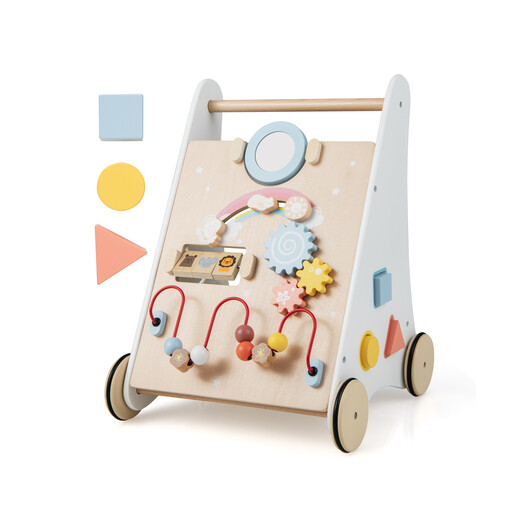
Our take: An excellent compromise for parents who want the elegance of wood without sacrificing the fun. It checks both boxes: a safe walking aid and a genuine little activity centre.
Its sturdy, high-quality wood construction ensures excellent stability. The rubber-coated wheels provide good grip and protect floors, thwarting the trap of noisy, slippery wheels.
Its ultra-comprehensive 7-in-1 design (with 3 shape blocks) and its rear storage basket, perfect for bringing along favourite soft toys.
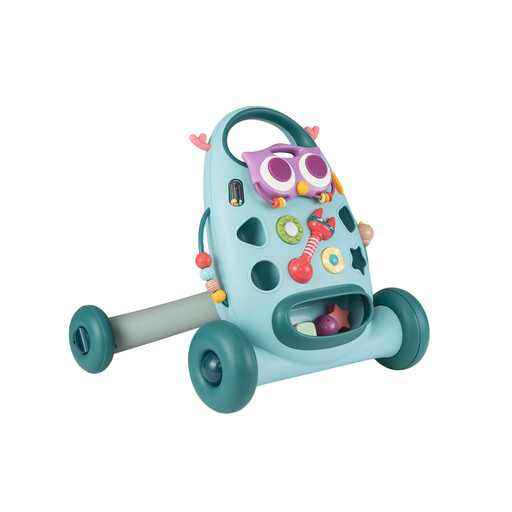
Our take: Perfect for parents looking for an all-in-one toy with sound and light stimulation. It's not wood, but its design focuses entirely on safety and versatility.
It counters the pitfall of runaway wheels with an adjustable speed control on the rear axle. Its wide triangular base gives it rock-solid stability.
Its removable activity panel, which allows for floor play as well. A true 2-in-1 product that grows with your child from sitting up to their first steps.
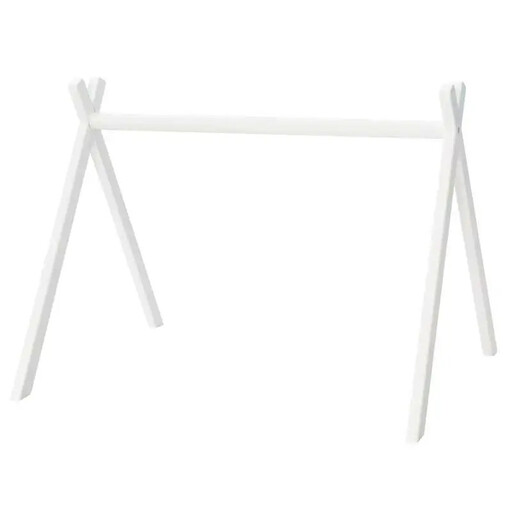
Our take: For fans of the Montessori method who prefer a gradual approach. Note, this is not a baby walker, but a play gym designed to gently prepare motor skills from the very first months.
By focusing on the phase before walking, it bypasses the stability and speed issues of walkers. It promotes the natural development of coordination without ever "forcing" the child to stand before they are ready.
Its minimalist and clean design in white lacquered wood, which fits in anywhere. You can hang different toys from it (sold separately) to keep the child engaged and support their development.
Discover our full selection of products that meet our selection criteria and European safety standards.
There's no specific age, but rather a developmental stage to watch for. The right time is when your baby starts pulling themselves up to stand and tries to move around by holding onto furniture (usually between 10 and 18 months). The key is to never force it: the walker is an invitation, not a requirement.
This is a legitimate concern, often stemming from confusion with old-style "sit-in" walkers (where the baby is suspended in a seat). A wooden baby push walker, which the child pushes while standing on their own two feet, is completely different. Far from hindering development, a well-designed model promotes a natural walking posture and healthy muscle development.
Adult supervision remains the golden rule. Also, remember to make the space safe: clear the play area, remove thick rugs that could block the wheels, and, most importantly, block access to stairs. Before the very first use, check that all screws are properly assembled and tightened. Finally, if the model allows, set the wheel resistance to the slowest level for a gentle start.