
Livraison le jour même ou le lendemain

Qualité garantie

Débloquez vos offres de bienvenue: Livraison GRATUITE | Jusqu'à -80 % | 30 jours d'essai gratuits à JoyPlus
Téléchargez l'application
The moment your child pulls themselves up and takes their first tentative steps is an unforgettable milestone. To support them in this great adventure, the wooden activity walker is often a popular choice for parents. Combining a walking aid with developmental play, it seems like the ideal companion. However, not all models are created equal. Certain design flaws can quickly turn this promising purchase into a real headache.
Before you decide, let's review the most common pitfalls so you can avoid them:
To help you see things more clearly, we have identified the key points to check before you buy. These few checks will allow you to distinguish a well-designed product from one that will just end up gathering dust.
The primary mission of a wooden push walker is to offer stable support. To achieve this, two elements are crucial:
The wheels are critical to your child's walking experience. A good walker for a 1-year-old should have:
A developmental walker should be more than just a walking aid. The integrated activities must stimulate different skills. Look for an early-years wooden toy that combines:
Rather than an endless list, here are a few models that meet specific needs, always keeping our safety and relevance criteria in mind.
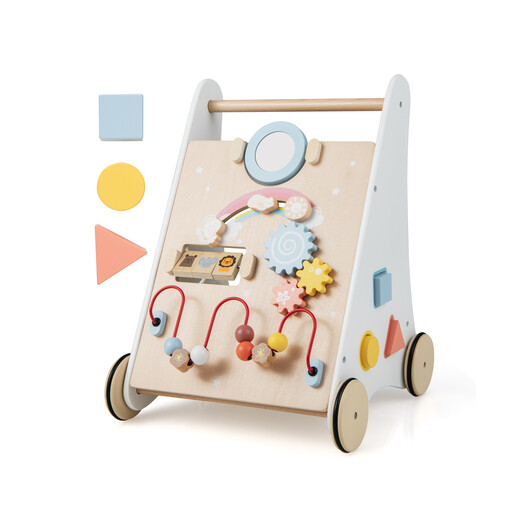
Why we chose it: This model offers an excellent balance between a walking aid and a developmental toy. Its wooden design will appeal to parents looking for a natural and sturdy product to support both first steps and playtime.
Its sturdy wooden structure and wide base ensure rock-solid stability. The wheels are equipped with a rubber coating to protect floors and reduce noise, thus avoiding the unsuitable wheels trap.
It combines 7 developmental activities (including shape-sorting blocks) and a handy storage basket. The rounded corners and smooth surface are real safety features.
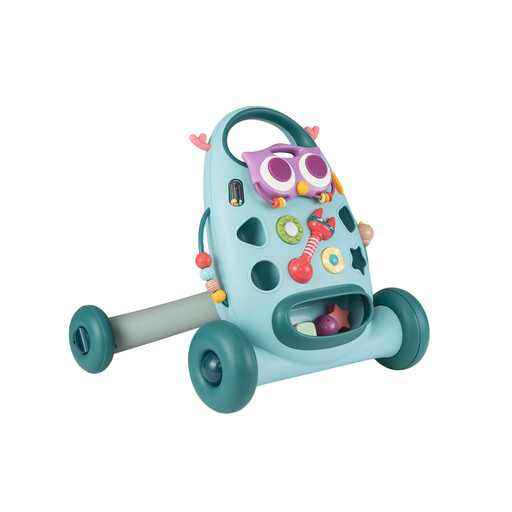
Why we chose it: For families who prefer the lightweight design and interactive features of plastic, this model is an excellent alternative. It integrates lights and music for a richer sensory experience.
Its triangular structure provides excellent stability despite its feather-light weight. It avoids the trap of wheels that are too fast thanks to a speed control on the rear wheels, which allows you to adapt it to your child's progress.
The activity panel is removable, allowing the child to play on the floor as well. It combines shape sorting, bead games, and musical keys.
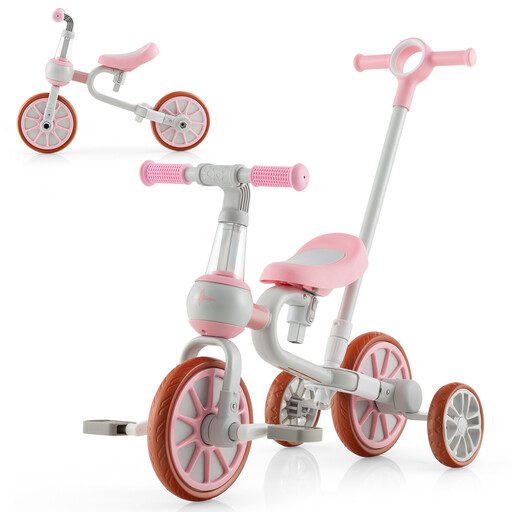
Why we chose it: This product isn't a walker, but it's for parents who are already looking ahead. Once walking is mastered, this convertible tricycle takes over to develop coordination and balance, supporting the child for several years.
It avoids the trap of rapid obsolescence by being a 4-in-1 product. It transitions from a parent-guided push trike to an independent tricycle, making it a great long-term investment.
Its high modularity (push handle, removable pedals, etc.) allows it to adapt precisely to a child's developmental stage between 2 and 4 years old.
Explore our full selection of products that meet our selection criteria and current safety standards.
There is no specific age, as every child develops at their own pace. Generally, a push walker becomes relevant when a baby starts to pull themselves up on furniture and shows a desire to move, often between 9 and 12 months. The important thing is that they have enough strength in their legs and core to stand upright. Be careful not to confuse these push walkers with sit-in walkers (where the child is seated), the use of which is strongly discouraged by paediatricians.
Many high-quality wooden models have a very simple adjustment mechanism. It is most often a screw located on the axle of the rear wheels. By tightening it, you create friction that slows the wheels' rotation. This is a very useful feature for the very first steps, as it prevents the walker from getting away from them. You can then gradually loosen the screw as the child gains confidence and balance.
The weight of a wooden walker is actually an asset for its stability. A model that is too light would tip over much more easily. Reputable manufacturers design their products with safety in mind: solid wood or dense panels, corners and edges that are systematically rounded to prevent injury, and the use of non-toxic, water-based paints and varnishes. As with any toy for young children, it should always be used under adult supervision.