
Livraison le jour même ou le lendemain

Qualité garantie

Débloquez vos offres de bienvenue: Livraison GRATUITE | Jusqu'à -80 % | 30 jours d'essai gratuits à JoyPlus
Téléchargez l'application
Choosing a wood saw can quickly become overwhelming. Between marketing promises, a jungle of models, and technical jargon, it's easy to make a mistake you'll regret. An unsuitable or poor-quality tool won't just waste your money; it will turn any DIY or gardening task into a real chore.
To avoid disappointment, let's review the common pitfalls that await the unwary DIYer. Knowing them is the first step to making a smarter choice.
To avoid these traps, you need to focus on a few objective technical features. These are what truly determine a saw's performance and durability, far more than any marketing claims.
The blade is the heart of your saw. Two points require close inspection:
Manual, battery-powered, or corded? The choice depends entirely on the balance you seek between mobility and power.
A good saw is, above all, a safe and comfortable tool. The handle is a crucial point: materials like TPR (thermoplastic rubber) provide an excellent grip, even with gloves or wet hands. On folding models or mini chainsaws, a robust safety lock to secure the blade in both open and closed positions is non-negotiable.
To put theory into practice, here are a few models that perfectly illustrate these criteria, each suited for a specific use.
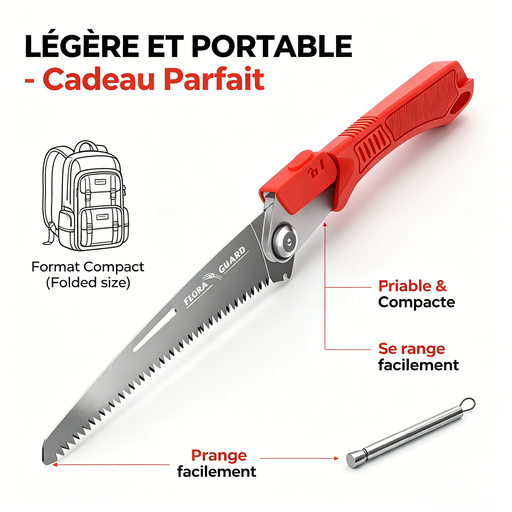
Why we chose it: It's the ultimate portable tool for garden maintenance, camping, or hiking. Its folding design makes it safe and easy to carry in a backpack or toolbox.
Its blade is made of SK-5 steel, a material that resists corrosion and holds its edge, avoiding the trap of low-end blades. Its reliable safety lock checks the essential safety box.
Compactness and cutting efficiency for branches and green wood. The ergonomic TPR handle ensures comfort during prolonged use.
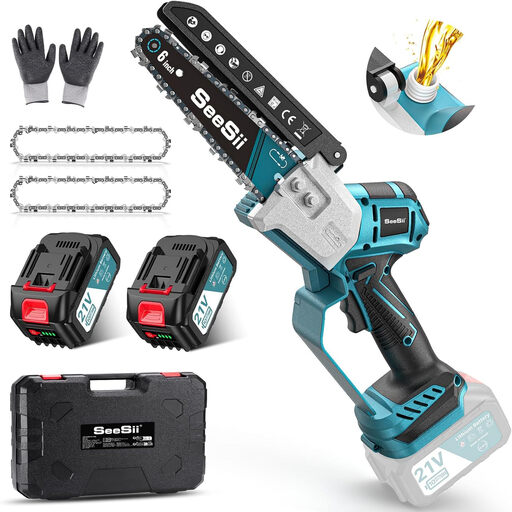
Why we chose it: For those who regularly need to cut branches too thick for a hand saw. This mini chainsaw offers the power of a chainsaw in a manageable, one-handed format.
It features an 800W brushless motor for efficient cutting and better durability. The automatic chain lubrication system prevents premature wear, a flaw often hidden in entry-level models.
Supplied with two 4000mAh batteries, it ensures long runtimes for extended pruning sessions. Its compatibility with Makita 18V batteries is a welcome bonus.
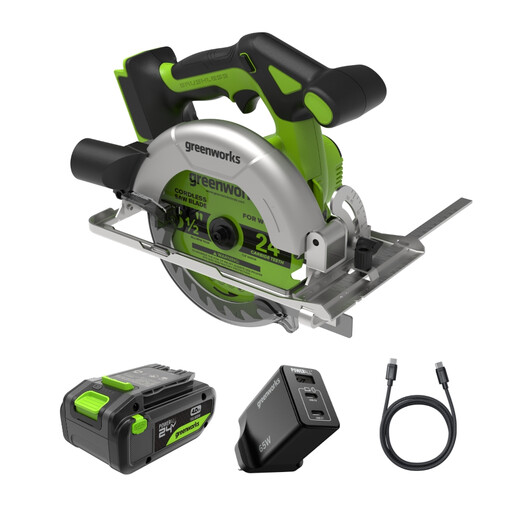
Why we chose it: For construction, renovation, or carpentry projects that require straight, fast, and precise cuts in planks, panels, or battens.
It avoids the "false versatility" trap by being a specialized tool. Its brushless motor and 165mm carbide blade are designed for performance and precision, not for pruning.
The ability to make bevel cuts up to 45° and its adjustable cutting depth (up to 57 mm) offer great versatility for different types of joints and projects.
We have compiled a complete selection of products that meet our specifications and current safety standards.
A blade's lifespan depends on several factors: the quality of its steel (an SK-5 steel or carbide blade will last much longer), the frequency of use, and the type of wood you cut. Regular maintenance is key: always clean the blade after use to remove sap, dry it to prevent rust, and store it in a dry place. A well-maintained blade can last for several years of occasional use.
Yes, as long as you use it for its intended purpose. It's a remarkably effective tool for cutting wood and branches up to 10-15 cm (4-6 inches) in diameter, which covers most home pruning needs. For good performance, choose a model with a brushless motor and batteries of at least 2.0 Ah (or 4.0 Ah for more convenience). It will never replace a gas-powered chainsaw for felling a tree, but it effortlessly outperforms a hand saw in terms of speed and user fatigue.
Maintaining a hand saw or folding saw is simple but essential.