
Livraison le jour même ou le lendemain

Qualité garantie

Débloquez vos offres de bienvenue: Livraison GRATUITE | Jusqu'à -80 % | 30 jours d'essai gratuits à JoyPlus
Téléchargez l'application
Finding the perfect piece of furniture—one that ticks both the style and practicality boxes—can often be a real puzzle. This is especially true for smaller items like the side table. Fortunately, the combination of wood and metal has established itself as a timeless choice, a core trend capable of injecting character into a living room, entryway, or hallway. Whether your goal is to optimise a tight space or simply assert your style, the wood and metal side table is an excellent ally.
To help you make the right choice, we've broken down the essential criteria and selected models that hit the mark, from rustic style to pure, hardcore industrial.
Before taking the plunge, review these few essential points. It's the best way to guarantee you'll find the model that will integrate perfectly into your daily life and your home.
First, and most importantly: get out your tape measure! An industrial console table will naturally find its place in a narrow entryway or hallway, while a wood and metal end table should ideally align with the height of your sofa's seat. Then, ask yourself how you'll use it: are you looking for a simple surface to place a lamp and your coffee cup, or do you need clever storage, like shelves for your books and magazines? This function will determine the dimensions and structure of your future furniture.
The wood and metal duo comes in several styles:
This is a non-negotiable criterion. Solid wood (pine, mango, oak) is synonymous with sturdiness and authentic charm, but it will require a bit more maintenance. More affordable and low-maintenance, particleboard (MDF) panels covered with a wood veneer offer perfectly respectable durability for everyday use. On the metal side, powder-coated steel is a wise choice for its effective protection against rust and scratches.
Here's a closer look at a few models that caught our eye with their design, ingenuity, and ability to adapt to any interior style.

Why it stands out This model stands out from the crowd with its bold design, marked by a large circular metal frame that envelops two of the four shelves. It's a statement piece that doesn't go unnoticed and adds structure to the space, perfect as a designer entryway table.
Key features
Who is it for?? For those who want an industrial console table that is much more than just a practical piece of furniture: a true statement piece to adorn an entryway, a hallway, or the space behind a sofa.
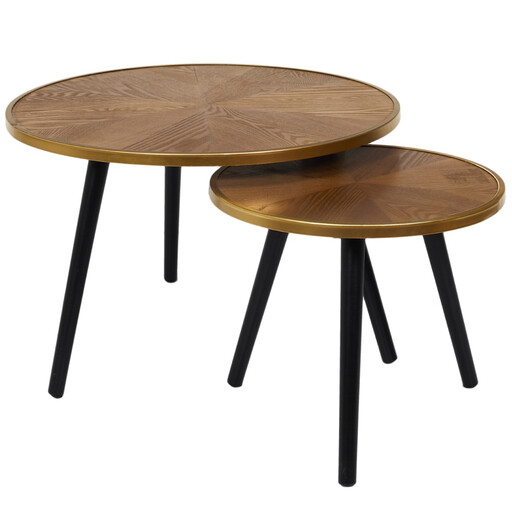
Why they stand out This duo of living room nesting tables is the epitome of flexibility. Made of pine, they bring a touch of natural warmth and a smart solution for interiors that need to adapt to any situation.
Key features
Who are they for?? Ideal for small living rooms or for anyone looking for a small living room table that is as modular as it is stylish.

Why it stands out This round wood coffee table combines a large, welcoming tabletop with a practical two-tier design. Its modernised farmhouse aesthetic, with a rustic wood grain and a sleek metal frame, makes it an inviting focal point for the living room.
Key features
Who is it for?? For families or those looking for a central coffee table that is both spacious and thoughtfully designed, for a living room where conviviality and organisation go hand in hand.
A side table is an excellent start. But the finishing touch often comes down to the details that dress up the walls. To perfect your room's ambiance and highlight your new furniture, a well-chosen piece of wall decor can make all the difference.
Discover our selection of patterned wall art to find inspiration and put the finishing touches on your interior.
The combination of wood and metal is far more versatile than you might think. For a Scandinavian or bohemian interior, opt for a model with light-coloured wood and a white or thin-lined metal frame. The contrast will be interesting without overwhelming the room. Feel free to pair it with soft textiles (rugs, throws, cushions) to warm up the space and offset the coldness of the metal.
As a general rule, you should choose an end table with a top that is at the same height as, or just below, your sofa's armrests. This makes it easier to access items placed on it (remote, glass, book) and creates a more visually harmonious look. A height of 50 to 60 cm is suitable for most sofas on the market.
For daily maintenance, a simple soft, slightly damp cloth will do the trick for both materials. Avoid abrasive cleaners and scouring pads that could scratch the metal or damage the wood's finish. For a solid wood top, applying a protective wax or oil once or twice a year will help nourish it and preserve its full lustre.