
Livraison le jour même ou le lendemain

Qualité garantie

Débloquez vos offres de bienvenue: Livraison GRATUITE | Jusqu'à -80 % | 30 jours d'essai gratuits à JoyPlus
Téléchargez l'application
The sunny days are back, and with them, the desire to garden, hike, or simply relax on the beach. But while the call of the sun is irresistible, protecting yourself from it is an absolute necessity. In this arsenal, a good women's UV protection sun hat is your best ally. Yet, faced with a multitude of styles, it's easy to make the wrong choice and end up with a disappointing, or even useless, purchase.
As a Product Specialist at Joybuy, my mission is to guide you. Let's forget the marketing jargon and focus on what's essential: here are the mistakes to avoid and the key criteria for making a truly informed choice.
To ensure you don't make a mistake, there are two technical criteria to scrutinise. These are the true guarantors of your future hat's quality and effectiveness.
The UPF (Ultraviolet Protection Factor) measures a fabric's ability to block ultraviolet rays (UVA and UVB). Unlike the SPF of sunscreens, UPF applies to textiles.
For sun protection worthy of the name, a women's UPF 50+ hat is therefore the standard to demand. This rating must be clearly stated on the label. It's a non-negotiable criterion for anyone who takes their health seriously.
The best hat is the one you never hesitate to wear. Its design must therefore fit your daily life and activities.
To illustrate how these criteria apply in practice, here is a selection of models that each meet a specific need, all while avoiding the pitfalls we've discussed.
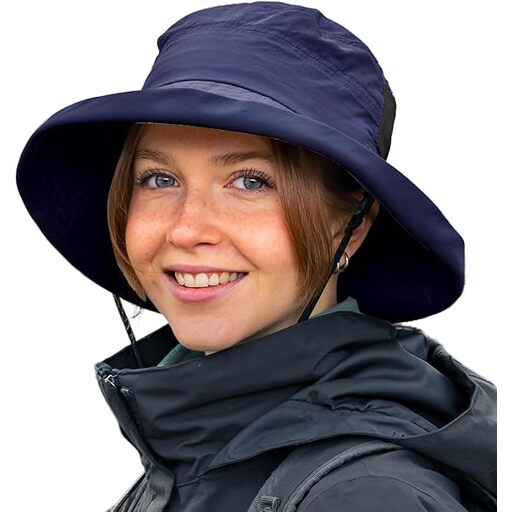
The right choice for: Those who switch from hiking to kayaking or gardening. Its robust design and features make it a reliable companion for all outdoor activities.
Certified UPF 50+, it features a removable chin strap (no more hats flying away!) and a ponytail hole. The problem of impractical design is solved.
Its nylon fabric is waterproof and its mesh is breathable. It folds for easy transport, and its wide brims (7 to 9.4 cm / 2.75 to 3.7 in) ensure maximum coverage.
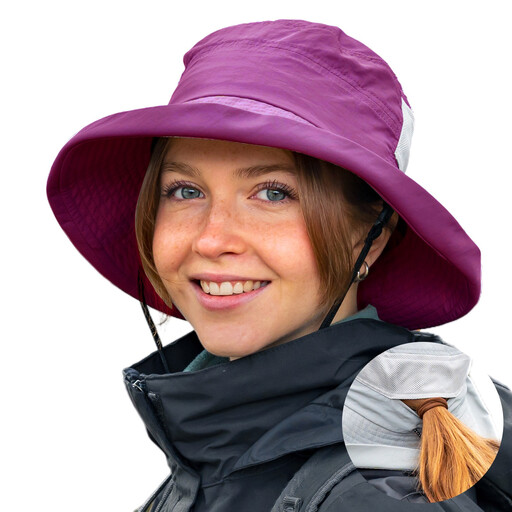
The right choice for: Those who want effective protection without the bulk. Its light weight and ability to be folded without losing its shape make it an essential for any suitcase.
Ultra-lightweight (approx. 64 g / 2.25 oz) and packable, it solves the problem of bulky, uncomfortable hats. The UPF 50+ certification is, of course, included.
Its 3-layer construction includes a waterproof membrane. We also appreciate the internal sweatband and the reflective details for safety.
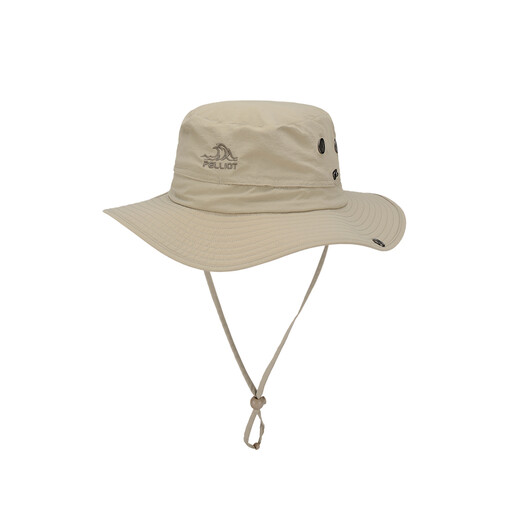
The right choice for: Those looking for a women's hiking hat that combines style and technical performance. Its rugged look and modular design adapt to changing conditions in the mountains or forest.
The UPF50+ protection is woven into the fibre, ensuring its durability wash after wash. Its triple anti-wind system puts an end to the nightmare of a hat that flies away.
Its 2-in-1 design allows you to switch from a bucket hat style to a cowboy look. The internal sweatband wicks away moisture for optimal comfort during exertion.
Explore our full collection of products that meet our strict selection criteria and current standards.
1. What's the difference between UPF and SPF? The SPF (Sun Protection Factor) of a sunscreen indicates its level of protection against UVB rays, which cause sunburn. UPF (Ultraviolet Protection Factor), on the other hand, measures a fabric's ability to filter both UVA rays (which accelerate skin ageing) and UVB rays. A UPF 50+ hat therefore offers complete and lasting protection that doesn't fade over the hours.
2. How do I care for my UV protection hat to maintain its effectiveness? Most technical hats can be washed by hand or in a machine on a cool cycle (30°C / 86°F). To preserve the fibres and the UV-protective treatment, let it air dry away from direct sunlight. Tumble dryers, irons, and bleach should be avoided. In all cases, the manufacturer's care label is the final word!
3. Is a wide-brimmed hat really more effective? Yes, and the difference is huge. A wide brim (7 cm / 2.75 inches or more) creates shade that protects not only the face but also the ears and neck—areas that are highly exposed and often overlooked. For activities like gardening or hiking, where you're often leaning forward, this extended protection is crucial.