
Livraison le jour même ou le lendemain

Qualité garantie

Débloquez vos offres de bienvenue: Livraison GRATUITE | Jusqu'à -80 % | 30 jours d'essai gratuits à JoyPlus
Téléchargez l'application
Getting around the city by bike, e-bike, or electric scooter is now a daily reality for many urbanites. It's convenient, eco-friendly, and great for your well-being. But one essential question remains?: how do you find protective gear that is safe, comfortable, and stylish all at once? Faced with a multitude of models, choosing a women's urban bike helmet can quickly become a real headache.
This guide is here to help. Our mission?: to give you all the keys to making the right choice, with complete objectivity and free of marketing jargon. We will review the essential buying criteria before presenting our selection of helmets designed for today's urban cyclists.
Before diving into our selection, let's go over the three core pillars of a good helmet for daily city riding.
A helmet's primary mission is to protect you. In Europe, and therefore in France, all bike helmets must comply with the CE EN 1078 standard. This certification ensures that the model has successfully passed a series of impact resistance and energy absorption tests. This is THE point to check before you buy. Its structure—typically an outer polycarbonate shell fused to an inner EPS (expanded polystyrene) foam liner—is designed to deform and absorb the impact for you.
A helmet you forget you're wearing is a helmet you'll wear every day. Comfort is therefore essential for regular use, typical of bike commuting. Opt for an adjustable protective helmet. Most current models feature a dial adjustment system at the back, allowing for a precision fit. The chin straps should also be easy to adjust for a perfect hold, without ever feeling too tight.
Ventilation is another crucial point. Well-designed vents promote air circulation and wick away heat and moisture, ensuring optimal comfort even in the middle of summer or during a more intense ride.
The urban jungle has its own challenges. Fortunately, certain features can truly enhance your experience and your safety?:
Here are three models that caught our eye for their design, features, and perfect suitability for urban use.
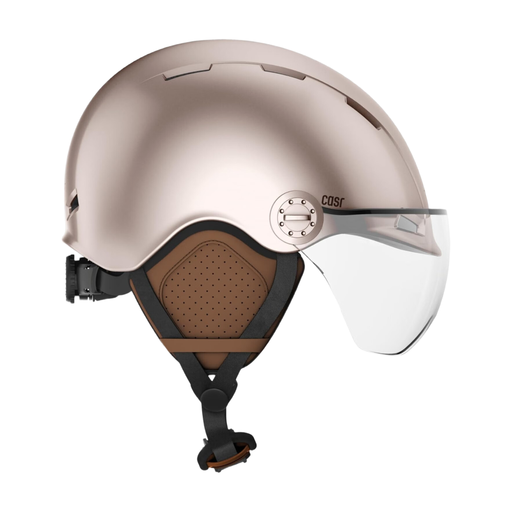
Why It Stands Out
This model makes a bold style statement and offers great versatility. Its metallic pink finish is unmissable—an asset for being seen in the city—while adding a pop of energy to your look. It's designed for year-round use thanks to its smart accessories.
Highlights
Who Is It For??
For those who want a 4-season helmet that's as practical as it is stylish, and who aren't afraid to make a colourful statement.
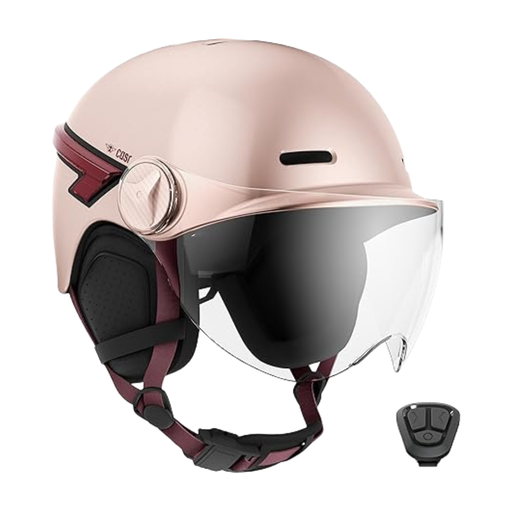
Why It Stands Out
This helmet puts technology at the service of your safety. Its comprehensive lighting system with turn signals and its transparent shell give it a futuristic look and ensure maximum visibility. It's a true active safety accessory.
Highlights
Who Is It For??
Ideal for the daily bike commuter or scooter enthusiast who rides in all conditions, even in low light, and who prioritises visibility and innovation.

Why It Stands Out
A true Swiss Army knife of urban protection, this helmet combines lighting, eye protection, and advanced ventilation. It was designed for those who want it all, without compromise.
Highlights
Who Is It For??
For the urban cyclist looking for the complete package. Its excellent ventilation makes it an excellent choice for long commutes or for those in sunnier regions.
Style is a very personal matter. If these models aren't quite to your taste or if you want to explore other colours, feel free to browse our complete collection.
? Discover more models in our Pink Helmets category
1. Is a bike helmet mandatory in France??
In France, wearing a helmet is mandatory for children under 12, whether they are the rider or a passenger. For adults, it is not mandatory but remains very strongly recommended. In the event of an accident, it significantly reduces the risk of head trauma.
2. When should you replace your bike helmet??
It is imperative to replace your helmet after any impact, even if no damage is visible to the naked eye. The internal EPS foam structure may be compressed and have lost its shock-absorbing capabilities. In the absence of an impact, it is advisable to replace it every 3 to 5 years, as the materials degrade over time (exposure to UV rays, temperature changes, humidity, etc.).
3. How can I be sure the helmet is the right size??
To find your size, measure your head circumference with a tape measure, placing it about 2?cm above your eyebrows. Once on, the helmet should be stable, cover your forehead properly, and not rock back and forth when you shake your head. Fine-tune the fit with the adjustment dial, then adjust the straps?: you should be able to fit two fingers between the strap and your chin.