
Livraison le jour même ou le lendemain

Qualité garantie

Débloquez vos offres de bienvenue: Livraison GRATUITE | Jusqu'à -80 % | 30 jours d'essai gratuits à JoyPlus
Téléchargez l'application
Choosing the right pair of women's trail running shoes can quickly become a headache. Faced with a jungle of models, technologies, and brands, it's hard to find your way. Yet, from forest paths to rocky scree and muddy terrain, every outing has its own rules. The wrong gear won't just ruin your time; it can also spoil your enjoyment and put your safety at risk.
As the Head of Product Recommendations at Joybuy, my mission is to clear the path for you. This guide gets straight to the point: giving you clear, concrete benchmarks to find the perfect shoe for your needs, without the usual marketing jargon.
Before diving into our selection, here are the three fundamental points that will guide your choice.
The type of ground you tackle most often is the number one criterion.
Cushioning is your best ally for absorbing shock with every stride. The ideal level depends on your preferences and the distances you're aiming for. Generous cushioning will maximise comfort over long distances, while firmer cushioning will offer better ground feel and more dynamism on short runs.
The drop (the height difference between the heel and the forefoot) is also a point not to be overlooked. A high drop (8-12 mm) promotes a heel strike, while a low drop (0-6 mm) encourages a more natural, "midfoot" strike.
Running with soaked feet is every runner's nightmare: discomfort, chafing, and blisters are guaranteed. Waterproof trail shoes, often equipped with a Gore-Tex (GTX) membrane, block water while allowing sweat to escape.
But this protection has a downside: breathability is often reduced. In hot, dry weather, a shoe without a membrane will be more ventilated and will dry much faster after crossing a stream. The choice, therefore, depends entirely on your usual running conditions.
Let's get down to business. Here are the models that have caught our full attention, tested and analysed for very specific uses.
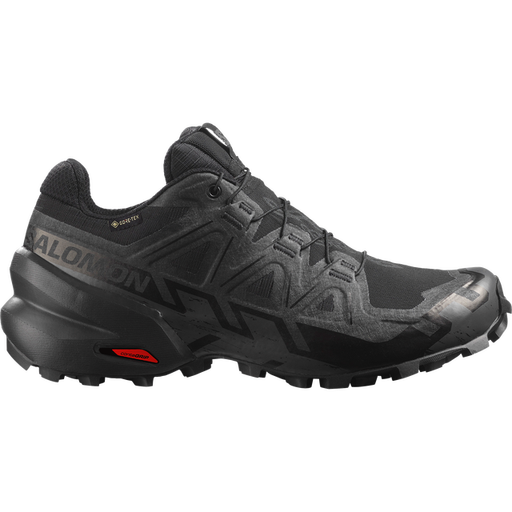
Why it stands out The Speedcross is a true legend on difficult terrain. This 6th version stays true to its DNA: a Contagrip outsole with oversized lugs, designed for formidable grip on soft and muddy ground. The GORE-TEX membrane completes the package with waterproof-breathable protection.
Highlights
Who is it for? For fearless trail runners who demand rock-solid grip in the mud and on technical, wet trails. The safe choice for regular running in forests or mid-mountain terrain, whatever the weather.
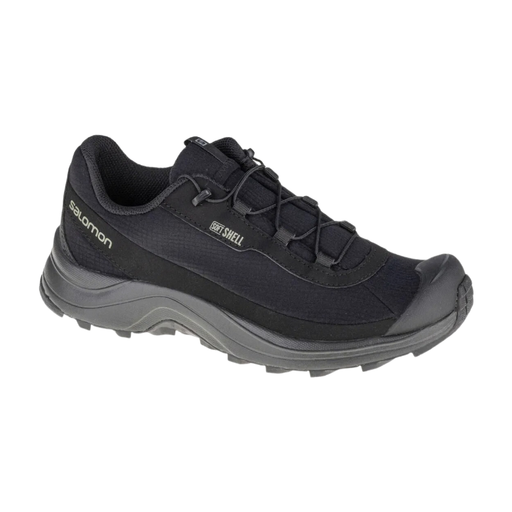
Why it stands out The Genesis is all about versatility, combining performance and comfort across a wide variety of terrains. Its EnergyFOAM midsole provides cushioning that is both dynamic and durable, while the All Terrain Contagrip outsole gives it its all-rounder status. An agile and protective shoe, ready to take on any challenge.
Highlights
Who is it for? For the runner looking for the Swiss Army knife of trail shoes: a high-performance model capable of taking them from technical trails to more rolling sections with ease.
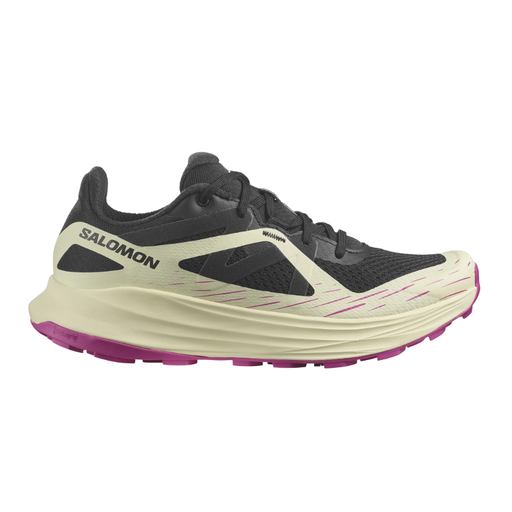
Why it stands out The Ultra Flow is the ultimate hybrid shoe, designed for an ultra-smooth transition between road and trail. It stands out for its maximalist cushioning and high stack height, offering shock absorption worthy of a road shoe but with the grip needed for the paths.
Highlights
Who is it for? For runners who are new to trail running or who often switch between pavement and easy trails. It's the ideal model for those who place comfort and cushioning above all else.
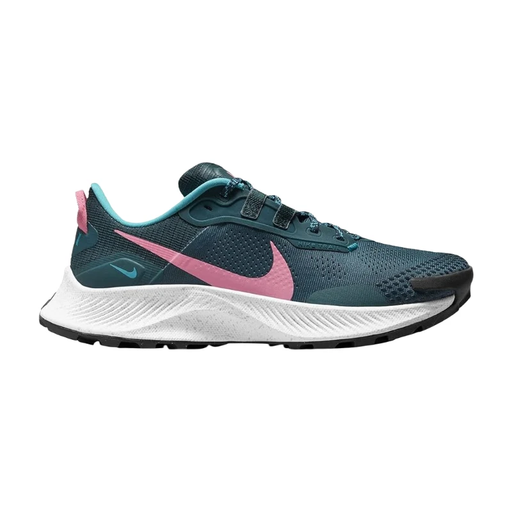
Why it stands out As the heir to the iconic road Pegasus, this trail version brings its comfort and dynamism to the paths. The Nike React foam ensures responsive cushioning and smooth strides. Its design provides effective grip on rocky trails and a flawless midfoot lockdown.
Highlights
Who is it for? For fans of the Pegasus who want to recapture that signature feel off the beaten path. A versatile and reassuring shoe, perfect for trail running on moderately technical terrain.
This selection is, of course, just a taste. Every trail runner is unique, and the perfect model for one person won't necessarily be for another. To explore other options or find the apparel and accessories that will make all the difference, take a look at our complete collection.
Discover our collection of women's running apparel and accessories
Women's trail running shoes differ on three key points: the outsole (equipped with lugs for grip), protection (rock plates, more durable materials), and stability (a structure that better locks the foot in on unstable ground). Road shoes, on the other hand, are lighter, more flexible, and built for the pavement—a uniform and predictable surface.
The golden rule: go bigger! It is advisable to go a half-size, or even a full size, up from your usual size. During long runs and especially on descents, the foot tends to swell and slide forward. A space of about one centimetre (or a thumb's width) between your longest toe and the end of the shoe is the ideal safety margin to avoid black toenails.
No, far from it! A Gore-Tex membrane is a real bonus if you often run in the rain, in wet morning grass, or on snow. However, in dry, hot weather, a non-waterproof shoe will be much more breathable and will dry significantly faster if you have to cross a stream. It all depends on your primary playground and the weather you face most often.