
Livraison le jour même ou le lendemain

Qualité garantie

Débloquez vos offres de bienvenue: Livraison GRATUITE | Jusqu'à -80 % | 30 jours d'essai gratuits à JoyPlus
Téléchargez l'application
A pair of women’s heeled sandals can complete a formal outfit just as easily as they can accompany a dinner or a summer outing. But a pretty picture alone isn’t enough to make the right choice. Some shoes become uncomfortable after a few hours, others don’t hold the foot properly, or they wear out quickly when the material and care instructions aren’t suitable.
Here are the criteria to consider before choosing high-heeled sandals, block-heeled sandals for women, or a style designed for evenings out.
A heel of 8 to 11 cm immediately catches the eye, but its height alone says nothing about the shoe’s stability. The width of its base, the presence of a platform, and the sole design directly influence comfort and balance when walking.
Block-heeled sandals generally distribute weight better than stiletto heels. A platform can also reduce the height difference between the front and back of the foot. However, it doesn’t replace properly adjusted support.
Very thin straps can add an elegant touch, but they may not hold the foot securely enough. If you plan to stand, walk, or wear your sandals for several hours, check for an adjustable ankle strap, a sturdy buckle, and an upper that doesn’t pinch your toes.
Not all strappy sandals are created equal: the number of straps matters less than their placement, adjustability, and how they conform to your foot.
Leather and synthetic materials don’t require the same care or offer the same durability. Women’s leather sandals need to be treated with suitable products and protected from prolonged exposure to water. Women’s vegan sandals are often easier to wipe clean, but they shouldn’t be submerged or treated with harsh chemicals.
Take the time to read the composition of the upper, lining, and outsole. A mention like “leather-look finish” doesn’t mean the shoe is made from genuine leather.
For a versatile pair, compare the different options:
The product page should state the height in centimetres. If a platform is also listed, subtract its height from the heel height to better gauge the actual incline of your foot.
Don’t just order your usual size. Check the size chart for each specific model: the equivalents between US, UK and European sizes can vary from one brand to another.
Measure your foot at the end of the day, when it may be slightly longer or wider than in the morning. Also check the stated width. A standard fit can become uncomfortable on a wide foot or a sensitive forefoot.
For the Call It Spring DALIAA models, the product page mentions a standard B width and correspondence with your usual size. If you’re unsure between two sizes, the brand recommends consulting its guidance. Meanwhile, the ALDO ENAEGYN 2.0 models are noted as slightly small: the detailed size chart is worth checking before you buy.
The composition gives valuable clues about care and how the shoe will age over time:
Never wash your sandals in a machine, don’t dry them near a heat source, and don’t store them while still damp.
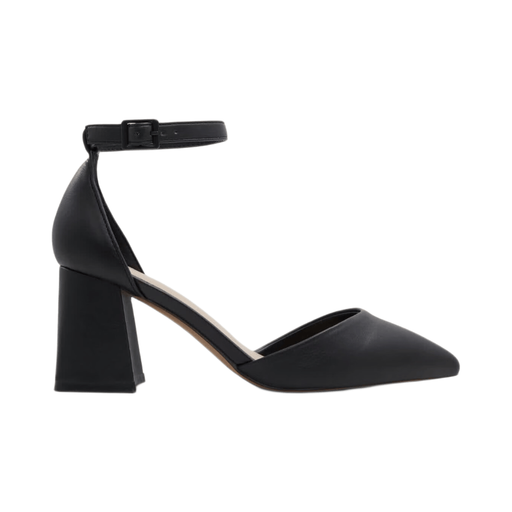
Why this choice suits this profile: Its black silhouette and clean lines make it a strong candidate for a first dressy pair. The adjustable ankle strap works for both outings and dinners.
The product page mentions an adjustable buckle strap and a standard B width: two concrete details that prevent you from choosing based on looks alone.
Synthetic upper, lining and outsole; B.E.D Foam insole claimed to contain recycled materials; model marketed as vegan by the brand.
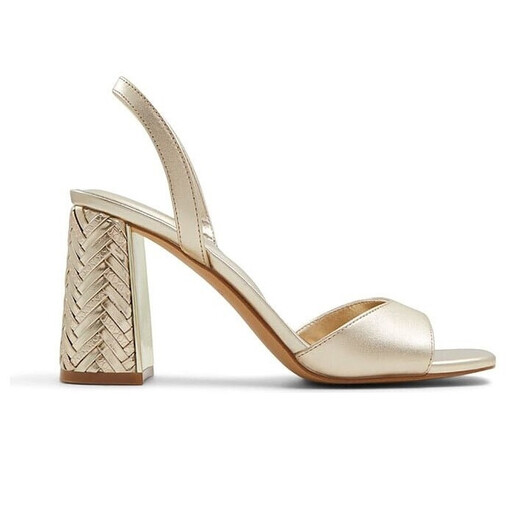
Why this choice suits this profile: Its metallic leather upper and open square toe pair equally well with a formal dress, a trouser suit, or an evening outfit.
The product page specifies the block heel height, 8.89 cm, as well as the presence of a rubber outsole. That gives you tangible criteria to compare.
Metallic-finished leather, open square toe, straps and rubber outsole; European sizes listed from 39 to 47 according to the product page.
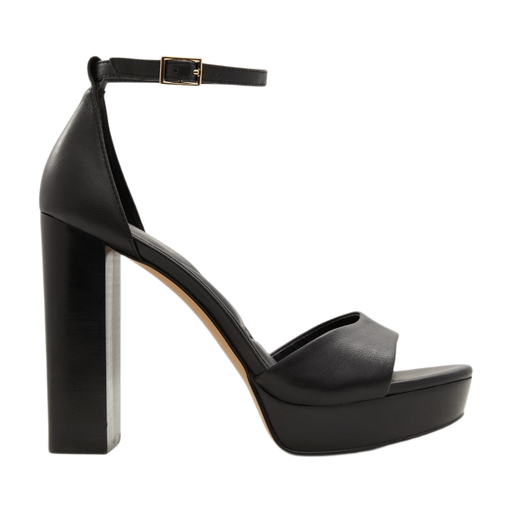
Why this choice suits this profile: With a heel stated at 10.80 cm and a 2 cm platform, this model is aimed at summer outfits, nights out, and occasions where you’re happy to embrace a noticeable height.
The platform is listed separately from the heel. The product page also notes a slightly small fit: it’s best to check the size chart before ordering.
Smooth leather upper, rubber outsole, round toe and heel stated at 4.25 inches, approximately 10.80 cm.
We’ve put together a comprehensive, real-time updated selection of products that meet these exacting criteria, in compliance with European safety regulations.
After each wear, remove dust with a soft cloth. For synthetic materials, lightly dampen the cloth, then let the sandals air-dry in a well-ventilated spot. For leather, use a product compatible with the finish specified by the manufacturer.
Avoid the washing machine, standing water, hairdryers and direct sunlight. Store your sandals in a dry place, ideally protected from dust. Their lifespan will depend on how often you wear them, the surfaces you walk on, the strain placed on the heel, and the quality of care you give them.
There’s no single ideal height that works for everyone. Consider the heel height and width, the presence of a platform, the shape of the forefoot, and the support provided by the straps. For a first pair, a block heel or a moderate height usually makes it easier to adapt.
The ankle strap should hold your foot without squeezing it. Your toes shouldn’t hang over the sole, and your heel shouldn’t slip out with every step. Check the size chart, especially if the model is described as slightly small or if you’re unsure between two sizes.
Models made from synthetic or PU materials can generally be wiped clean with a slightly damp soft cloth. That doesn’t mean they can withstand immersion or abrasive products. Always check the care instructions for your specific model, then let the sandals dry naturally before storing them.