
Same-day & Next-day Delivery

Quality Guaranteed

Unlock Your Welcome Offers: FREE Delivery | Up to 80% OFF | Free 30-day JoyPlus trial
Download the APP
Navigating the jungle of technical apparel is no easy task. The promise of a women's 3-in-1 waterproof jacket is incredibly appealing: one single purchase to handle rain, wind, and cold, whether in the city or on the hiking trail. Yet, disappointment often follows when a product fails to live up to its claims. Before you commit, it's crucial to know how to decode marketing traps to make an informed choice.
As a Product Expert at Joybuy, my mission is to help you analyse the technical specifications to ensure your next purchase is a success.
A well-oiled marketing machine often hides design flaws that make a jacket uncomfortable or ineffective after just a few outings. Here are the points to watch closely.
To avoid making a mistake, rely on objective data rather than marketing slogans. Here are the three non-negotiable criteria to check.
This rating measures a fabric's resistance to water pressure. It's the decisive criterion for a women's technical jacket designed to face the elements.
Also, ensure the product specifications mention heat-sealed or taped seams. Without this, water will seep through the stitch holes, rendering the membrane useless.
Breathability, or Moisture Vapour Transmission Rate (MVTR), indicates the amount of water vapour (sweat) the fabric can release in 24 hours.
The women's 3-in-1 coat draws its strength from its modularity. Look closely at the two layers that comprise it:
To illustrate this advice, here are a few models that check all the boxes, each tailored to a specific user profile.
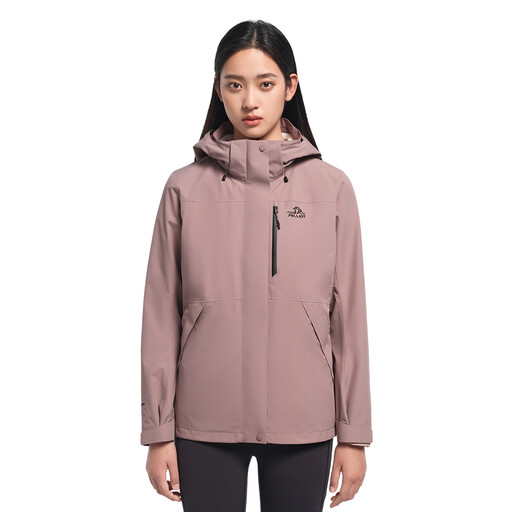
Who is it for? Ideal for those who practice mountain trekking and demand flawless protection against storms and lasting thermal comfort, even during intense exertion.
With a waterproof rating of 35,900 mm and a breathability of 16,000 g/m?/24h, it shatters market standards. Goodbye to the "waterproof" mirage and the sauna effect! The thermal technology liner ensures constant warmth.
Its technical performance, measured according to the JIS standard, is a data-backed guarantee against the worst weather conditions. Its abrasion resistance (over 40,000 cycles) is a testament to its durability.
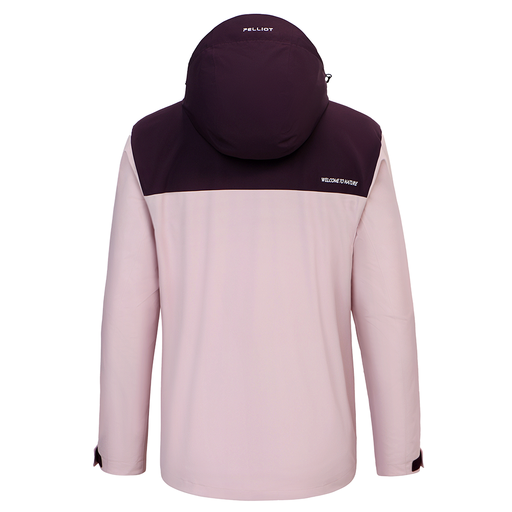
Who is it for? For the active woman who needs an all-season women's outdoor jacket capable of adapting to daily commutes, weekend outings, and nature getaways, without compromising on style.
The 3-in-1 system is designed for truly practical use, with clear temperature guides. The thermal liner features an anti-static treatment, putting an end to the annoyance of static cling.
Its key strength is its exceptional modularity: the shell alone for spring (10-25°C), the liner alone for autumn (0-10°C), and both combined for winter (-5 to -15°C).
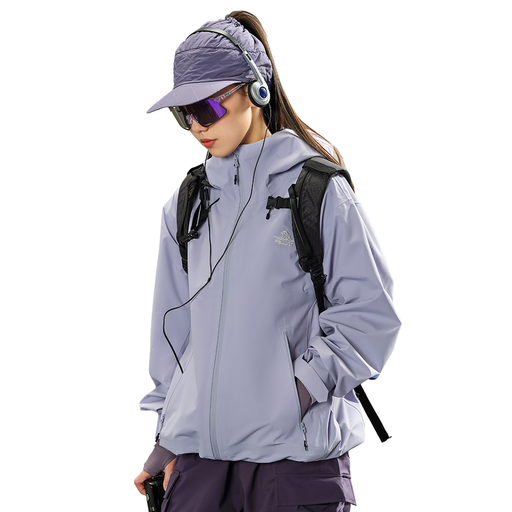
Who is it for? For those who prefer to build their own layering system or are primarily seeking a reliable and durable protective shell to pair with their favourite fleece or down jacket.
This model focuses on a single mission: to offer a robust outer shell. By not including a liner, it avoids the pitfall of a poor-quality fleece and gives you full control over the insulating layer.
A hardshell that is abrasion-resistant, waterproof, and windproof, providing a solid and durable foundation for a custom layering system suited to a multitude of activities.
Explore our full selection of jackets that meet our performance criteria and European safety standards.
Wash the outer shell and the liner separately. Close all zippers before machine washing on a cold, delicate cycle. Use a special detergent for technical apparel that won't clog the membrane. Most importantly, never use fabric softener. To reactivate the water-repellent finish, you can tumble dry the jacket on low heat (if the label permits) or apply a DWR (Durable Water Repellent) spray after several washes.
Yes, that's the main advantage of this system. Its modularity makes it an excellent all-season women's outdoor jacket.
Water-repellency is a chemical treatment applied to the fabric's surface that causes water droplets to slide off. This protection is temporary and fades with wear and washing. It cannot withstand continuous rain. Waterproofing is an inherent property of the material itself, usually a membrane (like Gore-Tex or other proprietary technologies) that physically blocks water while still allowing perspiration to escape. It is the only guarantee that you will stay truly dry.