
Livraison le jour même ou le lendemain

Qualité garantie

Débloquez vos offres de bienvenue: Livraison GRATUITE | Jusqu'à -80 % | 30 jours d'essai gratuits à JoyPlus
Téléchargez l'application
On paper, the women's 3-in-1 hiking jacket seems like the perfect solution: a waterproof windbreaker for summer showers, a cosy fleece for cool evenings, and the combination of both to take on winter. In reality, however, the promise can quickly turn into a nightmare. Make the wrong choice, and you could end up with a jacket that leaks, feels like a sauna during exertion, or has an attachment system that fails after just a few uses.
As a Product Expert at Joybuy, my job is to guide you through the jungle of options to find truly reliable gear. Let's break down the potential pitfalls and the criteria that make all the difference in a successful purchase.
The outdoor gear market is a jungle of technical terms and marketing promises. Here are three common pitfalls that can ruin both your comfort and your investment.
To avoid falling for marketing hype, ignore the slogans and focus on concrete performance metrics.
These two features are the core of what makes a great warm, waterproof jacket for women.
The secret to a great jacket? An excellent balance between high waterproofing and effective breathability.
Inspect the zippers. Are they from a reputable brand (like YKK), or do they look sturdy at first glance? The main zip should be protected by a storm flap for a perfect seal. The connection points between the liner and the shell (at the collar and cuffs) must be both simple and robust enough to withstand hundreds of uses.
A women's trekking jacket will inevitably rub against branches, rocks, and backpack straps. Its resistance to abrasion and tearing is therefore a key factor for durability. Look for manufacturers that share data from resistance tests (e.g., the number of abrasion cycles). A tough outer fabric ensures a longer lifespan for your women's outdoor coat and protects the precious waterproof-breathable membrane inside.
Here are a few options that cater to different user profiles, based on the objective performance criteria we've just discussed.
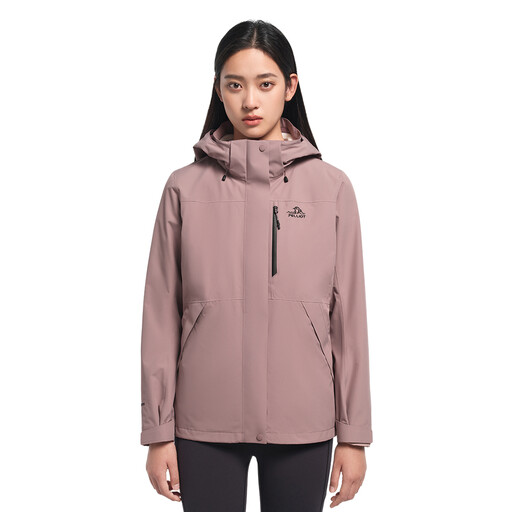
For whom? For those who go on multi-day treks and demand flawless protection against unpredictable mountain weather.
It shatters the "fake waterproof" pitfall with a certified rating of 35,900 mm H?O. This is storm-level protection, far exceeding that of standard rain jackets.
Its excellent breathability (16,000 g/m?/24h) prevents the "sauna" effect during exertion. Its abrasion resistance, tested for over 40,000 cycles, guarantees rock-solid durability.
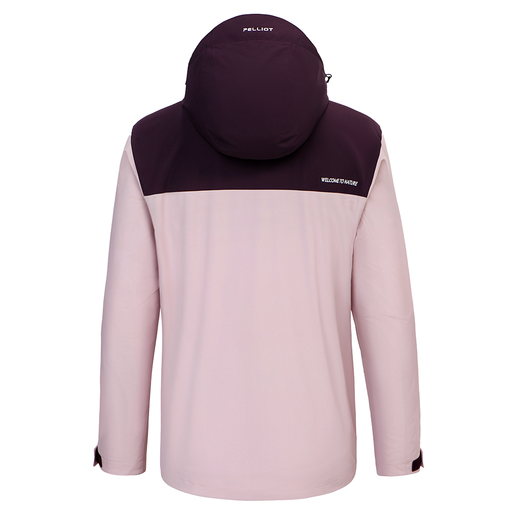
For whom? For those looking for THE do-it-all jacket, perfect for everything from forest walks to mid-mountain hikes, in any season.
It tackles the "gimmicky modularity" pitfall with a 3-in-1 system designed to be reliable and practical. The temperature guidelines for each configuration make it a genuine tool, not just a marketing ploy.
The STORMS BREATH technology provides highly balanced triple-layer protection. The real bonus: the thermal lining has an anti-static treatment, which greatly improves comfort when layering.
Explore our complete collection of women's outdoor jackets, all selected for their on-the-ground performance and reliability.
To maintain its performance, wash your jacket with a detergent specifically for technical apparel, and never use fabric softener. Be sure to separate the outer shell from the liner. The waterproof treatment can be "reactivated" with gentle heat (a low-temperature tumble dry or a cool iron, carefully following the label's instructions). After several washes, a re-waterproofing spray can restore your jacket's performance.
Yes, as long as you invest in a high-quality model. Its true value lies in its versatility. The women's hiking windbreaker shell is ideal on its own for windy or rainy days from spring through autumn. The fleece liner can be worn by itself in cool, dry weather. By combining the two, you get a warm, waterproof jacket for women that's ready to tackle the cold and damp of winter. It's an excellent 4-season solution for temperate climates.
Water repellency is a surface chemical treatment that causes water to bead up and roll off the fabric, much like on a duck's feathers. This prevents the fabric from becoming saturated but isn't enough to protect you from continuous rain. Waterproofing, on the other hand, is a physical barrier (a membrane or coating) that blocks water from penetrating. A good hiking jacket always combines both: a water-repellent treatment on the outside and a waterproof membrane underneath.