
Livraison le jour même ou le lendemain

Qualité garantie

Débloquez vos offres de bienvenue: Livraison GRATUITE | Jusqu'à -80 % | 30 jours d'essai gratuits à JoyPlus
Téléchargez l'application
Choosing a women's 3-in-1 hiking jacket can quickly become a real headache. Between the technical jargon and marketing promises, the risk of ending up with a disappointing garment is very real, whether for a mountain trek or facing a downpour in the city. The goal is to find that hidden gem: a versatile jacket that will keep you dry and comfortable without breaking the bank. To succeed, you need to know how to avoid the most common pitfalls.
To make an informed choice, ignore the marketing hype and focus on the numbers that matter. They are the ultimate arbiters of your future women's outdoor jacket's performance.
A fabric's waterproofness is measured in Schmerber or millimetres (mm) of water column. This value indicates the pressure the fabric can withstand before water penetrates it.
Another non-negotiable feature: taped seams. Without heat-sealed waterproof tape over all the seams, even the best fabric will let water in through the stitch holes.
Breathability is the fabric's ability to let water vapour (sweat) escape. It's measured by its MVTR (Moisture Vapour Transmission Rate), expressed in g/m?/24h.
The entire value of a women's 4-season coat depends on the quality of its three possible configurations:
Be uncompromising on the quality of the liner (fleece weight, anti-static treatment) and the smoothness of the attachment system (quality zips, practical snaps at the cuffs and collar).
We've selected a few models that stand out for their performance and meet specific needs.
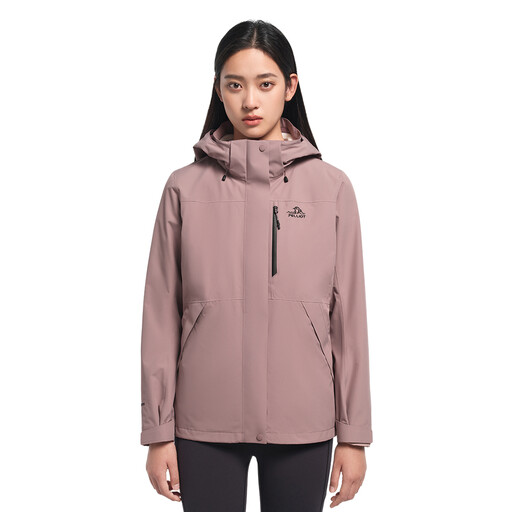
Why it's a match: Ideal for those who switch between mountain treks and rainy city commutes, demanding flawless protection with no technical compromises.
With an impressive 35,900 mm waterproof rating and taped seams, it far surpasses simple water-repellent jackets. Its 16,000 g/m?/24h breathability rating ensures you stay dry even during exertion, avoiding the sauna effect.
Its top-tier technical specs (waterproofing and breathability). The fleece liner features an anti-static treatment, a real bonus for everyday comfort.
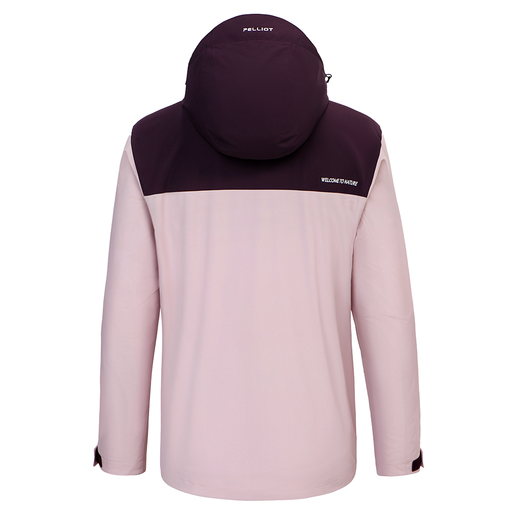
Why it's a match: For those who want performance without sacrificing style. Its two-tone design looks just as good on the trails as it does in the city.
Its 3-in-1 system is particularly well-designed: the thermal liner retains heat and its anti-static treatment prevents static cling, which is often annoying with layers. The outer jacket is built to resist abrasion from rocks and branches.
The combination of robust weather protection (thanks to its microporous membrane) and a bold two-tone design. Its outer layer is reinforced to better withstand scuffs and scrapes.
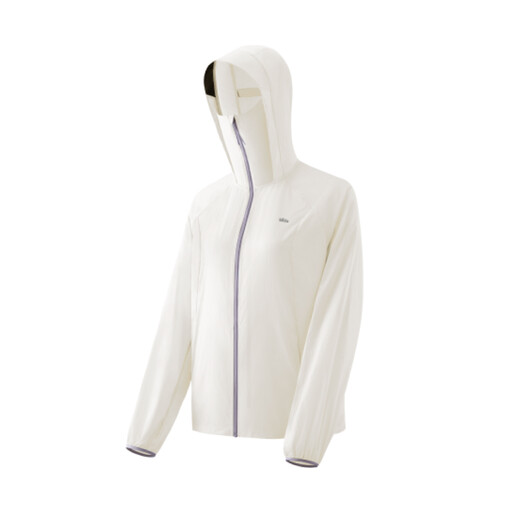
Why it's a match: Perfect for those seeking ultra-light protection against summer showers or mid-season winds. No bulk, just the essentials: wind resistance and sun protection.
This model gets straight to the point: a lightweight, windproof, and water-repellent outer jacket. It doesn't fall into the 3-in-1 trap, which is often too heavy for summer, and instead focuses on targeted ventilation to maximise breathability.
Its featherlight weight, very high UPF 100+ sun protection, and strategic vents for optimal comfort in mild or unpredictable weather.
Struggling with gift ideas for a special occasion? Explore our selection of gifts for her.
To maintain its performance, wash the outer jacket and the liner separately. Use a delicate cycle at 30°C (86°F) with a detergent specifically for technical apparel, and be sure to close all zips. Most importantly, never use fabric softener: it clogs the membrane's pores and destroys its breathability. Air drying is always the best option.
The durable water repellent (DWR) finish that makes water bead up wears off over time. To reactivate it, a 20-minute cycle in a tumble dryer on low heat (if the care label permits) may be enough. Alternatively, use an iron on a low setting, protecting the fabric with a towel. If water no longer beads at all, it's time to apply a re-waterproofing product, available as a spray or a wash-in treatment.
Yes, that's its main appeal! It's perfect for the vast majority of situations, from spring through winter. For deep cold in the high mountains, you'll simply need to supplement it with a warmer mid-layer (like a down jacket). Conversely, during a summer heatwave, even the outer shell alone might be too much; a simple, ultra-light windbreaker would be more comfortable.