
Livraison le jour même ou le lendemain

Qualité garantie

Débloquez vos offres de bienvenue: Livraison GRATUITE | Jusqu'à -80 % | 30 jours d'essai gratuits à JoyPlus
Téléchargez l'application
A wok lets you stir-fry vegetables, prepare noodles, sear meat, simmer a dish or even deep-fry food. Yet some purchases fall short: the coating becomes damaged, the base is incompatible with induction, the diameter is too small for a family or cleaning is more demanding than expected.
Before choosing a wok pan, it is therefore worth looking beyond the colour and marketing claims. Here are the criteria that really matter when it comes to finding a durable, practical model suited to your cooking habits in the UK.
The claim “suitable for all hobs” should be checked in the product details. A model may work on gas and electric hobs without necessarily being compatible with induction. In that case, the base needs to include a suitable magnetic layer.
Flat-bottomed models are generally easier to use on ceramic, electric or induction hobs. A traditional wok with a very rounded base is better suited to a gas cooker, with a suitable support ring.
A non-stick wok makes it easier to cook with little fat and clean up quickly. That does not mean it can withstand every type of use. Prolonged heating when empty, an abrasive sponge or sharp metal utensils can significantly shorten the coating’s lifespan.
Woks with a ceramic coating also require a few precautions. Ceramic provides an easy-to-clean surface, but its durability depends on the temperature used, the utensils and how it is maintained.
With a diameter of 30 or 32 cm, a large wok gives you more room to toss food without half of it ending up on the hob. On the other hand, it takes up more space in a cupboard and quickly becomes heavy once full. By contrast, a 20 cm wok is generally intended for a single portion or a small preparation.
For a family, a diameter between 28 and 32 cm is a good starting point. For a student or someone living alone, a more compact size will often be easier to store and handle.
If you choose a non-stick coating, look for product details that clearly specify the type of surface, permitted temperatures and washing recommendations. To protect the coating, wooden, silicone or heat-resistant plastic utensils remain the safest choices.
Uncoated woks, particularly some stainless-steel models, may be used with a suitable metal spatula. Sharp tools should still be avoided. The “hot pan, cold oil” technique, combined with controlled heat, can also help reduce sticking.
A wok supplied with a lid is more versatile for steaming, simmering or cooking food gently. With a glass lid, you can monitor your dish without allowing unnecessary heat to escape. Also remember to check the handle length, its insulation and the pan’s overall balance.
The claim “dishwasher-safe” does not necessarily mean that this washing method is ideal in the long term. To preserve a coating or a Bakelite handle, gentle hand washing with a non-abrasive sponge is often preferable.
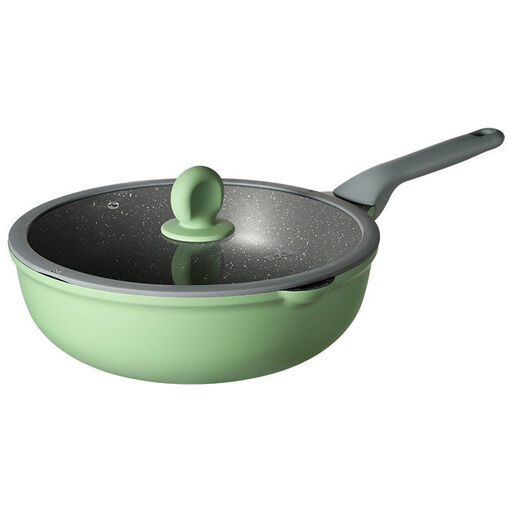
Why this choice suits this profile : Its 32 cm diameter is suitable for family meals, while its aluminium construction is easier to handle than a cast-iron wok. The product details state that it is compatible with induction, gas, electric hobs and ceramic hobs.
The product details specify the compatible heat sources and recommend hand washing and non-metal utensils to help limit wear to the coating.
32 cm diameter, non-stick coating and stated compatibility with several types of hob.
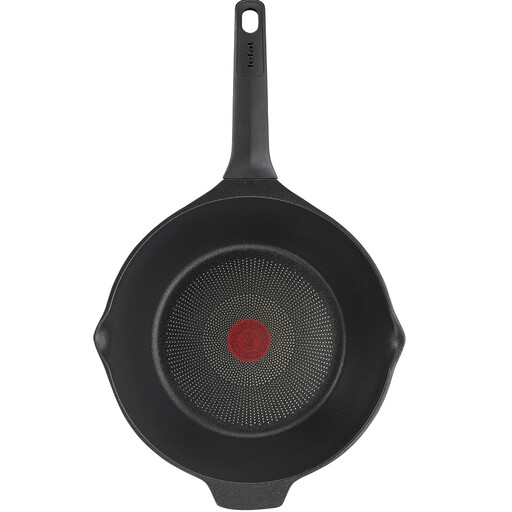
Why this choice suits this profile : This 28 cm wok combines cast aluminium, a Thermo-Signal temperature indicator and a multi-layer non-stick coating. It is ideal for everyday cooking when precise heat control and versatility are the top priorities.
The visual indicator helps prevent overheating, while the instructions advise against using metal utensils or abrasive products.
28 cm, stated compatibility with all hobs, oven-safe design and a two-year manufacturer’s warranty according to the product details.
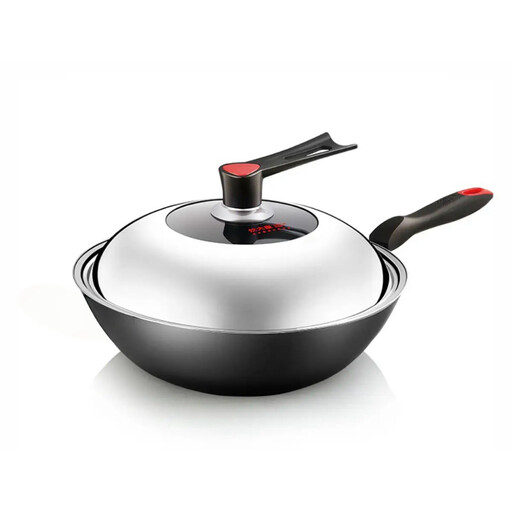
Why this choice suits this profile : This 32 cm cast-iron wok is designed for those who want excellent heat retention for searing, stir-frying or simmering food on a gas cooker.
The product details explicitly state that it is suitable for gas cooking and remind you to dry the cast iron immediately after washing to help prevent rust.
Cast iron, 32 cm diameter and glass lid included. Seasoning and regular maintenance are required.
We have put together a complete, real-time updated selection of products that meet these demanding criteria and European safety standards.
A 28 to 32 cm wok is generally suitable for preparing several portions, provided your hob and storage space can accommodate it. A diameter of 20 to 24 cm is better suited to one person or a small kitchen.
Yes, provided the model has a magnetic base compatible with induction. Also check that the base diameter corresponds to your hob’s cooking zone. A simple “suitable for all hobs” claim should be confirmed in the detailed specifications.
Avoid heating it when empty, excessively high temperatures and sharp metal utensils. Allow the wok to cool before washing it, use a soft sponge and dry it before putting it away. For a cast-iron wok, follow specific surface-care instructions and never leave it damp.