
Livraison le jour même ou le lendemain

Qualité garantie

Débloquez vos offres de bienvenue: Livraison GRATUITE | Jusqu'à -80 % | 30 jours d'essai gratuits à JoyPlus
Téléchargez l'application
A wireless video doorbell lets you see who is ringing, answer remotely and, depending on the model, track a delivery from your phone. It is suitable for both homeowners and tenants who want to avoid wiring work. However, product descriptions can sometimes blur the distinction between a camera, a smart doorbell and a wireless video intercom, while certain features may be reserved for subscribers.
Before making a purchase, check three things: actual battery life, storage method and detection capabilities. A doorbell camera may produce a very sharp image, but become frustrating to use if its battery needs recharging too often or if accessing videos requires a monthly subscription.
A range of 150 or 300 metres is generally measured in an unobstructed area. In a home, thick walls, metal structures, security doors and nearby Wi-Fi networks can considerably reduce the distance. For a Wi-Fi smart doorbell, check the 2.4 GHz coverage near the entrance. Some models do not support 5 GHz.
Radio doorbells with an indoor chime, such as some KYF or Konyks models, can continue to make the receiver ring even when your phone is unavailable. Smartphone notifications, on the other hand, depend on a working internet connection.
A subscription-free doorbell can record events to a microSD card, built-in memory or local base station. By contrast, person and parcel detection, as well as cloud video history, may require a separate subscription.
Read the difference between « cloud storage available » and « storage included » carefully. The Arlo AVD3001-100EUS, for example, states that person and parcel detection, along with cloud recording, are linked to the Arlo Secure plan after the trial period.
The 2K specification does not, by itself, guarantee a genuinely usable image. The viewing angle, vertical format, lighting in front of the door and quality of night vision also play a role. A camera aimed towards the ground will show a parcel more clearly, while a wide-angle lens will cover more of the landing, at the risk of producing less detail on a distant face.
For a battery-powered doorbell, examine the stated capacity, whether the battery is removable and the conditions in which battery life was measured. The number of daily activations, video length, cold weather and signal quality all directly affect power consumption.
The eufy S220 and Arlo Essential models state several months of use in their technical specifications, but this can vary significantly depending on activity outside the entrance. A compatible wired power supply can eliminate the need for recharging, provided suitable wiring is available. The Woox also supports battery power or an 8–24 V connection.
A video doorbell with motion detection can send an alert whenever a car, animal or change in lighting passes by. Person and parcel detection helps filter these events, but its accuracy depends on the viewing angle, distance and weather conditions.
Dual-camera systems often point one lens towards the face and the other towards the ground. This design makes it easier to monitor a parcel left outside the door. However, check whether advanced detection is performed locally or requires an online service.
Local storage reduces reliance on a subscription and allows events to be saved to a card, internal memory or home base station. Check the supported capacity, whether a card is included and how long recordings are retained.
In France, point the camera towards your own property and avoid continuously filming neighbours’ private areas or public roads beyond what is necessary. Inform the people concerned when required by regulations and consult the CNIL’s recommendations for compliant use.
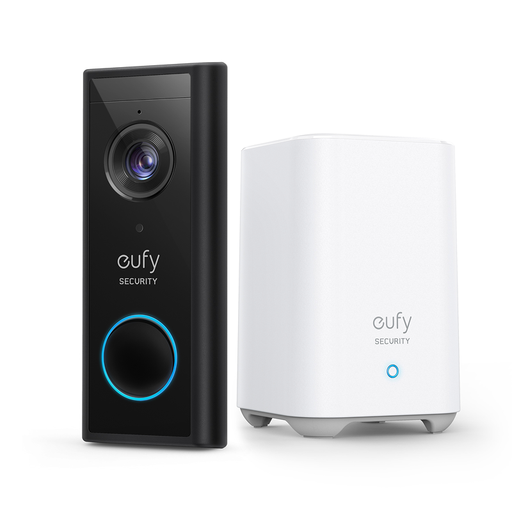
Why it suits this profile: Its standalone battery-powered installation, 2K video, two-way audio and person detection make it an excellent first doorbell, without complicated wiring.
The product description states that local storage is available, with no monthly fee for this function. Even so, check whether the storage medium is supplied with the product.
2K resolution, adjustable activity zones, vertical view and battery or wired power.
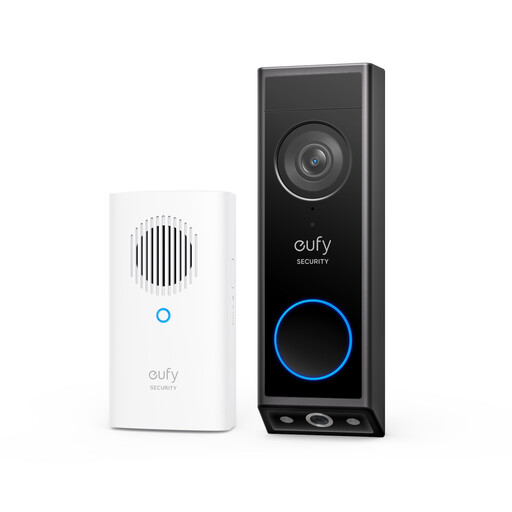
Why it suits this profile: Households that want to monitor both visitors and deliveries benefit from two lenses, a chime and expandable memory.
Local detection of people, parcels and animals is advertised with the HomeBase Mini hub, making the role of the associated hardware clear.
Dual lenses, colour night vision advertised up to 5 metres and expandable local storage up to 128 GB.
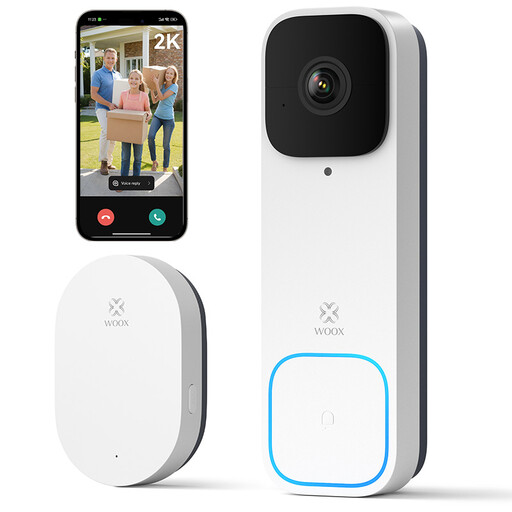
Why it suits this profile: Its 5 200 mAh battery, included chime and microSD card compatibility make it suitable for busy entrances.
The product description specifies that continuous recording is not supported: videos are triggered by motion or by pressing the button.
170° field of view, two-way audio, infrared night vision and support for microSD cards up to 128 GB.
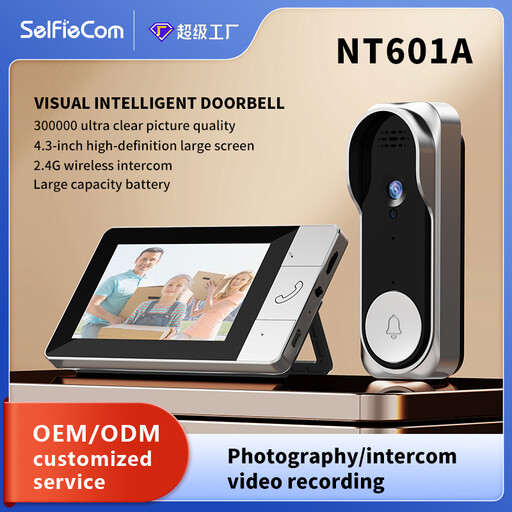
Why it suits this profile: This video intercom works with a dedicated indoor screen and does not need Wi-Fi to receive a call, making it suitable for a local installation.
It does not rely on an app or online subscription to display visitors. However, the advertised range between the doorbell and screen remains limited to around 30–50 metres.
4.3-inch indoor screen, night vision, two-way intercom and video recording to a TF card.
We have put together a complete, real-time updated selection of products that meet these strict selection criteria, as well as European safety requirements.
Not necessarily. Some models have built-in memory, a microSD card slot or a local base station, with no monthly fees. Cloud recording and certain advanced features may, however, be linked to a subscription. Check the terms for each specific model.
It depends on the number of visitors, video length, temperature and Wi-Fi signal quality. Product descriptions often state several months of battery life, but this estimate is based on specific conditions. A removable battery or wired power supply can make everyday maintenance easier.
A smart doorbell that sends alerts to a smartphone will generally need Wi-Fi and an internet connection. A model with an indoor screen or radio chime can receive the call locally without Wi-Fi. Your choice therefore depends on your priority: remote access or standalone operation.