
Livraison le jour même ou le lendemain

Qualité garantie

Débloquez vos offres de bienvenue: Livraison GRATUITE | Jusqu'à -80 % | 30 jours d'essai gratuits à JoyPlus
Téléchargez l'application
A wireless microphone can make vlogging, street interviews and video calls much easier. However, a well-written product listing does not necessarily guarantee a smooth day-to-day experience. Some models highlight ‘noise reduction’ without explaining when it works, while others promise broad compatibility even though a specific adapter is still required.
Before placing your order, check three things: compatibility with your device, battery life suited to your sessions and the exact contents of the box. Here are the criteria to consider when comparing the models available in France, without being swayed by marketing claims alone.
The mention of Bluetooth 5.0 does not necessarily mean that the microphone will connect directly to every smartphone, camera or computer. Some kits use proprietary transmission with a transmitter and a receiver that plugs into your phone or camera.
For a microphone for iPhone and Android, check the connector supplied: Lightning, USB-C, 3.5 mm jack or 6.35 mm jack. A model designed for the iOS ecosystem will not automatically work with an Android smartphone.
A noise-reduction function can lessen certain background sounds, but it will not turn a busy street into a perfectly silent studio. The positioning of the wireless lavalier microphone, the wind muff and the distance from the sound source remain essential.
For outdoor filming, choose a model supplied with a wind muff and a secure mount, and preferably with several adjustment levels. Each manufacturer measures performance using its own method, so these functions should be treated as technical features rather than a universal guarantee of results.
A stated battery life of 3 to 6 hours may be enough for a short interview, but prove insufficient for a full day of filming. Above all, check whether this figure applies to the microphone alone or to the entire kit including the charging case.
A rechargeable wireless microphone will be even more practical when the box contains a case, a suitable cable and the necessary mounting accessories. For regular use, also consider charging time and whether you can continue recording while using an external power supply, if this function is supported.
The connector must match your main equipment. A USB-C microphone can plug directly into certain phones, tablets and computers, but compatibility also depends on the operating system and the app being used.
For a camera or mixing desk, 3.5 mm and 6.35 mm jacks remain common. The Muse Wireless Microphone, for example, uses 2.4 GHz transmission and offers 3.5 mm and 6.35 mm jack connectors. Its stated range can reach 30 metres in an open space, while its battery life extends to up to 8 hours. Indoors, walls, obstacles and interference can nevertheless significantly reduce the actual range.
A single transmitter is enough for filming a vlog, presentation or video call. For an interview microphone, a kit with two transmitters lets you record two speakers without having to pass the same device between them.
Kits with two transmitters are also useful for a two-person podcast or recording a discussion. Check the available output and how the two tracks are recorded: some systems mix them, while others let you process them separately during editing.
For long sessions, compare battery life, the charging system and whether internal recording is included. Wireless transmission can be disrupted by an environment saturated with networks, thick walls or excessive distance.
Statements such as ‘up to 28 hours’ generally refer to use with the charging case under conditions defined by the manufacturer. They do not guarantee 28 hours of continuous recording in every situation.
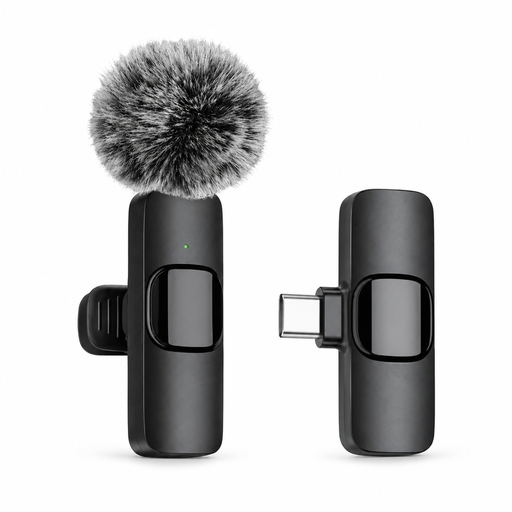
Why this choice suits this profile : Its compact design and USB-C interface suit creators who film with a compatible device and want a simple setup for live streams, recordings and interviews.
The listing states a battery life of 3 to 6 hours and a Type-C interface. You can therefore check whether it is compatible with your phone before buying.
Compact lavalier microphone, wind muff mentioned in the description and a design intended for videos, conferences and interviews.

Why this choice suits this profile : It is aimed at creators who switch between an iPhone, camera or USB-C Android device and want advanced features for a variety of filming situations.
The listing distinguishes between voice modes, noise-reduction levels and internal backup recording, rather than relying on a general promise.
Dual-frequency anti-interference transmission, 32-bit float internal recording and stated total battery life of up to 28 hours.
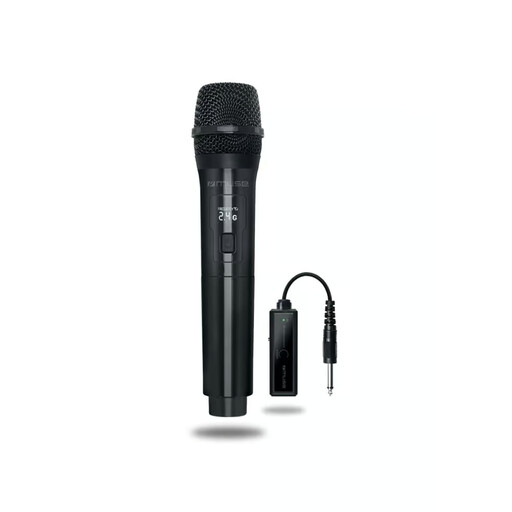
Why this choice suits this profile : Its jack connectivity works with a mixing desk, amplifier, speaker or certain recording equipment, making it suitable for presentations and events.
The stated range is given for an open space. This prevents it from being confused with a guaranteed distance in a busy room.
2.4 GHz transmission, 3.5 mm and 6.35 mm sockets, built-in rechargeable battery and stated battery life of up to 8 hours.
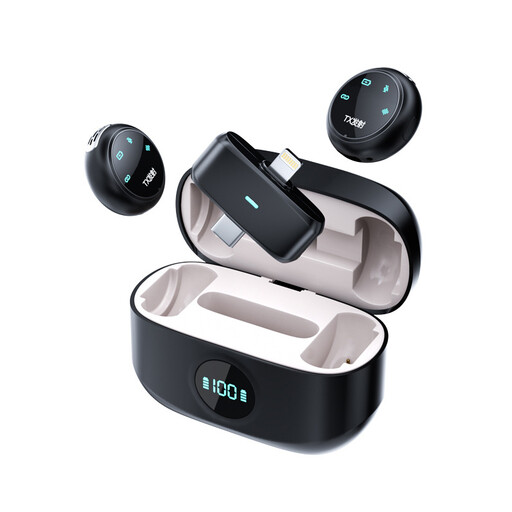
Why this choice suits this profile : This dual-microphone kit is suitable for interviews, live streams and remote conversations that require two separate audio sources.
The magnetic charging case reduces the risk of misplacing the transmitters and makes them easier to store between filming sessions.
Two microphones, an interface stated to be compatible with Android and Apple, plus noise reduction and wind resistance mentioned in the description.
We have put together a complete, regularly updated list of products that meet these demanding selection criteria and European safety requirements.
Plug the receiver into the appropriate port, then switch on the transmitter and receiver. With a recent iPhone or Android device, USB-C may be required. Some iPhones still use a different connector, so check the contents of the box and the supported connector carefully.
For a short interview, 3 to 6 hours may be enough if the microphone was charged before you set off. For a full day of filming or several takes in succession, choose a charging case and a higher combined battery capacity. Fast charging can also help minimise interruptions when it is included in the technical specifications.
Yes, provided that your computer or phone recognises the receiver as an audio source. Test it in the app’s settings before the meeting. For a fixed setup, a wired USB microphone such as the Elgato Wave:3 MK.2 may also be a good option if you do not need mobility.