
Livraison le jour même ou le lendemain

Qualité garantie

Débloquez vos offres de bienvenue: Livraison GRATUITE | Jusqu'à -80 % | 30 jours d'essai gratuits à JoyPlus
Téléchargez l'application
Accurately anticipating the local weather is no longer a luxury reserved for professionals. A wireless weather station allows you to get reliable data, right from your own garden or balcony. But be warned: the market is flooded with models making tempting promises that often disappoint in practice. To avoid making a mistake, it's best to know the most common pitfalls that can quickly turn the ideal gadget into a source of frustration.
On paper, everything looks perfect. In reality, disappointment is often just around the corner. Here are the three key issues to watch out for before you buy:
To make a lasting choice, rely on these key technical criteria rather than on marketing hype.
Not all stations are created equal when it comes to measurements. A basic model generally measures indoor and outdoor temperature and humidity. For more comprehensive data, especially for gardening or weather enthusiasts, it's better to look for more advanced models.
The quality of the wireless outdoor weather sensor is paramount. Check the materials used and the operating temperature range to ensure it will withstand the climate conditions in your region.
Data transmission and readability are at the heart of the user experience.
Rather than an endless list, here is a selection of products suited to specific profiles, chosen for their reliability and features.
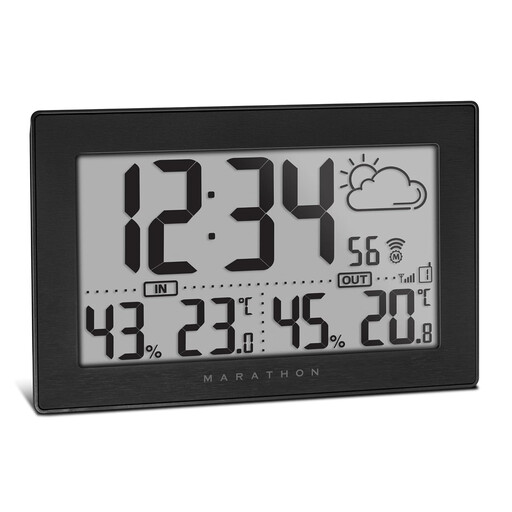
The Verdict: Perfect for those who want to monitor the temperature and humidity in multiple locations (a child's room, wine cellar, greenhouse) without drowning in complex data. Its strength lies in its simplicity and its ability to manage up to three sensors.
This model focuses on a reliable multi-sensor connection rather than promising an unrealistic range. Its highly readable monochrome LCD screen doesn't create false expectations about backlighting.
Allows you to monitor up to 3 zones simultaneously with additional sensors. Simple installation and included batteries for immediate out-of-the-box use.
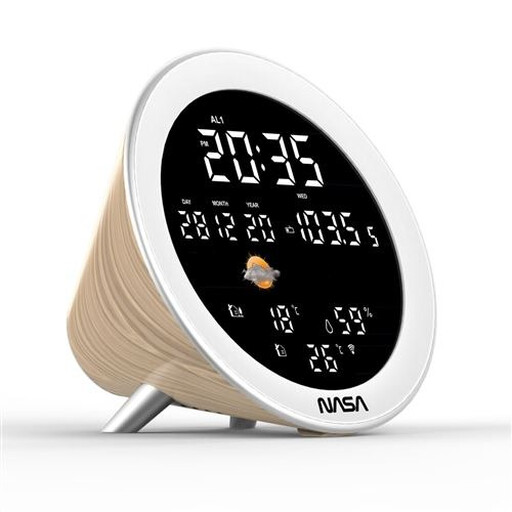
The Verdict: For those who see their weather station as much a decorative object as a tool. Its wood-effect finish and official Nasa weather station branding make it a product that stands out from the crowd.
It bypasses the problem of unreadable screens with a large, colour touchscreen with adjustable brightness. The dual power option (batteries and AC) is clearly stated, avoiding the unpleasant surprise of a screen that turns off.
Large 5.7-inch colour touchscreen for crystal-clear reading. Elegant design and dual power for continuous backlighting via the included AC adapter.
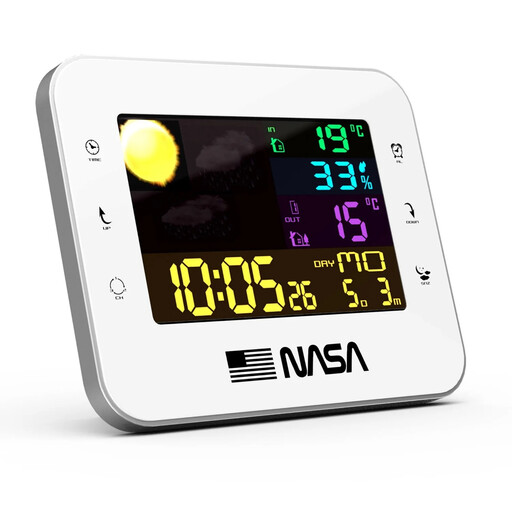
The Verdict: Designed for the user who wants to go beyond just temperature. As a 7-in-1 station, it provides data on wind and rain, approaching the capabilities of a professional weather station for advanced home use.
This model avoids the trap of limited scalability by offering a complete set of sensors right from the start. No need to upgrade your station as your passion for weather grows.
Comprehensive outdoor sensor measures temperature, humidity, pressure, wind speed, and precipitation. Large 6-inch colour screen for a clear view of all data.
Explore our full selection of products that meet our selection criteria and current regulations.
To get accurate data, the wireless outdoor weather sensor should be placed in an open area that is representative of local conditions. Install it in the shade to prevent direct sunlight from skewing temperature readings. Also, make sure it is sheltered from direct precipitation (under an eave, for example) and away from any heat sources (air conditioner units, vents). Good air circulation is just as important.
A sensor's lifespan depends on two factors: the quality of its construction and its battery life. A well-designed sensor made of UV-resistant ABS plastic can last for many years. As for batteries, most sensors run for 12 to 24 months on a set of good-quality alkaline or lithium batteries. Lithium batteries are also recommended for cold climates, as they maintain their performance better at low temperatures.
For the vast majority of users, a consumer-grade wireless weather station is more than sufficient. It provides essential data (temperature, humidity, pressure-based forecasts) with satisfactory accuracy. A professional weather station is only justified if you have specific needs: agriculture, outdoor event management, or a deep passion for collecting and analysing highly precise meteorological data (wind gust speed, UV index, etc.). These models are often more expensive and more complex to install.