
Livraison le jour même ou le lendemain

Qualité garantie

Débloquez vos offres de bienvenue: Livraison GRATUITE | Jusqu'à -80 % | 30 jours d'essai gratuits à JoyPlus
Téléchargez l'application
Should you grab an umbrella, air out the house, or protect your plants from frost? A good wireless weather station with an outdoor sensor makes these daily decisions easier. Yet, the market is saturated with models making tempting promises that often lead to disappointment. A sensor that keeps losing its connection, an unreadable screen, or wildly inaccurate forecasts: the frustrations are many and all too common.
As a product expert at Joybuy, my role is to help you cut through the noise. This guide focuses on the essential criteria for making the right choice and avoiding the common pitfalls that lead to buyer's remorse.
Before you even start comparing features, it's crucial to know the deal-breakers that can render a device useless after just a few months.
To ensure your investment is both wise and long-lasting, focus on these three fundamental points.
The heart of your weather station with an outdoor sensor is its remote unit. The relevance of all your data depends on its reliability. Check two things:
The goal is to get the information you need at a glance.
Beyond being a simple wireless thermometer-hygrometer, certain features add real-world convenience.
Rather than an exhaustive list, here are options that cater to specific needs while avoiding the pitfalls mentioned earlier.
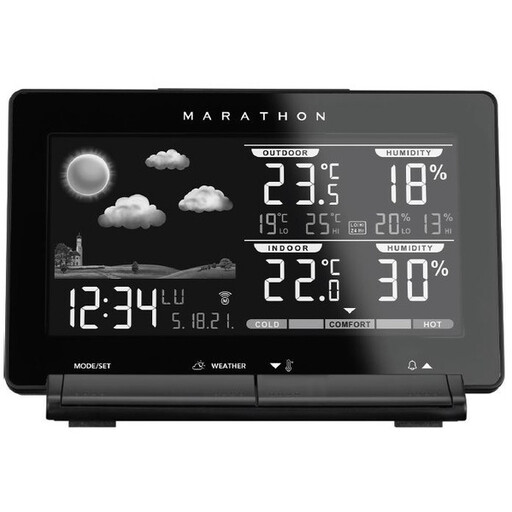
Why it's a great choice: Ideal for those who want accurate data (temperature, humidity) without unnecessary features. Perfect as a first device or for reliably monitoring a room and the garden.
Its sensor is designed to withstand the elements, and its clear, straightforward monochrome LCD screen avoids information overload.
Simple to set up and use; radio-controlled clock for consistently accurate time; records 24-hour min/max values.
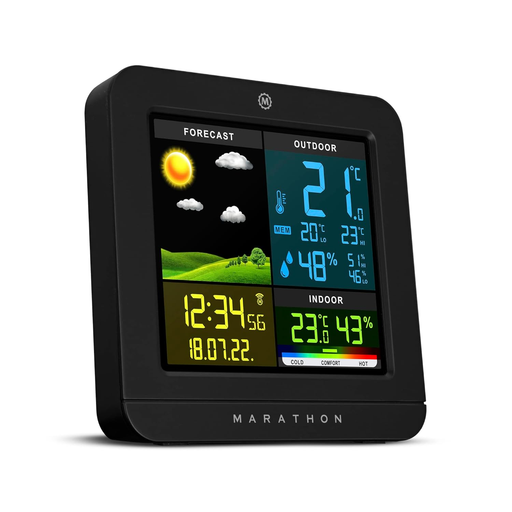
Why it's a great choice: This will appeal to those who appreciate a modern, visual display. The colour screen and animated icons blend perfectly into a contemporary interior, combining functionality with aesthetics.
The colour LCD screen offers excellent readability and organises data intuitively, unlike basic monochrome screens that can be hard to read from a distance.
Modern colour screen with animated forecast icons; indoor comfort level indicator; DCF radio-controlled clock.
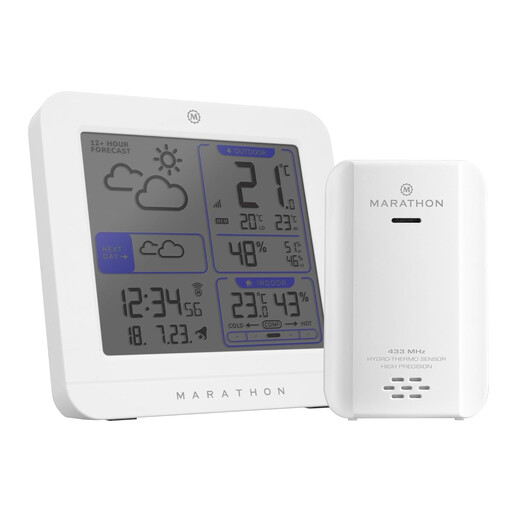
Why it's a great choice: Perfect for large homeowners, gardeners with a greenhouse, or anyone who wants to monitor a wine cellar and a baby's room simultaneously, thanks to its multiple sensors.
Supplied with 3 sensors, it solves the problem of needing to buy multiple devices. The large 10-inch screen clearly displays data from each zone without confusion.
Monitors up to 4 zones (1 station + 3 included sensors); extra-large screen for easy long-distance viewing.
We've compiled a comprehensive list of products that meet our standards for quality and reliability.
For accurate measurements, the sensor should be placed sheltered from direct sunlight and rain. Ideally, mount it on a north-facing wall, at a height of 1.5 to 2 metres off the ground. Avoid placing it near heat sources like an air conditioning unit, a vent, or heat-retaining surfaces (brick walls, asphalt).
Battery life varies greatly depending on the model, transmission frequency, and the quality of the batteries. In general, expect between 12 and 24 months for the outdoor sensor and the main station (if it's battery-powered). Using lithium batteries is highly recommended for outdoor sensors, as they perform much better in cold weather.
The weather forecast function on a home device is based on changes in atmospheric pressure measured by its barometer. It provides a local trend for the next 12 to 24 hours. While it's no substitute for a professional weather report, this hyper-local forecast is often very relevant for anticipating a shower or a sunny spell right outside your door.