
Livraison le jour même ou le lendemain

Qualité garantie

Débloquez vos offres de bienvenue: Livraison GRATUITE | Jusqu'à -80 % | 30 jours d'essai gratuits à JoyPlus
Téléchargez l'application
Accurately predicting your local weather is no longer a luxury reserved for professionals. Whether you're planning your gardening sessions, adjusting your heating, or just satisfying your curiosity, the wireless weather station has become an essential gadget. But with so many options on the market, choosing the right one can be overwhelming. Not to worry! Follow our guide to find the model that perfectly blends performance and design to seamlessly integrate into your home.
By the Joybuy team, your high-tech experts
Before you commit to a model, here are the key points to check to ensure your future weather station meets your specific needs.
For a weather station with an outdoor sensor, the wireless communication with its base unit is the most critical factor. The range, often listed in metres "in an open area," is therefore a decisive criterion. Be sure to account for the distance and any obstacles (thick walls, double-glazed windows, etc.) that will separate the sensor from the main display. For reliable measurements, install the sensor in a well-ventilated area, sheltered from direct sun and rain.
A proper weather station does much more than just report the temperature. Today's models come packed with a host of useful features:
Since a weather station will likely take pride of place in your living room, its appearance is just as important as its performance. A designer weather station with a polished finish and a perfectly readable screen makes all the difference. Our advice: opt for backlit colour LCD screens for optimal reading comfort, day or night. The size and layout of the information are also crucial for seeing everything at a glance.
To do the legwork for you, our editors have reviewed several promising models. Here are our favourites, selected for their technical specs, design, and versatility.
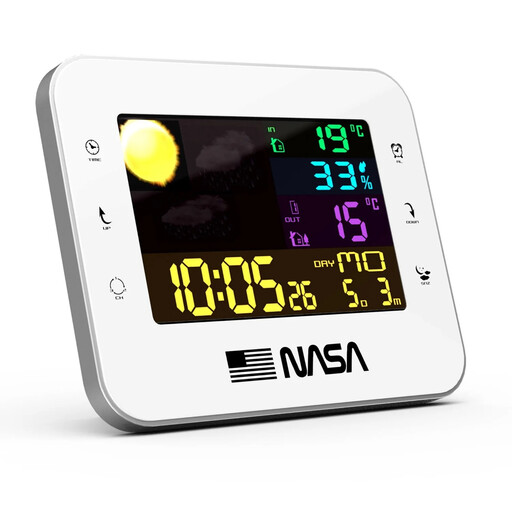
Why it stands out: Its huge 6-inch colour screen and modern, officially licensed NASA design make it a high-tech object that's sure to turn heads. The display is crystal clear, and the information is perfectly organised.
Key features:
Who is it for? Ideal for gadget and tech enthusiasts who want a comprehensive device with a large, detailed display that's readable even from across the room.
See details for the Nasa WS500
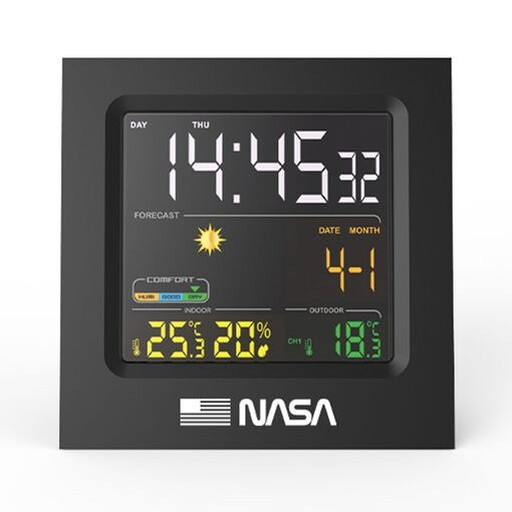
Why it stands out: Its versatile form factor and multifunctionality. Despite its compact size, it displays all the essentials with great clarity on its backlit colour screen.
Key features:
Who is it for? Perfect for those who are short on space but don't want to compromise on essential weather information. Its discreet design fits in anywhere.
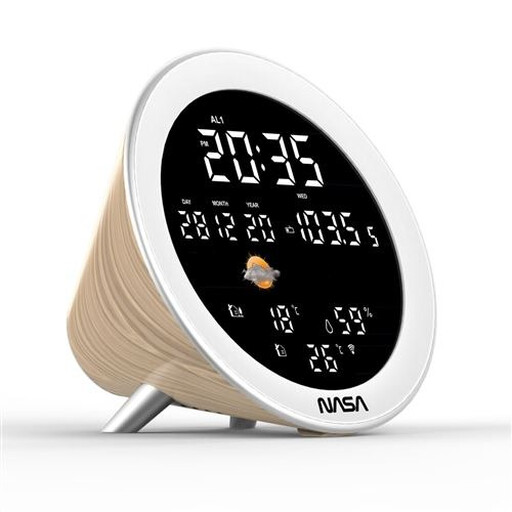
Why it stands out: Its elegant wood-effect finish makes it the quintessential designer weather station. It blends technology with aesthetics to fit into the most stylish interiors, from modern to classic.
Key features:
Who is it for? Aimed at those for whom design is as crucial as function. It will find its place in a living room or office, like a decorative object that is as beautiful as it is useful.
A weather station is good, but a complete high-tech setup is even better! If you're looking for power cables, adapters, or other accessories for your devices, take a look at our selection.
Discover our cables and accessories
Rest assured, installation is a breeze. Place the outdoor sensor away from direct sunlight and rain. Insert the batteries into the sensor and the main unit (or plug it into the mains). The two will automatically synchronise within a few minutes.
The advertised range, often between 10 and over 30 metres, is measured "in an open area." In practice, concrete walls or triple-glazed windows can reduce this distance. Our advice: test the connection before permanently mounting the sensor.
The forecasts from a personal weather station are based on atmospheric pressure changes measured at your location. They provide a highly localised, short-term trend (12 to 24 hours). While they won't replace forecasts from the official meteorological service, they are an excellent supplement for knowing what the weather will be like right on your doorstep.