
Livraison le jour même ou le lendemain

Qualité garantie

Débloquez vos offres de bienvenue: Livraison GRATUITE | Jusqu'à -80 % | 30 jours d'essai gratuits à JoyPlus
Téléchargez l'application
A wireless video doorbell lets you see who’s at your door, speak to them remotely, and keep an eye on deliveries from your smartphone. But the spec sheets often focus more on resolution or artificial intelligence than the real-world challenges of installation, battery life and storage.
Before you buy a Wi-Fi doorbell camera, there are three pitfalls worth paying attention to.
A 2K doorbell camera can deliver a detailed image without actually capturing the ground in front of your door. If the lens is mainly aimed at the visitor’s face, a parcel left at the foot of the entrance could easily remain out of shot. To keep track of deliveries, check for a second camera or a sufficiently wide vertical field of view.
A wireless battery-powered doorbell is easier to install, but its battery life depends on many factors: the number of visitors, recording duration, detection sensitivity and Wi-Fi signal quality. Cold weather, heat or repeated triggers can also accelerate battery drain.
A removable battery or the option to switch to a wired power supply can help reduce interruptions. Because ‘wireless’ doesn’t mean ‘no recharging’ – regular charging is often still necessary.
Some advanced features are reserved for a paid online service. If you’re looking for a doorbell without a subscription, carefully examine the local storage options, the maximum microSD card capacity and whether there’s any built-in memory. Also check what can actually be saved: videos, images, or only certain events.
2K resolution offers more detail than a standard image, which can help you identify a face or read information near the door. However, it won’t work miracles if the lighting is poor, the lens is badly positioned or the connection is unstable.
Colour night vision can provide a more usable image in low light. Its effectiveness depends on the available light and the immediate surroundings. Black-and-white infrared night vision remains very common and usually comes with a stated range – for example, up to 5 metres depending on the model’s specifications.
With a dual-camera video doorbell, compare the angle of the main lens and that of the downward-facing camera separately. This setup is particularly useful when parcels are left on the ground.
Human and motion detection covers two different functions. Motion detection picks up activity in a defined area, while human detection tries to identify a person and distinguish them from an animal, vehicle or simple change in light. The relevance of alerts depends on the settings you choose, the distance and any obstacles.
Parcel detection can be handy for monitoring a delivery, but it doesn’t replace a visual check. Before you decide, look at the areas covered, the sensitivity settings available and the duration of notifications.
A 2.4 GHz Wi-Fi doorbell generally offers a range suitable for installation near your door. Some models also support 5 GHz. The distance to your router, wall thickness and nearby equipment can all affect the stability of notifications.
In a flat, measure the available space and check the mounting system supplied. In a house, look at weather resistance – particularly the IP65 rating – as well as the operating temperatures stated by the manufacturer. A wired model may require a professional to install it and must be fitted in line with local electrical safety regulations.
Two-way audio lets you speak to a visitor directly from the app. Conversation quality depends on the microphone, speaker, background noise and network connection. Also think about privacy zones, your building’s regulations and the camera’s orientation to avoid unnecessarily filming the street or neighbouring properties.
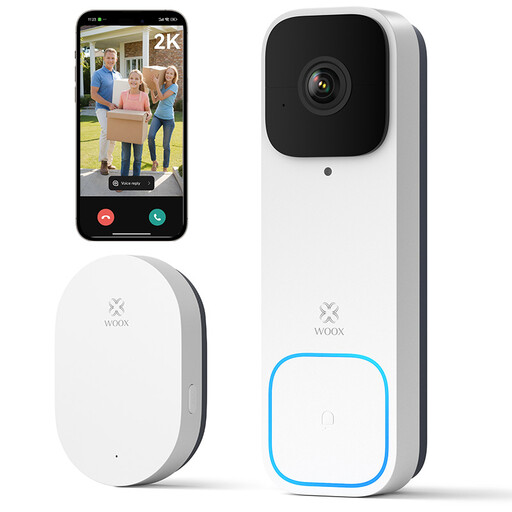
Why this suits this profile: Its 5,200 mAh battery, supplied wireless chime and 2.4 GHz Wi-Fi compatibility make it an appealing option for a first home installation.
The spec mentions human detection, motion and parcel alerts, plus storage on a microSD card up to 128 GB, without continuous recording.
Video at 1536 × 2048, two-way audio, IP65 rating and a 433 MHz chime with a stated maximum range of 200 m.
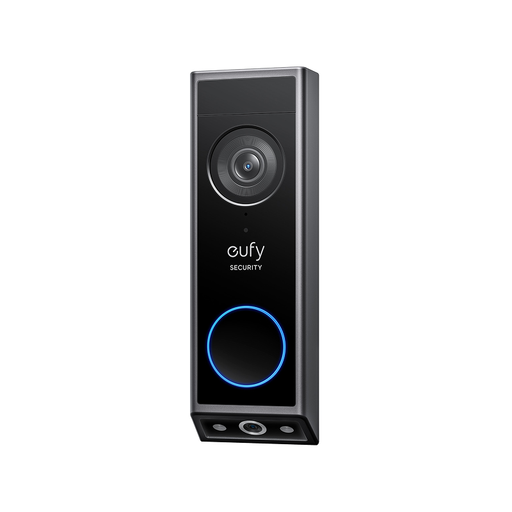
Why this suits this profile: Its two lenses, 2K resolution and colour night vision meet the needs of a busy entrance or a household that regularly receives parcels.
The downward-facing camera complements the main lens and covers the ground area where parcels typically end up – a point often overlooked by single-lens models.
Removable battery, optional wired power, wireless chime and expandable local storage up to 128 GB according to the spec sheet.
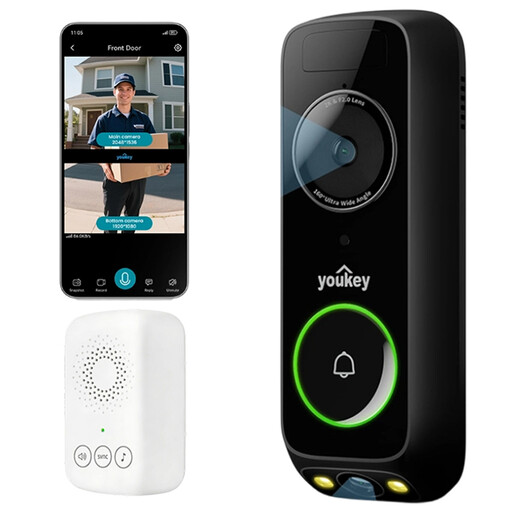
Why this suits this profile: With its 6,400 mAh battery, dual camera and system combining radar, PIR sensor and scene analysis, this model is designed for entrances with a lot of traffic.
The triple detection and delivery monitoring are designed to better distinguish relevant events from ordinary movements.
Wi-Fi 2.4/5 GHz and Wi-Fi 6, built-in 8 GB eMMC memory, colour night vision and stated use without monthly fees.
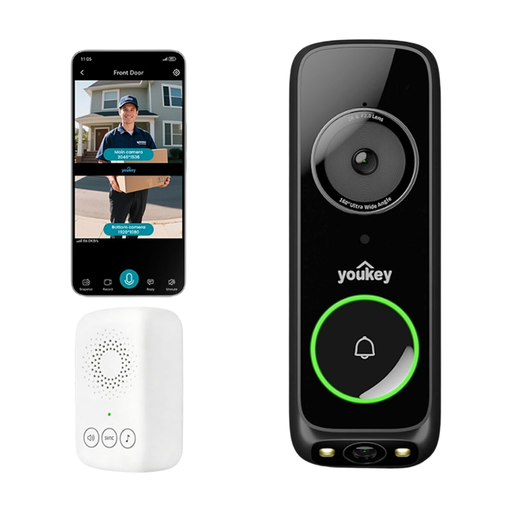
Why this suits this profile: The wired power supply is for those who want to avoid recharging and already have a compatible electrical setup near the entrance.
The wired connection removes reliance on battery life. The spec sheet does note, however, that installation should be carried out with the necessary skills and precautions.
Two stated viewing angles of 158° and 120°, detection of people, motion and parcels, colour night vision and 8 GB eMMC memory.
We’ve put together a full selection, updated in real time, of products that meet these demanding criteria and European safety regulations.
To receive reliable notifications, install the doorbell in an area with good router coverage and test the signal before fixing the mount permanently. Position the lens to frame the visitor’s face, while avoiding unnecessarily filming the street or neighbouring properties.
When you first set it up, download the compatible app, pair the doorbell with your Wi-Fi network and check that the chime works properly. To preserve battery life, lower the sensitivity if your entrance faces a busy street, set a privacy zone and adjust the recording duration.
Yes. Some models offer local microSD storage, built-in memory or a compatible hub. However, you should check which features are accessible without an online service – notifications, saving and certain options may still be tied to the manufacturer’s app.
There’s no one-size-fits-all figure. Battery life varies depending on the number of triggers, temperature, Wi-Fi signal quality, resolution and video length. The figures stated by the manufacturer should therefore be taken as estimates obtained under specific conditions, not as a guarantee for every home.
A single camera can be sufficient if its lens covers the visitor and the bottom of the door properly. A dual-camera video doorbell is more relevant if you want to monitor both the face and the area where parcels are left. The right choice depends on the layout of your entrance, the installation angle and your delivery habits.