
Livraison le jour même ou le lendemain

Qualité garantie

Débloquez vos offres de bienvenue: Livraison GRATUITE | Jusqu'à -80 % | 30 jours d'essai gratuits à JoyPlus
Téléchargez l'application
Knowing who's at your door, whether you're in the living room or on the other side of the world, is no longer a luxury. The wireless video doorbell has become an accessible tool to enhance your security and simplify your life. However, the market is flooded with marketing promises, making it easy to get lost. To avoid buyer's remorse, it's best to know the most common pitfalls and how to sidestep them.
As a product selection expert at Joybuy, my mission is to bring you some clarity. Here are the 3 most common pitfalls and our advice for avoiding them.
The absence of monthly fees is often the main selling point for many doorbells. It's a promise some models keep, but it often hides a different reality. In practice, a subscription-free doorbell will work, but essential features like cloud video recording, person or package detection, or access to history beyond a few hours may require a paid subscription after a short trial period. The result?: you end up with a device with crippled capabilities or unexpected fees.
A 2K doorbell, on paper, guarantees a great image, right?? Not so fast. While high resolution is crucial during the day, it's no guarantee of a clear image after dark. Night vision quality actually depends on a trio of factors?: the image sensor, the power of the infrared LEDs, and the processing algorithms. An entry-level doorbell, even if it's labelled "2K", is likely to produce a grainy, unusable pixelated mess at night, making it impossible to identify a face.
Manufacturers promise months of battery life, but these figures are often based on lab-tested conditions with minimal foot traffic and ideal weather. In the real world, repeated motion detections, chats with delivery drivers, and cold winter weather can cut this battery life in half, or even by two-thirds. Having to recharge your doorbell every month then becomes a real chore.
To make the right choice and avoid these disappointments, focus on a few key technical criteria. They will help you select a model that truly fits your needs.
This is THE crucial point for determining if a doorbell is truly free of hidden fees.
Don't be blinded by resolution alone.
Most wireless video doorbells are battery-powered, which radically simplifies installation. However, for complete peace of mind, opt for models that offer dual power options. They can run on battery but can also be hardwired to your old doorbell's power supply (usually 8-24V AC). This option permanently frees you from the hassle of recharging.
Rather than an exhaustive list, here is a selection of models that cater to specific user profiles, taking into account the criteria we've just discussed.
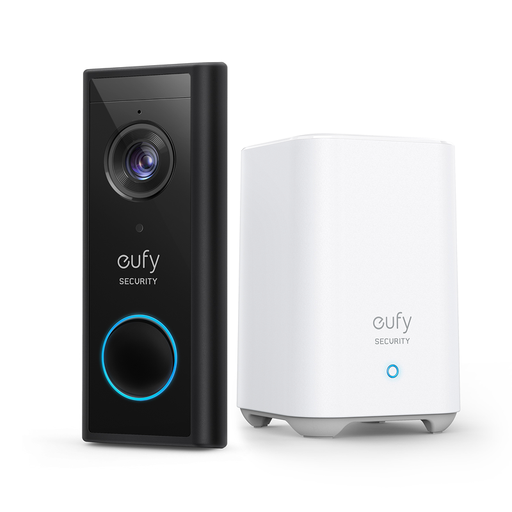
Why it's a great choice : The perfect solution for those who want a set-it-and-forget-it device. It combines simple installation, good image quality, and, most importantly, operation without any mandatory subscription.
This model records everything locally on its HomeBase : goodbye to cloud fees. AI-powered human detection is also included at no extra cost.
2K resolution with a Sony sensor for a clear image. Dual power options (battery or hardwired) for greater flexibility.
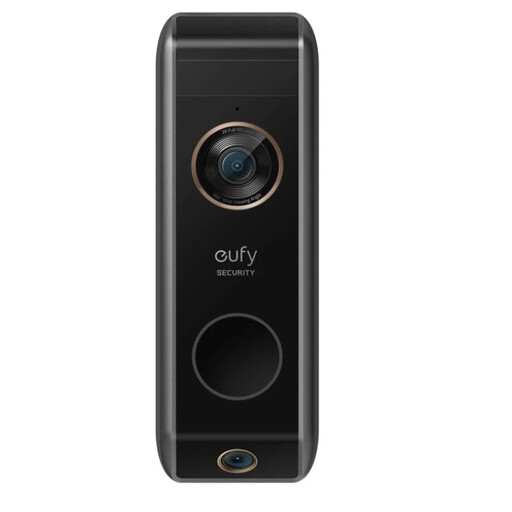
Why it's a great choice : A must-have if you frequently receive packages. Its dual-camera design provides a complete view of your entrance, eliminating the blind spot below the doorbell where packages are usually left.
Its package detection and local storage via a HomeBase help you avoid the subscription and blind spot traps. You're alerted upon delivery and can verify that your package is safe.
Dual-camera system to see everything. AI-powered package and human detection for relevant alerts.
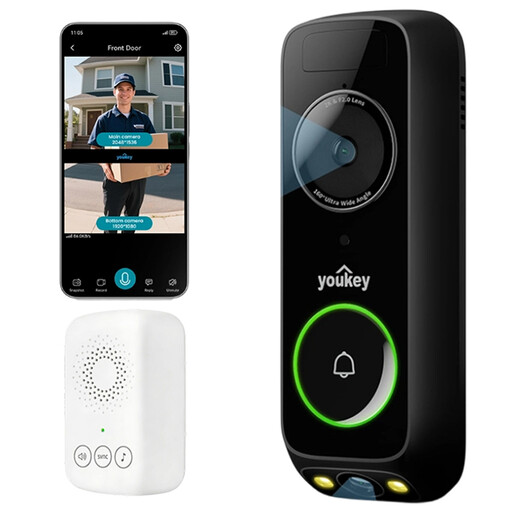
Why it's a great choice : For those who can't stand false alerts. This model combines multiple technologies to put an end to unnecessary notifications (from falling leaves, the neighbour's cat, etc.).
Its triple detection (Radar + PIR + AI) drastically reduces the false alerts that drain the battery. Its 8GB of built-in eMMC storage ensures subscription-free operation.
Triple detection technology for high accuracy. Colour night vision and Wi-Fi 6 compatibility for a stable connection.
We've curated a full range of products that meet our strict selection criteria and security standards.
Real-world battery life depends heavily on your usage. For a high-traffic entryway, expect to recharge the battery every 2 to 3 months, even if the manufacturer advertises 6 months. If possible, opting for a hardwired model remains the most convenient solution so you never have to think about it again.
Yes, as long as you choose a model with local storage. Make sure that event recording and history access are not tied to a paid plan. Models that record to an SD card or a dedicated base station (HomeBase) are the safest bet on this front. Read the product specifications carefully to verify that smart features (person detection, package detection) are included at no extra cost.
No, in fact, it's one of their biggest advantages. Installation typically takes less than 30 minutes. You just need to mount the bracket to the wall (a few screws, often included, are all it takes), clip the doorbell on, and then connect it to your Wi-Fi network via the manufacturer's app. No electrical knowledge is required for a battery-powered model.