
Livraison le jour même ou le lendemain

Qualité garantie

Débloquez vos offres de bienvenue: Livraison GRATUITE | Jusqu'à -80 % | 30 jours d'essai gratuits à JoyPlus
Téléchargez l'application
Choosing a wireless video doorbell can quickly become a headache. Between marketing promises and indigestible spec sheets, it's easy to end up with a disappointing device. As a product expert at Joybuy, my mission is to help you see things more clearly. Let's review the pitfalls to avoid and the criteria that really matter to make the right choice.
Before you even start comparing models, let's identify the three classic mistakes that can turn a good deal into a disaster.
To avoid falling into these traps, here are the technical specifications that truly make a difference in daily use.
A sharp image is fundamental. It's non-negotiable. Forget 720p and even 1080p (Full HD) if your budget allows. Today, 2K resolution is becoming the standard, offering excellent visual comfort. It allows you to zoom in on details without the image turning into a pixelated mess.
The field of view is just as crucial. A wide angle (over 150°) and a vertical aspect ratio (like 4:3) are essential to see a person from head to toe, as well as any packages left on your doormat. Colour night vision is a real bonus for flawless identification, even in the middle of the night.
This is the crucial point, the one that will determine whether you have to pay a monthly fee. You have two options:
Most Wi-Fi doorbell models are battery-powered, which promises an ultra-simple installation. But battery power means recharging. Some smarter models offer a dual power option: they can run on battery or be connected to the wiring of your old wired doorbell. This is the best of both worlds: the simplicity of installation and the peace of mind of a continuous power supply.
Because every home is unique, here is our selection of models that meet different needs, based on the criteria we've just outlined.
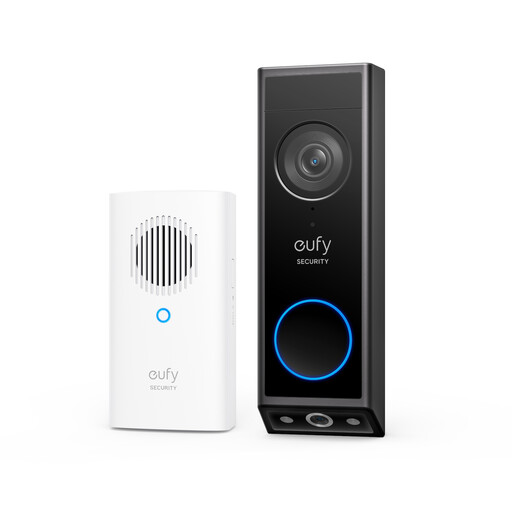
Why it stands out : The logical choice for anyone who wants cutting-edge surveillance while keeping control of their data. The dual cameras provide a complete view of your porch, including the ground for package detection—an incredibly effective feature for avid online shoppers.
This model cleverly bypasses subscriptions. Videos and AI detections are processed and stored locally on the included HomeBase, with expandable storage. Privacy is guaranteed, and there are zero hidden fees.
2K resolution, dual cameras for a blind-spot-free panoramic view, and dual power (battery or wired) for maximum flexibility.
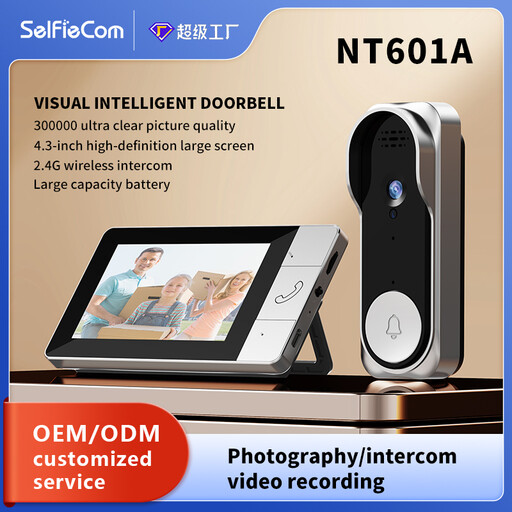
Why it stands out : The perfect solution for those who are averse to smartphones and complex Wi-Fi setups. This system is 100% standalone and ready to use out of the box with its own indoor monitor.
No Wi-Fi, no app, no subscription. This is an incredibly simple closed-circuit system: someone rings, the screen turns on, and you see who's there. Effective and foolproof.
100% standalone operation with an included 4.3-inch screen. Zero reliance on Wi-Fi or a smartphone. Photo and video capture on a microSD card (not included).
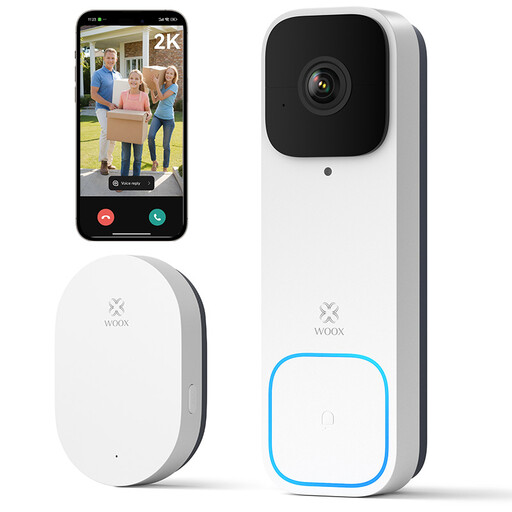
Why it stands out : The ideal compromise for accessing modern features (2K video, smart detection) without breaking the bank. Its vertical aspect ratio is a real plus for viewing on a smartphone.
It gives you a choice: local storage on a microSD card (up to 128GB) to break free from subscriptions, or the cloud for those who prefer it. It provides access to premium features at a very reasonable price.
2K UHD resolution with a native vertical display, dual power (battery or wired), and a wireless chime included as standard.
Discover our full selection of products that meet our demanding selection criteria and relevant privacy laws.
Absolutely not, and that's excellent news. Many models, particularly from Eufy, Woox, or Uniview, include a local storage option (on a microSD card or a dedicated base station). This allows you to save your recordings without any monthly fees. However, with some brands, access to the cloud and advanced AI features (facial recognition, etc.) may require a paid subscription. A word of advice: always read the fine print about trial periods before confirming your purchase.
That's the big question. The "6 months" promised on the box are lab-tested figures, obtained with only a handful of activations per day. For an entrance with moderate traffic, you should expect 2 to 4 months in real life. The main factors that drain the battery are the motion detection sensitivity, the length of the recorded video clips, and extreme temperatures (severe cold or heat).
No, and this is a crucial point. Privacy laws are very strict. You are only permitted to film your own private property. The camera must under no circumstances film public spaces (the street, the pavement) or your neighbours' property (their door, windows, or garden). You must orient the lens so that it only frames your doormat and entrance. Fortunately, most models include angled mounts to help you comply with the law hassle-free.