
Livraison le jour même ou le lendemain

Qualité garantie

Débloquez vos offres de bienvenue: Livraison GRATUITE | Jusqu'à -80 % | 30 jours d'essai gratuits à JoyPlus
Téléchargez l'application
Knowing who's at your doorstep, whether you're on the sofa, at the office, or on the other side of the world: that's the promise of a wireless video doorbell. It lets you see, hear, and speak to your visitors directly from your smartphone or a dedicated screen.
But with a vast array of models featuring widely different specs—with or without a subscription, battery-powered or hardwired, with basic or smart detection—it's hard to know where to start. This guide is here to cut through the noise and help you find the wireless video intercom that truly fits your lifestyle and your home.
Before diving into our top picks, let's review the key points that will make all the difference in making the right choice.
This is often the first sticking point: do you have to pay every month? Many brands reserve their most advanced features (cloud video storage, facial recognition, etc.) for those who sign up for a monthly or annual subscription.
To avoid unpleasant surprises on your bank statement, opt for a subscription-free smart doorbell. These models rely entirely on local storage, usually via a microSD card or a storage hub connected to your network. Not only do you keep control of your personal data, but your wallet will thank you in the long run.
Beware the "wireless" trap! While the term refers to the network connection (Wi-Fi), you also need to consider the power source.
A good video intercom with a camera does more than just record. A doorbell with motion detection has become the standard, but its effectiveness depends on its precision. The top-performing models use algorithms to distinguish between a person, an animal, a car, or a package, which drastically reduces false alerts.
Image quality is just as important: a good resolution (HD, Full HD, 2K) is crucial for clearly identifying a face, day or night. Also, consider the viewing angle, which should be wide enough to cover the entire area in front of your entrance.
Here are three models that stand out from the crowd, each with a very different approach to meet specific needs.
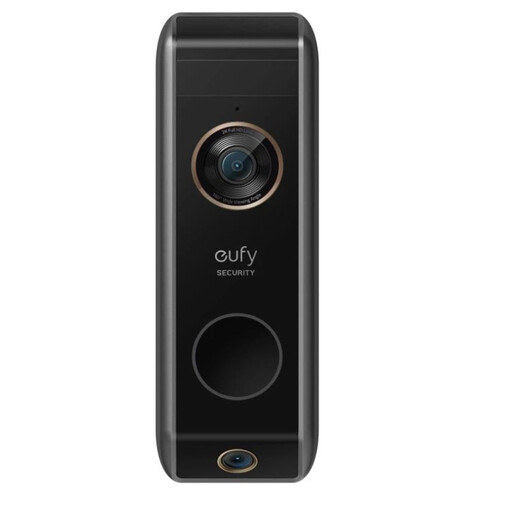
Its standout feature: This model sets itself apart with its innovative dual-camera system. The main camera films visitors, while a second, downward-facing camera is specifically designed to keep an eye on packages left on your doormat.
Advantages?:
Who is it for? For those who juggle frequent deliveries and want a cutting-edge solution without committing to a subscription. Its ease of installation makes it accessible to everyone.
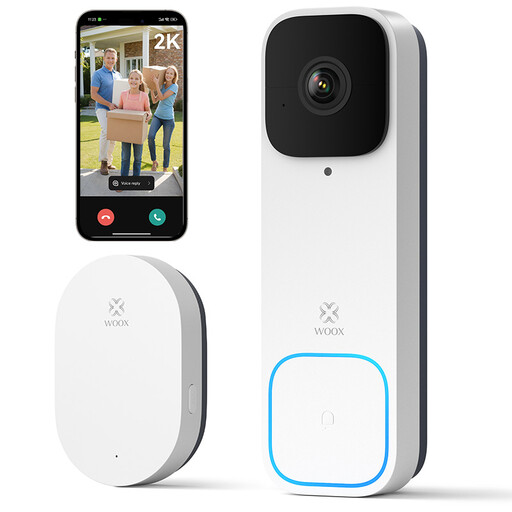
Its clever design: The Woox R4331 doorbell records in a portrait format (1536x2048 pixels), a choice perfectly suited for our smartphone screens. It displays your visitors from head to toe.
Advantages?:
Who is it for? For smart home enthusiasts who want to integrate their doorbell into the Alexa or Google ecosystem and appreciate having a choice of power options.
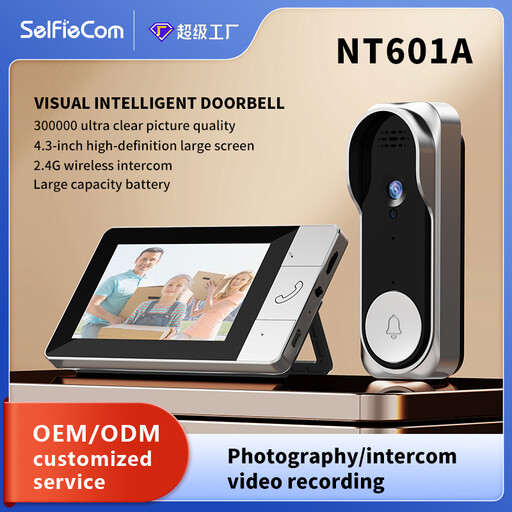
Its philosophy: Simplicity above all else. This isn't a smart doorbell, but a true standalone wireless video intercom that works without Wi-Fi, an app, or a smartphone.
Advantages?:
Who is it for? The perfect solution for anyone who finds apps and complicated settings a hassle. Ideal for seniors, second homes without an internet connection, or simply for those who want a system that gets straight to the point.
Does your setup require a specific power solution? External batteries, solar panels, or other smart accessories can complete your security equipment.
? Explore our Smart Power solutions
1. What is the real-world battery life of a battery-powered doorbell? It depends heavily on your usage! The more foot traffic and interactions you have, the faster the battery will drain. On average, you can expect 3 to 6 months of battery life with typical use. Be aware that very cold weather can also cause issues and slightly reduce this duration.
2. Can you use a video doorbell without a Wi-Fi connection? Absolutely. Some models, like the Verbex NT601A in our selection, operate on a closed circuit. They use their own radio signal to communicate between the doorbell and an indoor monitor, without ever going through the internet. It's the ideal solution if your Wi-Fi doesn't reach your front door or if you prefer a 100% independent system.
3. Is local storage a good alternative to paid cloud services? It's an excellent and increasingly popular alternative. Local storage (on an SD card or a dedicated base station) has two major advantages: it's free (no subscription!) and your data stays with you, safe from external servers. The only downside: if a thief steals the doorbell, they also take the memory card. This is why systems like eufy's, with a storage base (HomeBase) placed indoors, are particularly clever.
The Joybuy Expert's Selection