
Livraison le jour même ou le lendemain

Qualité garantie

Débloquez vos offres de bienvenue: Livraison GRATUITE | Jusqu'à -80 % | 30 jours d'essai gratuits à JoyPlus
Téléchargez l'application
A cosy reading nook, but with no outlet in sight?? A patio for extending those long summer evenings?? Restaurant tables cluttered with cables that ruin the ambience?? The wireless table lamp has emerged as the ideal lighting solution, combining freedom of placement with a sleek, minimalist design.
With a dizzying array of options on the market, it can be difficult to know where to start. As our editorial team's product expert, my mission is to demystify the market for you. Let's cut through the marketing jargon: this guide provides the keys to making the right choice in 2026, based on objective criteria and a curated selection of models that caught our eye.
Before diving into our selection, it's essential to identify your needs. Here are three fundamental criteria to help you find the perfect lamp.
For a portable lamp, battery life isn't a minor detail?— it's the most critical factor. Expressed in hours, it depends on the battery's capacity (measured in mAh) and the light intensity used. A rechargeable table lamp with 8 to 10 hours of battery life is more than enough for daily use. For extended use, such as in a professional setting (lamp for restaurants) or outdoors, aim for models that offer 12 hours or more.
The charging method is also a decisive criterion?:
Lighting isn't just for visibility; it creates an atmosphere. Modern features allow you to tailor the light to your mood?:
The design and materials determine not only the lamp's appearance but also its durability. A designer portable lamp made of metal or high-quality ABS plastic will blend beautifully into a contemporary interior.
If you plan to use it outdoors, ensure the model is specifically designed for it. A battery-powered outdoor lamp must be at least splash-resistant to withstand morning dew or a surprise shower.
We have scoured the market to select three models that stand out for their versatility and performance, each tailored to a specific use case.
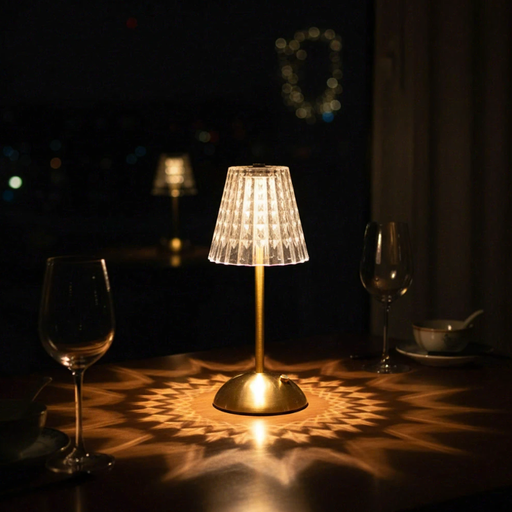
Why it stands out This model blends a retro design, inspired by the famous "mushroom" lamps, with modern-day features. Its outstanding versatility makes it an excellent choice for multiple uses, from the living room to a bistro table.
Key features
Who is it for? Ideal for those seeking a versatile ambient lamp for their home (bedroom, living room, office) or for professionals (bars, restaurants) who want to create a warm, customised atmosphere.
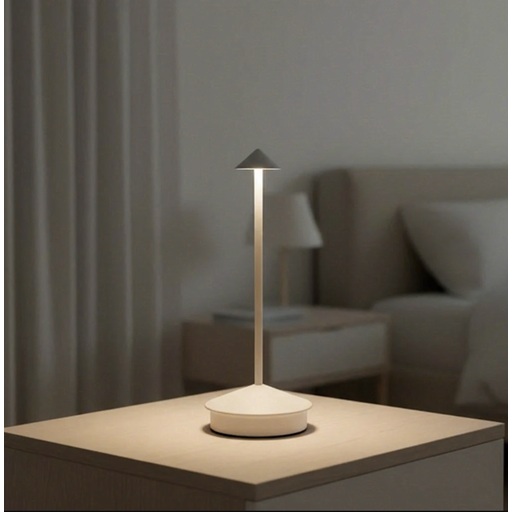
Why it stands out This model focuses on elegance and convenience with its contact charging station. No more plugging in cables?— just place it on the base, and it charges. It's that simple. Its clean, minimalist design will integrate perfectly into contemporary interiors.
Key features
Who is it for? Perfect for those who prioritise ease of use and a modern design. It will find its place on a bedside table, a desk, or an entryway console.
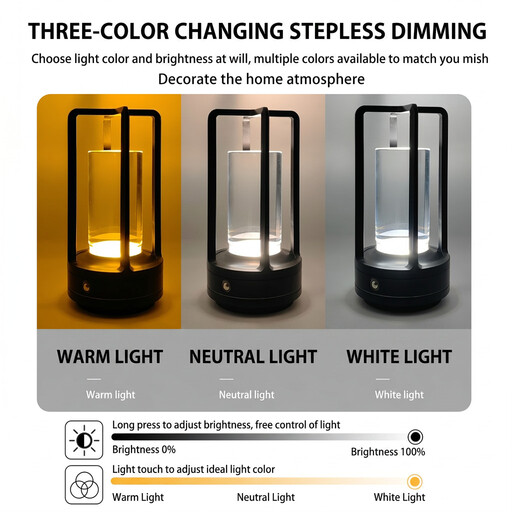
Why it stands out Built for adventure, this lamp is the most durable in our selection. Its robustness and water resistance make it the perfect companion for lighting up your evenings on the balcony, patio, or even while camping.
Key features
Who is it for? For anyone looking for a robust, portable lighting solution that can go anywhere, both indoors and out. It's the smart choice for balconies, gardens, and outdoor excursions.
Good lighting is essential, but it's often the small details that make all the difference. If you're looking to refine your decor with objects that are as functional as they are original, other accessories can transform your space.
For inspiration, take a look at our unique finds, like our collection of super cute office supplies and other decorative gems.
Generally, you can expect between 8 and 20 hours. It all depends on the battery capacity (in mAh) and, most importantly, the light intensity you use. Logically, a soft ambient light will consume far less power than lighting at full brightness.
Absolutely, as long as you choose a model designed for it?! Check for a "water-resistant" label or an IP rating, such as IP44. A golden rule?: never expose a standard indoor lamp to rain or high humidity.
It's very simple?: a sensor is integrated directly into the base or shade. Most often, a quick tap is enough to turn it on, off, or change the light colour. To adjust the intensity (the well-known dimming feature), simply hold your finger on the touch-sensitive area to vary the brightness.