
Livraison le jour même ou le lendemain

Qualité garantie

Débloquez vos offres de bienvenue: Livraison GRATUITE | Jusqu'à -80 % | 30 jours d'essai gratuits à JoyPlus
Téléchargez l'application
The wireless speaker market is a veritable jungle, filled with tempting promises. Between inflated power figures and vague waterproof claims, it's easy to get lost and end up with buyer's remorse. Too many users find themselves with a device that doesn't meet their needs at all. To help you see more clearly, let's break down the common pitfalls to avoid and the real criteria to watch for before you buy.
Instead of relying on marketing slogans, focus on a few objective technical specifications to make an informed choice.
RMS (Root Mean Square) power is the only reliable measure of the power a speaker can deliver continuously. For a living room or office, 20 to 50W RMS is more than enough. To power a party or if you're looking for a speaker with powerful bass, aim higher. But sound quality isn't just about watts: the presence of dedicated drivers for highs (tweeters) and lows (woofers) guarantees a clearer, richer sound than a speaker with a single full-range driver.
An essential criterion if you plan to use your speaker outdoors, in a bathroom, or by the pool.
Rather than an endless catalogue, here is our selection of models that meet specific needs, applying the criteria we've just discussed.
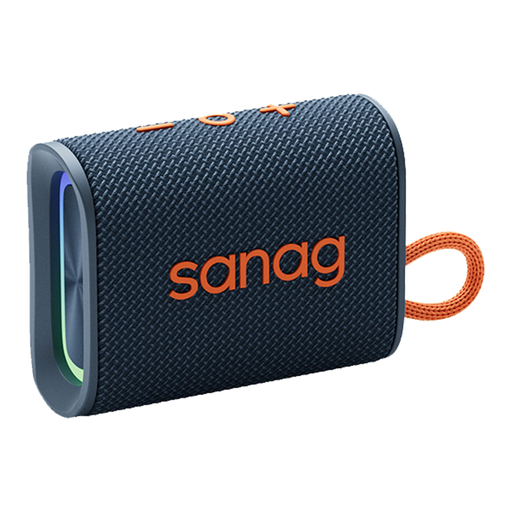
Why we chose it: Perfect for those who want to take their music everywhere, from hiking trails to the poolside. Its compact size and rugged build make it a reliable travel companion that won't break the bank.
This model boasts a clear IPX7 certification, guaranteeing resistance to temporary immersion. No more stress about rain or accidental drops in the water, unlike products that merely claim to be "water-resistant".
Its braided fabric cover ensures a good grip and enhanced durability. The RGB lights add a touch of ambiance for evening gatherings outdoors.
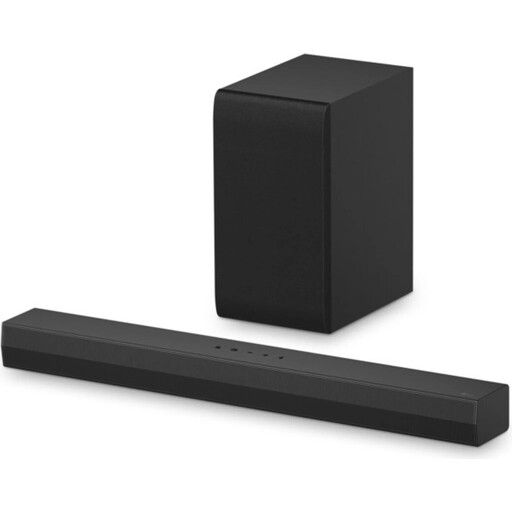
Why we chose it: For anyone tired of their TV's flat, lifeless sound. This solution transforms the viewing experience for films and series, delivering clearer dialogue and deep bass without the clutter of a full home theatre system.
It avoids the connectivity trap with its HDMI ARC port, which lets you control the volume with your TV remote and ensures perfect synchronisation. The wireless subwoofer simplifies setup and delivers a powerful bass presence.
The 2.1 format (two channels + subwoofer) creates a much wider soundstage than a standard speaker. The total power of 300W is clearly distributed, with 200W dedicated to the subwoofer for real impact in action scenes.
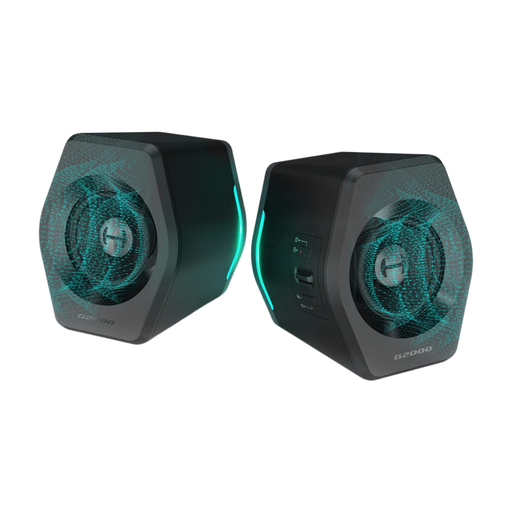
Why we chose it: Designed for PC gamers who want immersive sound without necessarily wearing a headset. Their compact form factor fits easily on a desk, and their features are tailor-made for gaming.
These speakers avoid the raw power trap by focusing on what's essential for gaming: sound quality and spatialization. The DSP with virtual 7.1 surround sound processing provides a tactical advantage for locating enemies, something a standard portable speaker can't do.
Their triple connectivity (USB, Bluetooth 5.3, AUX) makes them ultra-versatile for PC, Mac, or consoles. The customisable RGB lighting effects allow them to match any setup.
Discover our full selection of products that meet our selection criteria and current safety standards.
Its longevity primarily depends on the battery and build quality. For a portable Bluetooth speaker, the lithium-ion battery will start to degrade after 3 to 5 years (or 500 to 1,000 charge cycles). To preserve it, avoid full discharges and extreme temperatures. Stationary speakers (soundbars, Hi-Fi speakers) that remain plugged in have a much longer lifespan, with their main enemy being technological obsolescence (new connectivity standards, etc.).
In theory, yes, but the details matter. A Bluetooth connection is the most universal, but it can introduce slight latency (a delay between the audio and video), which quickly becomes annoying. For a TV soundbar, an HDMI ARC connection remains the best solution: it transmits lossless audio and lets you control the volume with your TV's remote. The alternative, an optical connection, also offers excellent quality. Check the available ports on your TV before you buy.
Not always. The price reflects a combination of factors: material quality, power, R&D, and extra features (multi-room, HD codecs, etc.). However, there's no need to spend €500 on a Hi-Fi speaker just to listen to podcasts in your kitchen. The key is to choose a speaker suited to your primary use case. A €100 pair of PC gaming speakers will offer a much better gaming experience than a €200 portable speaker, simply because it was designed for that purpose.