
Livraison le jour même ou le lendemain

Qualité garantie

Débloquez vos offres de bienvenue: Livraison GRATUITE | Jusqu'à -80 % | 30 jours d'essai gratuits à JoyPlus
Téléchargez l'application
By the Joybuy Team, Your Product ExpertsPublished: July 22, 2026
Securing your home shouldn't mean complex wiring or soaring electricity bills. The wireless solar security camera is the ideal solution, both convenient and self-sufficient, for keeping an eye on your property. Whether you want to monitor the entrance to your apartment, your garden, or a remote second home, the absence of power and network cables makes installation a breeze.
With an ever-growing market, it can be tough to navigate the options. This guide breaks down the essential criteria and presents a selection of models for every scenario, helping you make the best choice for your home security.
Before diving into specific models, it's helpful to understand the features that will make a daily difference. Here are some key points to guide your decision.
Connectivity is the first decision to make, as it determines where you can place your camera.
A clear image is essential to identify what's happening. Resolution is a key indicator:
Color night vision is also an increasingly popular feature. Unlike traditional black-and-white infrared vision, it uses more sensitive light sensors and sometimes a small spotlight to render full-color images even in the dark, which is a game-changer for identification.
To avoid being flooded with unnecessary notifications (triggered by animals or moving branches), person detection or vehicle detection powered by artificial intelligence is a crucial feature. The camera analyzes movement and only alerts you when it's relevant.
Other features like a built-in alarm (siren and/or flashing light) and two-way audio (speak and listen through the camera) provide active deterrence and remote interaction.
Also, consider the storage options:
Here are a few models that stand out from the crowd, selected for their technical specs and suitability for different use cases.
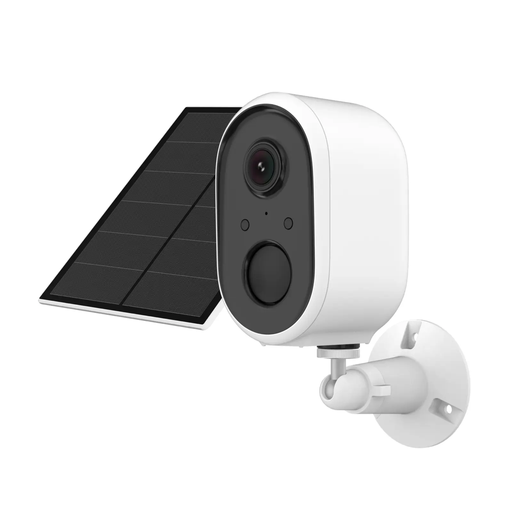
Why It Stands Out: This camera is notable for its integration into the TUYA (Smart Life) ecosystem, one of the world's most popular smart home platforms. It combines a sharp 2K resolution, color night vision, and active deterrence with its sound and light alarm. It's a comprehensive solution for those looking to integrate their security into an existing smart home setup.
Highlights:
Who Is It For? For users looking for a high-performance and affordable wireless outdoor IP camera that integrates seamlessly into a TUYA, Alexa, or Google Assistant-based smart home environment.
See details for the Goldsmart camera
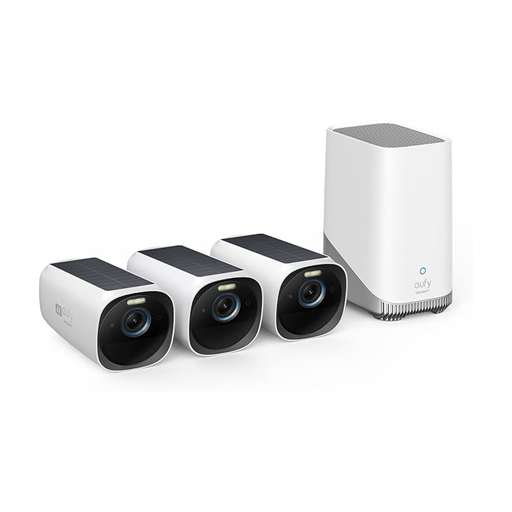
Why It Stands Out: The eufyCam 3 sets a high bar with its 4K resolution and a solar panel integrated directly into its housing. Its main advantage is its BionicMind AI, which enables facial recognition to distinguish family members from strangers. It also shines with its expandable local storage of up to 16 TB via its HomeBase 3, all without a subscription.
Highlights:
Who Is It For? For demanding homeowners who prioritize superior image quality, advanced smart features, and a private storage solution without relying on the cloud.
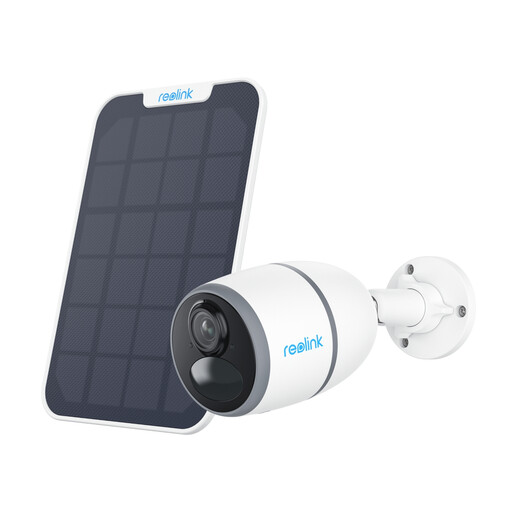
Why It Stands Out: The Reolink Go G330 is the solution for off-grid areas. Operating on 4G/3G mobile networks, this solar-powered battery camera is completely self-sufficient. It needs neither Wi-Fi nor a power outlet. Its 2K+ resolution and smart detection of people and vehicles make it a reliable guardian for the most remote locations.
Highlights:
Who Is It For? For owners of second homes, boats, camper vans, or for monitoring construction sites, barns, or remote properties where Wi-Fi is not an option.
This selection is, of course, just a glimpse of the possibilities offered by solar cameras. Since every situation is unique, your needs may require different features.
To explore a wider range, including our solar-powered 4G security camera models, feel free to browse our full category.
Battery life depends on several factors: the direct sunlight the solar panel receives (a few hours per day are usually enough to maintain the charge), the frequency of motion detections, and the duration of recordings. The solar panel provides a trickle charge. It is therefore recommended to fully charge the battery via USB before the first installation to start off on the right foot.
No, one of the main advantages of these cameras is their ease of installation. It usually just involves mounting the camera and solar panel bracket to a wall or post, then following the mobile app's instructions to connect it to the network (Wi-Fi or 4G). The lack of electrical wiring eliminates the most complex part of the job.
Not necessarily. Most of the models featured here, and many others on the market, offer local storage on a microSD card. Models like the eufyCam 3 use a base station with a hard drive. These solutions allow you to keep your recordings without monthly fees. Cloud storage is often offered as a paid option for those who want an extra backup of their data.