
Livraison le jour même ou le lendemain

Qualité garantie

Débloquez vos offres de bienvenue: Livraison GRATUITE | Jusqu'à -80 % | 30 jours d'essai gratuits à JoyPlus
Téléchargez l'application
A wireless smoke detector saves you from having to run cables and can be installed in a flat, house, office or small commercial space. But product listings sometimes pile up promises that are hard to compare: claimed battery life, sound output, Wi-Fi connectivity or regulatory compliance. To make the right choice, it's best to separate the truly useful features from the more optional extras.
A smoke detector advertised as lasting 10 years reduces the need for battery changes, but it won't work without a little care. The test button should be used regularly and the casing dusted. Some models come with a sealed battery, while others use a replaceable one. This difference has a direct impact on cost and upkeep over time.
A Wi-Fi smoke detector can send a notification to your smartphone, but it depends on your wireless network, the app and sometimes a user account. Check compatibility with 2.4 GHz Wi-Fi, the presence of a test button, and how the alarm behaves if the internet goes down. The local alarm must still work even when your phone isn't connected.
The EN 14604 standard covers smoke alarm devices for homes. Before ordering, make sure compliance is clearly stated on the product page and that the manufacturer's or EU responsible party's contact details are accessible. A simple marketing mention doesn't replace checking the documentation or installation instructions.
A photoelectric smoke detector uses an optical sensor to detect smoke particles. It's generally suitable for hallways, bedrooms and living areas, provided you follow the manufacturer's recommendations. Avoid areas directly exposed to steam, cooking fumes, dust or strong draughts to reduce false alarms.
In France, the detector should normally be installed on the ceiling, in the circulation areas leading to bedrooms, taking into account the layout of your home. As a precaution, plan for at least one device per floor and follow the instructions in the manual.
An interconnectable smoke detector communicates with other compatible devices. When one detector goes off, the others can sound too. This feature is especially useful in a house with multiple floors or a long, narrow home, where an alarm from just one room might not be loud enough.
Radio linking between detectors should not be confused with Wi-Fi. A radio-interconnectable model can work without a router or app. Conversely, an app-controlled smoke detector lets you receive an alert remotely, but requires network setup and software updates.
An 85 dB smoke detector produces a powerful alarm, according to the stated specifications. The indicated level should be interpreted taking into account the measurement distance, often three metres. The silence button can temporarily stop a non-urgent alarm, but it should never be used to permanently disable protection.
To compare battery life, check whether the battery is:
The models below are grouped by different uses. The features mentioned correspond to the information available on the product pages.
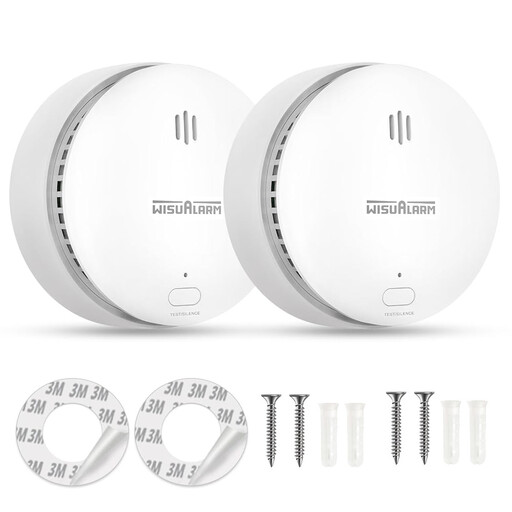
Why this choice suits this profile: The pack of two devices is ideal for a flat or small home that needs several detection points. Installation is said to be straightforward and the controls remain easy to access.
The listing advertises a 10-year battery, a test/silence button and EN 14604 compliance, rather than relying solely on a connected alert.
Claimed optical detection, alarm above 85 dB at three metres and fixing accessories included, according to the product page.
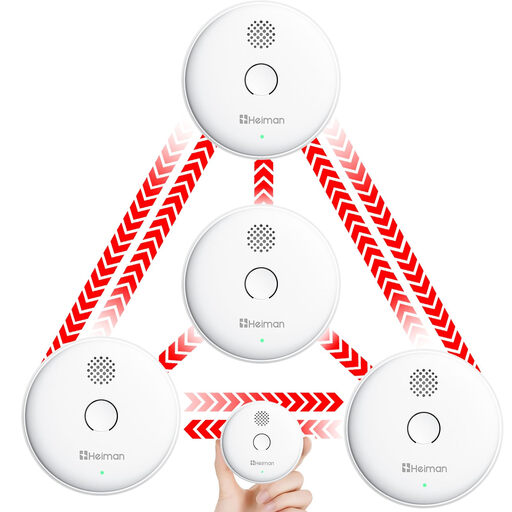
Why this choice suits this profile: The pack of four devices is aimed at houses with several rooms or floors, where radio interconnection offers a real advantage over a standalone alarm.
The claimed radio link avoids relying on a Wi-Fi connection, while the listing mentions up to 40 interconnectable alarms.
Claimed 10-year battery, 85 dB alarm, silence button and EN 14604 compliance stated by the manufacturer.
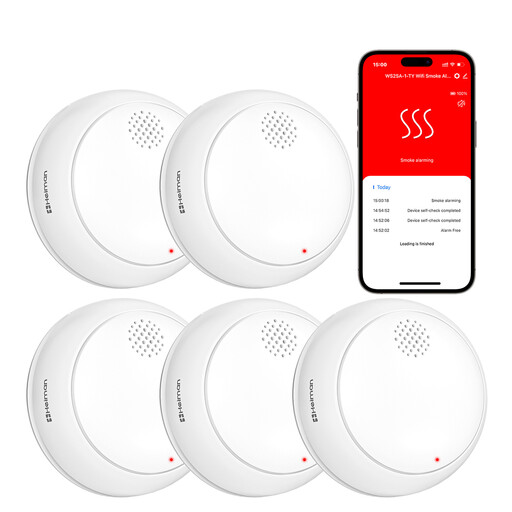
Why this choice suits this profile: The pack of five could suit a large home, a property manager or someone who wants to monitor several areas from an app.
The listing mentions a replaceable battery and alerts sent via the app. However, check compatibility with a 2.4 GHz Wi-Fi network before buying.
Claimed remote notifications, 85 dB alarm, silence button and EN 14604 reference stated in the description.
We've put together a comprehensive, real-time updated selection of products that meet these strict selection criteria and European safety regulations.
Before fitting, read the manual and check the contents of the kit. The ceiling is generally preferred, away from walls and corners as per the manufacturer's recommendations. Avoid the kitchen, bathroom and areas exposed to steam. After installation:
For a commercial space or multiple homes, keep the manuals, references and replacement dates to make it easier to manage the installed units.
Yes, a standalone or radio-interconnectable model can work without Wi-Fi. This connection is mainly used to send notifications to an app. In all cases, the local audible alarm depends on the power supply and the detector being in good working order.
It depends on the model. Some claim a 10-year battery, while others use a replaceable battery or have a shorter battery life. The date to remember is the one stated by the manufacturer in the manual. A device should also be replaced if it fails the test, is damaged or shows irregular behaviour.
A model with a sealed battery limits the need to buy new batteries, but means replacing the whole device at the end of its claimed lifespan. A model with a replaceable battery may require a regular maintenance budget. So compare the pack price, the number of rooms to equip and the type of power supply, rather than just looking at the single listed price.