
Livraison le jour même ou le lendemain

Qualité garantie

Débloquez vos offres de bienvenue: Livraison GRATUITE | Jusqu'à -80 % | 30 jours d'essai gratuits à JoyPlus
Téléchargez l'application
Having a flawless lawn is great. Achieving it without the chore is even better. The promise of a wireless robotic mower is tempting: a perfect lawn, effortlessly, and above all, without the tedious installation of a perimeter wire. But be warned, the market is flooded with models offering widely varying performance. Before you take the plunge, it's crucial to understand the marketing traps that can turn this dream of autonomy into a real nightmare.
As a product expert for Joybuy, my mission is to help you see things more clearly. I'll break down the red flags and technical features that truly make the difference for a successful purchase.
To make the right choice, focus on these key technical criteria that signify the true performance of a robotic mower.
Navigation accuracy is the heart of the matter for a good wireless perimeter robotic mower. The most advanced technologies combine several systems for maximum reliability:
The specified mowing area is essential data. For a large garden, a 1500m2 robotic mower is the minimum. But surface area isn't everything. Check two additional elements:
A modern robotic mower should be more than just a tool; it should integrate into your daily life. An Alexa-connected mower or Google Home allows you to start or stop mowing with a simple voice command. The mobile app should be intuitive and offer useful features like custom scheduling, remote cutting height adjustment, and the creation of no-go zones. The inclusion of a robotic mower with a garage is also a real plus, protecting the device from the elements and extending its lifespan.
To help you see how these criteria apply in practice, here is a selection of models suited to different user profiles.
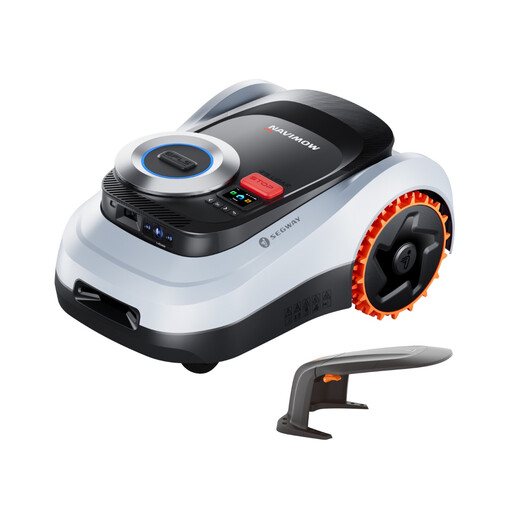
The user profile: Perfect for owners of large gardens (up to 1500 m?) dotted with obstacles: slopes, trees, flowerbeds... The ideal customer here is looking for a "zero-hassle" solution, with no compromises on precision and performance.
It shatters the "fake" wireless concept: no antenna or beacons to install. Its LiDAR + Vision fusion technology ensures surgical navigation that misses no areas and avoids collisions. Its all-terrain wheels and high-torque motor tackle slopes up to 45% without breaking a sweat.
LiDAR + Vision Navigation: Centimetre-level precision and flawless obstacle detection. Slope Performance: Masters 45% inclines thanks to its dedicated wheels and traction control. Garage included.
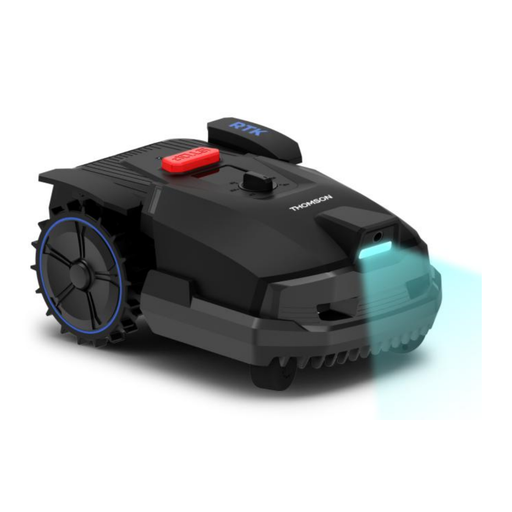
The user profile: The right compromise for gardens up to 800 m?. This robot is for those who want a fair balance between smart features and simple installation, without needing to tackle extreme slopes.
This model offers a true wireless experience thanks to its RTK navigation paired with an AI camera, which avoids the pitfall of complex installations. The camera ensures intelligent obstacle detection, thus limiting the risk of it getting stuck.
Integrated AI Camera: For smart navigation and obstacle detection. App-based control: Full management (Wi-Fi/Bluetooth) from a smartphone with the MowMate app.
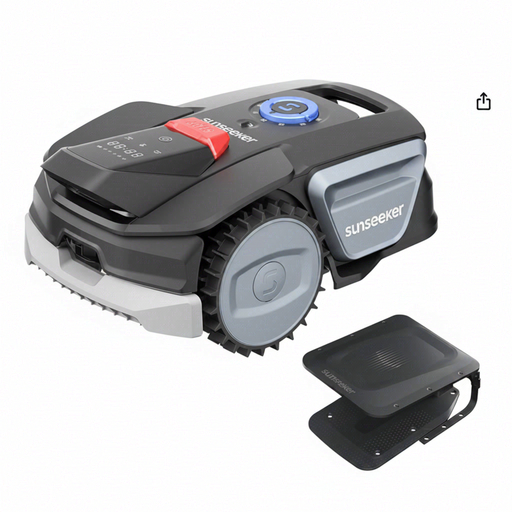
The user profile: Ideal for owners of small gardens (up to 300 m?) looking for a simple, effective, and 100% automated entry-level solution, without getting bogged down in technical details.
It makes wireless technology accessible for smaller areas. Its AI vision navigation and "One-Click Mowing" feature eliminate any complexity in both setup and use, while ensuring sufficient obstacle avoidance for simple gardens.
Ease of use: Designed for quick setup and intuitive control via the app. Garage included: A rare advantage in this price segment, which future-proofs your investment.
We have curated a complete selection of products that meet our high standards and current safety regulations.
Yes, for models equipped with advanced navigation technologies (LiDAR, camera vision...). Installation boils down to plugging in the charging station, turning on the robot, and starting the initial mapping from the app. The robot then travels along the edges of your lawn to memorise the perimeter, an operation that only takes a few minutes.
Yes, most high-end smart models can. Via the app, you can define multiple mowing "zones". To move from one zone to another if they are not connected, you will just need to move the robot manually. Some models even allow you to create "channels" on the map so the robot can cross a path and reach another zone autonomously.
The lifespan of the blades depends on the frequency of use, the type of grass, and the presence of debris (twigs, pinecones). On average, for regular use during the season, it is advisable to change the blades every 2 to 3 months. This is the secret to ensuring a clean cut that doesn't damage the grass. Rest assured, it's a very simple and inexpensive task.