
Livraison le jour même ou le lendemain

Qualité garantie

Débloquez vos offres de bienvenue: Livraison GRATUITE | Jusqu'à -80 % | 30 jours d'essai gratuits à JoyPlus
Téléchargez l'application
Maintaining a large lawn quickly becomes a chore. The promise of 100% autonomous mowing is certainly appealing, but the idea of installing a perimeter wire over hundreds of metres—especially in a complex garden full of flowerbeds, trees, and slopes—remains a real deal-breaker. This is where the wireless robotic lawnmower enters the picture as the obvious solution.
The problem: the market is flooded with marketing jargon like "AI," "smart navigation," or "all-terrain performance" that creates confusion. Our mission is to help you decode these spec sheets to make a truly informed decision. Here are the most common pitfalls to avoid and the criteria that really matter.
To ensure truly autonomous and stress-free mowing, two technical criteria are non-negotiable. This is what distinguishes a high-tech gadget from a true ally for your garden.
The absence of a perimeter wire requires the robot to know its precise location. The most advanced technologies are:
Rather than an exhaustive list, here are options that cater to specific user profiles, based on the performance and reliability criteria we've just discussed.
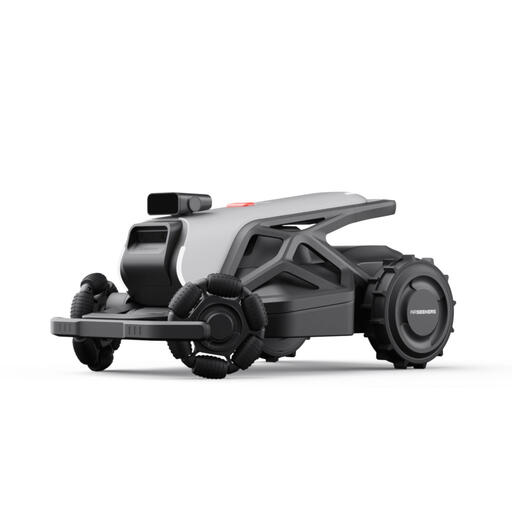
Why it stands out: Ideal for very large lawns (up to 1800 m?) and steep slopes. This is a model built for the toughest conditions, without ever sacrificing mowing quality.
It combines RTK navigation with AI vision, avoiding the pitfall of relying on a single signal. Its advertised capacity for slopes up to 65% is backed by powerful motors and a robust design, countering the pitfall of overestimated performance.
Covers a very large area (1800 m?) and handles extreme slopes (up to 65%). 3-in-1 mowing system (mowing, mulching, fertilising) for a healthier lawn.
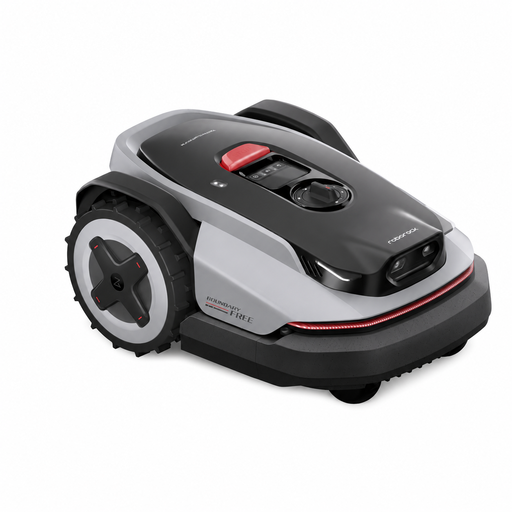
Why it stands out: The perfect balance for gardens up to 1000 m?. It incorporates the navigation expertise from a leading brand in autonomous robots, delivering a solution that is as reliable as it is powerful.
Its dual NetRTK + VSLAM navigation technology provides redundancy that protects it against signal loss (pitfall #3). The stereoscopic vision for obstacle avoidance is far more advanced than simple contact sensors (pitfall #1).
Highly reliable hybrid navigation and intelligent obstacle avoidance. Capable of handling slopes up to 45% and clearing 4 cm obstacles, making it versatile for most gardens.
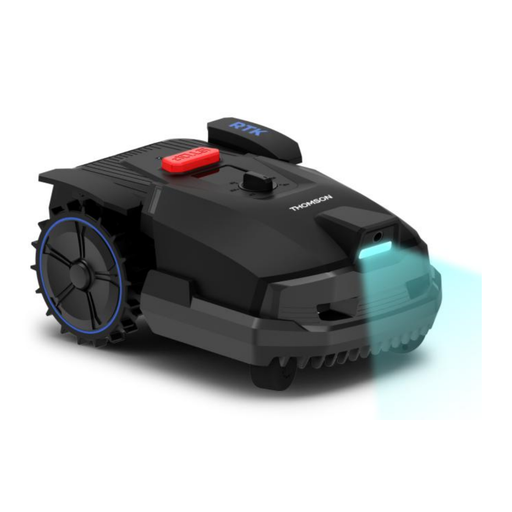
Why it stands out: The ideal entry point to wireless mowing for medium-sized gardens (up to 800 m?). It packs the essentials of a modern connected mower, without the extreme specifications (and price tag) of models for very large areas.
By integrating RTK navigation and an AI camera, it avoids the random navigation of pitfall #1. It offers cutting-edge technology suited for a reasonable area, providing a much better performance-to-price ratio than a low-end "pseudo-smart" model.
Simplified wireless installation and full control via the MowMate app. The automatic return to base and rain sensor make it a truly autonomous solution for standard-sized gardens.
For a flawless lawn all year round with zero effort, artificial turf is an increasingly popular alternative. Discover our selection of realistic and durable models, designed for a natural look.
The lifespan of a cable-free robot mower primarily depends on its maintenance. Generally, you can expect a lifespan of 7 to 10 years. The component under the most stress is the battery, which typically lasts 3 to 5 years before its capacity begins to diminish. It is designed to be replaceable. The motors, often brushless on these models, are very durable. Regular maintenance (cleaning, blade replacement, dry winter storage) is the best way to ensure its longevity.
Yes, and the difference is dramatic. The most tedious step of traditional installation, burying the perimeter wire, is completely eliminated. Installing an RTK model usually comes down to:
Most recent models are waterproof and designed to withstand the elements, with water protection ratings like IPX5 (protected against water jets) or IPX6 (protected against powerful water jets). They can therefore technically mow in the rain. However, most are also equipped with a rain sensor. When this sensor detects a shower, it instructs the robot to return to its charging base. This prevents poor quality mowing on wet grass (clogging, wheel ruts) and helps keep the robot clean. This feature is usually customisable via the app.