
Livraison le jour même ou le lendemain

Qualité garantie

Débloquez vos offres de bienvenue: Livraison GRATUITE | Jusqu'à -80 % | 30 jours d'essai gratuits à JoyPlus
Téléchargez l'application
Looking after a lawn, hedge, vegetable patch or a few plants on a balcony doesn’t mean turning your garden shed into a warehouse. However, the wrong equipment can quickly become bulky, awkward to use or expensive to replace. When choosing the right garden tools and accessories, it’s best to start with how you’ll actually use them, the space you have available and your storage needs, rather than relying on the advertised power alone.
For cordless garden tools, voltage, battery capacity and the type of work you’re doing are closely linked. A cordless brushcutter with a high advertised speed may tackle dense grass, but its battery life will also depend on the vegetation, the blade you use and how often you stop.
Before placing your order, check:
A powerful tool that’s heavy or poorly balanced could end up at the back of the garage. With a cordless brushcutter, a telescopic handle, adjustable head or wheels can make ground-level work much more comfortable. For a telescopic hedge trimmer, also check the overall length, weight and whether it comes with a shoulder strap.
The advertised reach never removes the need to take care. When cutting branches overhead, work from stable ground, wear safety glasses and follow the manufacturer’s instructions.
An expandable hose, garden greenhouse or raised garden bed may look compact on a product page. Once extended or filled, however, it can significantly change the layout of a balcony or patio. Measure the space available, make sure you can still reach the tap and check how the item should be stored over winter.
Corded electric tools provide a continuous power supply, but you’ll need a suitable socket and extension lead. An electric tiller, for example, requires you to plan the cable route carefully around your vegetable patch. Cordless models make it easier to move around, provided they offer enough battery life.
For an electric grass trimmer or small hedge trimmer, also check:
A wider working width lets you cover more ground, but can make it harder to manoeuvre between plants. The Outsunny electric tiller featured in this selection has a working width of 40 cm, a depth of 20 cm and six 65Mn steel blades. These specifications make it suitable for preparing small plots, although the type of soil will directly affect how easily it moves through the ground.
For hedge maintenance, compare the blade length and tooth spacing. A 45 to 51 cm blade can suit many types of hedge. However, make sure the stated cutting capacity matches the diameter of the branches you plan to trim.
When choosing growing accessories, the material alone won’t tell you how easy they are to use. A raised garden bed needs effective drainage, a stable structure and dimensions that suit the amount of soil required. A planter with trellis should also be weighted down or secured if it’s exposed to the wind.
For a support for climbing plants or a garden greenhouse, check:
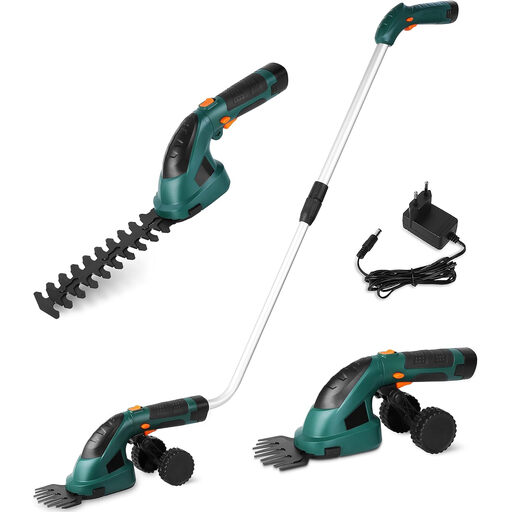
Why it suits this type of user : This compact tool combines grass shears and a hedge trimmer, with an adjustable pole measuring 45 to 80 cm. It’s ideal for small areas, lawn edges and shrubs around the house or patio.
Its compact design takes up less space, while the quick-change blade means you don’t need to buy two separate tools for light gardening jobs.
Rechargeable 7.2 V battery, up to 30 minutes’ stated battery life and a head that pivots through 90 degrees.
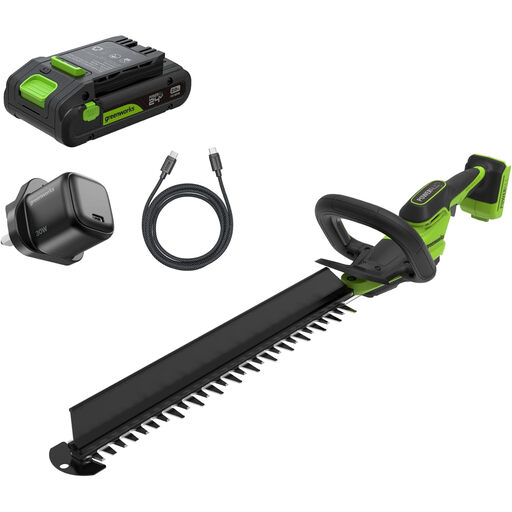
Why it suits this type of user : This cordless hedge trimmer is aimed at users looking for a branded tool with a 51 cm blade and a dedicated battery platform for regular hedge maintenance.
The battery and charger are included, so there’s no need to add them separately to your basket before getting started.
Brushless motor, 51 cm dual-action blade, stated cutting capacity of 28 mm and USB-C charger.
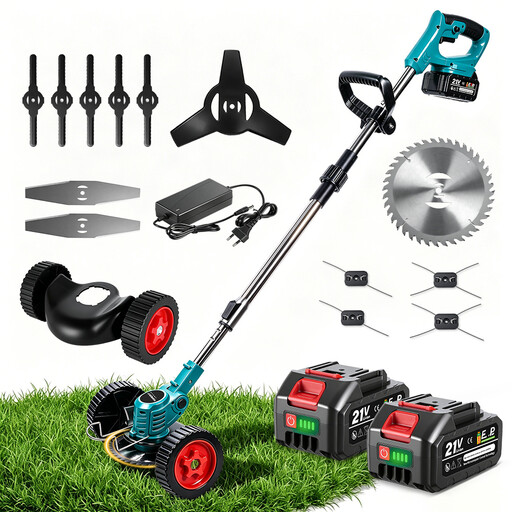
Why it suits this type of user : This cordless brushcutter is designed for gardens overrun with thick grass, weeds or hard-to-reach vegetation. Its telescopic handle and wheels can make longer sessions more manageable.
The six included cutting attachments let you adapt the tool for soft grass, long grass or certain shrubs, provided you follow the instructions.
Stated 600 W motor running at 12,000 rpm, two 4.0 Ah batteries, handle adjustable from 100 to 135 cm and a head that pivots through 180 degrees.
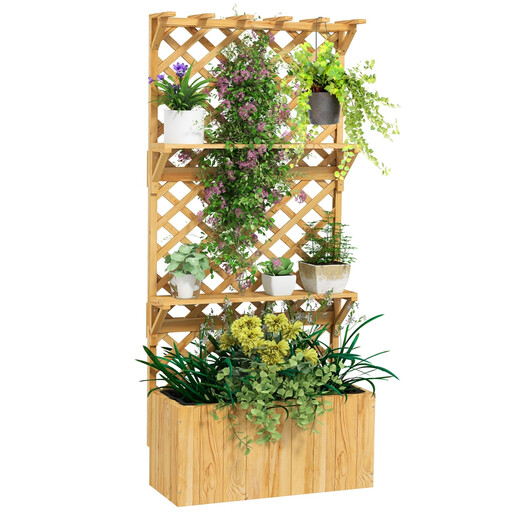
Why it suits this type of user : This planter with trellis makes use of vertical space, so you can grow plants on a balcony, patio or in a courtyard without fitting a structure to the wall.
The drainage holes and inner lining help prevent water from collecting, an issue that’s often overlooked with raised planters.
Integrated trellis, two shelves, stated load capacity of 50 kg for the planter and dimensions of 76 × 33 × 177 cm.
An expandable garden hose can be especially handy on a balcony or in a garden where every centimetre of storage space matters. The model featured extends to 30 or 45 m and comes with 3/4 and 1/2-inch brass connectors and a shower nozzle with ten spray patterns. Before choosing one, measure the distance you need to cover and check that the connector will fit your tap.
For climbing plants, an adjustable metal arch or freestanding support can guide roses, tomatoes, cucumbers and vines as they grow. Secure anchoring is essential, particularly in windy areas. A garden greenhouse also needs to be properly secured; pegs designed for polytunnels can help hold the cover or netting in place.
Start with the essentials: trimming lawn edges, watering and growing plants in pots. Cordless shears, an expandable hose and a planter with trellis will generally take up less space than large powered equipment.
Remove the battery before cleaning the tool, clear away debris after each use and store it somewhere dry. Follow the care instructions in the manual for the blades. Don’t use the tool in conditions it wasn’t designed for, including in the rain if the manufacturer doesn’t recommend it.
It depends on the motor’s power and how long you use it. A 1,500 W model theoretically uses 1.5 kWh for each hour of continuous operation. In practice, you’ll often take breaks and move the tiller between areas. To estimate the cost, multiply the power in kilowatts by the time you use it, then multiply that figure by the rate set out in your electricity tariff.