
Livraison le jour même ou le lendemain

Qualité garantie

Débloquez vos offres de bienvenue: Livraison GRATUITE | Jusqu'à -80 % | 30 jours d'essai gratuits à JoyPlus
Téléchargez l'application
By our high-tech experts, August 27, 2026
Upgrading your car with the latest driving technology can quickly become an expensive headache. However, adding a wireless portable CarPlay screen is a simple and affordable way to enjoy GPS, stream your music, and make hands-free calls without replacing your entire car stereo.
The problem? The market is flooded with products that make tempting promises but often hide deal-breaking flaws. To avoid buyer's remorse, you need to learn how to spot the most common traps.
Too many drivers regret their purchase, disappointed by over-hyped features or simple design flaws. Here are the three most common issues:
To ensure you invest in a reliable, high-performance device, here are the technical specifications you should never compromise on.
The smoothness of your experience depends on the quality of the connection between your smartphone and the screen.
The visual interface is at the core of the user experience. Do not compromise on this point.
One of the main advantages of this portable car stereo is its simplicity.
Here are a few recommended options, selected for their quality and their ability to avoid the aforementioned pitfalls.
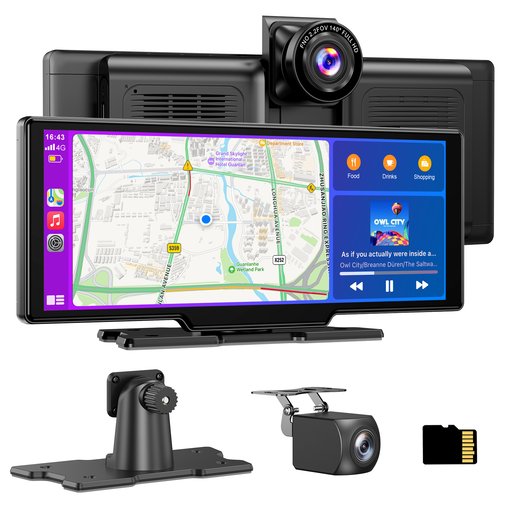
Why it's a great choice: This device combines all the essential features into a single package: a large 10.26-inch screen, wireless CarPlay and Android Auto, a 4K front dashcam, and a 1080p backup camera. It's the perfect solution for those who want to upgrade everything in one go.
It bypasses the connectivity issue with dual-band Wi-Fi and a stable Bluetooth chip. The screen resolution (1600x600) and 4K dashcam are verifiable technical specs that guarantee impeccable quality, a far cry from vague promises.
The easy installation is a major advantage. Its biggest plus? It comes with a 64 GB memory card, making it ready to use right out of the box with no extra purchases required.
Why it's a great choice: For those who want to modernize their vehicle without breaking the bank, this device offers an unbeatable features-to-price ratio. It's far more cost-effective than a full replacement of an integrated head unit, which can easily cost over a thousand dollars, including installation.
It avoids the trap of hidden costs. Unlike an integrated car stereo that often requires adapters, specific faceplates, and a professional installer, this model is a single, all-inclusive solution with no additional fees.
It provides a complete upgrade (navigation, media, safety) for a fraction of the cost of a permanent installation, while also being transferable from one vehicle to another.
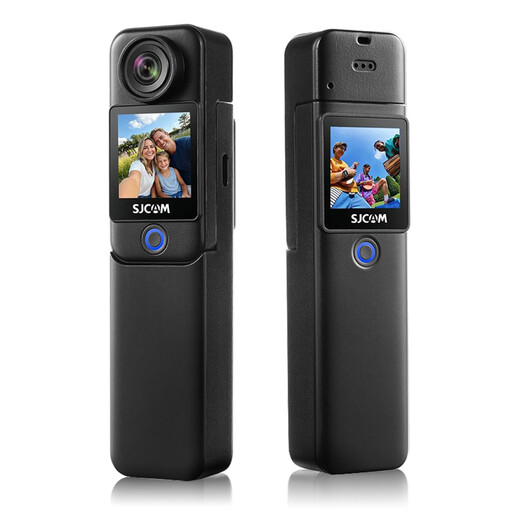
Why it's a great choice: For drivers who already have a navigation solution but are primarily looking for a high-performance, reliable dashcam. This user profile prioritizes video recording quality, which is essential for security or as evidence in case of an accident.
It avoids the trap of "jack-of-all-trades" devices, which are often mediocre in every area. Instead of a subpar camera integrated into another system, this is a dedicated action camera built for video performance, complete with advanced image stabilization.
It includes driving-specific features like "car mode" and loop recording. Its 6-axis gyroscopic stabilization ensures smooth, usable footage, even on bumpy roads.
We have curated a full range of products that meet our strict selection criteria.
Yes, in the vast majority of cases. The compatibility of these devices is nearly universal because they don't depend on the vehicle's original multimedia system. The only requirement is a functional cigarette lighter socket (usually 12V or 24V) to power the screen.
FM transmission is a convenient solution, but it can be prone to interference, especially in dense urban areas where radio frequencies are saturated. For significantly better sound quality, it is recommended to use the auxiliary output (AUX cable) to connect the screen directly to your car stereo's input. If your car stereo supports it, connecting audio via Bluetooth is also an excellent alternative.
Yes, easy installation is one of the main selling points. The process typically involves attaching the mount to the dashboard, securing the screen to it, and plugging in the power cable. Installing the backup camera requires a bit more effort to route the cable discreetly to the rear of the vehicle, but the main unit is operational in under five minutes.