
Livraison le jour même ou le lendemain

Qualité garantie

Débloquez vos offres de bienvenue: Livraison GRATUITE | Jusqu'à -80 % | 30 jours d'essai gratuits à JoyPlus
Téléchargez l'application
Protecting your home is a top priority. To that end, the wireless outdoor security camera stands out as a simple and effective solution. However, the market is flooded with models making tempting promises that sometimes hide critical flaws. As a product expert for Joybuy, my role is to help you decipher technical specifications to make a truly informed choice—one tailored to your actual needs, not the siren song of marketing.
Before you dive in, let's review the three most common pitfalls that can turn a sound investment into a source of frustration.
To avoid these disappointments, it's best to focus on a few objective technical specifications. They are the true arbiters of the performance and durability of your future home security system.
This rating is crucial for a device meant to stay outdoors. It consists of two digits: the first indicates protection against solids (dust), and the second against liquids (rain).
High resolution is useless if the sensor is poor quality. The goal is to be able to identify specific details (a face, a license plate).
This is the crucial factor in determining if your camera will truly be a subscription-free camera.
Rather than a random list, here are a few models that meet specific needs, based on the criteria we've just reviewed.
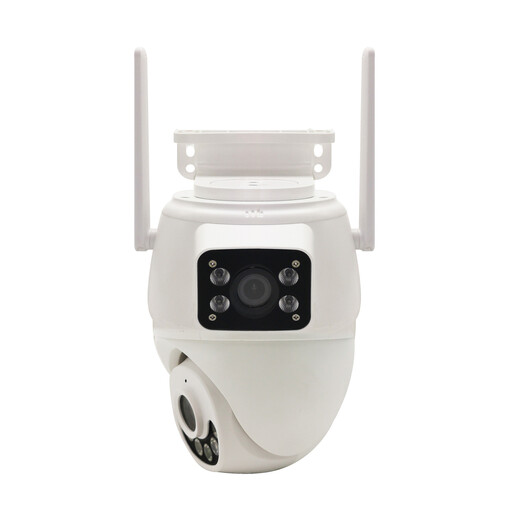
Why we chose it: Perfect for those looking for a complete, budget-friendly solution. It ensures wide coverage thanks to its motorised pan-and-tilt function and detailed image quality from its dual sensor, all ready to use right out of the box.
It bypasses the partial "subscription-free" trap by including a 16GB SD card. This gives you functional local storage from the very first minute, with no hidden fees to record alerts.
Its outdoor PTZ camera (pan-tilt-zoom) function allows it to scan a 355° angle and monitor a vast area with a single device. The colour night vision up to 30 metres is a real asset in this price range.
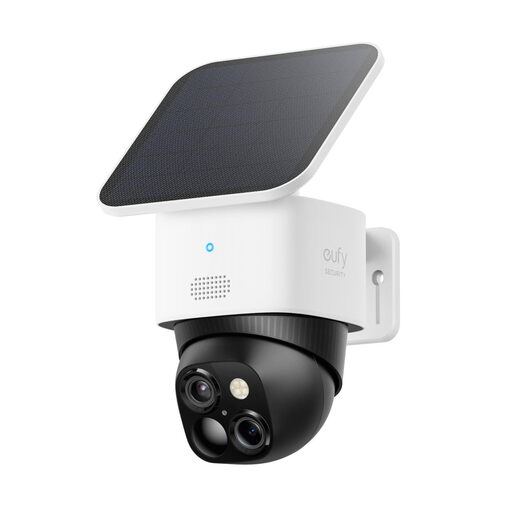
Why we chose it: For those who want absolute peace of mind with minimal maintenance. Its solar power, 360° vision, and 3K resolution make it a powerfully effective "set it and forget it" solution.
It tackles the overstated battery life trap head-on. Its integrated solar panel provides continuous power, ending the chore of recharging and ensuring uninterrupted operation.
The combination of a 360° security camera and a dual view (simultaneous wide-angle and zoom) leaves no blind spots. Storage is handled locally, with no mandatory subscription.
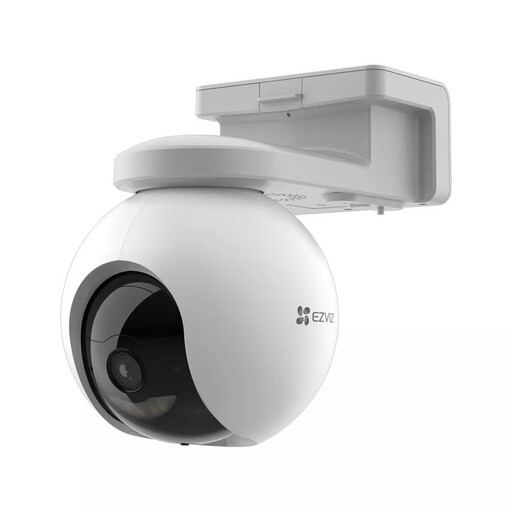
Why we chose it: This is the solution for the most challenging scenarios: a shed at the back of the garden, a distant entrance gate, a construction site, or a second home without an internet router. Its 4G connectivity makes it completely independent of a home Wi-Fi network.
It solves the problem of limited Wi-Fi range, a flaw that is often discovered too late. By relying on the mobile network (via a SIM card and data plan), it ensures a stable connection where all other cameras give up.
Its high-capacity 10,400 mAh battery, combined with a compatible solar panel (sold separately), gives it record-breaking autonomy. The built-in GPS is a real bonus for locating the device if needed.
We have put together a complete selection of products that meet our selection criteria and current security standards.
1. Is it legal to install an outdoor security camera in France? Yes, but under certain conditions. You are allowed to film the interior of your property and its direct access points (front door, private driveway). However, it is strictly forbidden to film public roads or your neighbours' property. If you employ domestic staff, you must inform them of the cameras' presence. For more details, the CNIL website remains the official reference.
2. What is the real battery life of a wireless camera? Battery life varies enormously depending on usage. A camera placed in a high-traffic area that triggers 20 times a day will drain much faster than a model monitoring a quiet corner. Outdoor temperature and Wi-Fi signal strength also have an impact. Keep in mind that the battery life figures advertised by manufacturers are always calculated under ideal conditions. For peace of mind, opt for models with a very large battery or, even better, those equipped with a solar panel.
3. Is a 4K camera really useful for home use? It's not essential, but it's a real plus. A good 2K camera is more than enough to identify a person at a reasonable distance. The main advantage of a 4K outdoor camera is its ability to zoom into the recorded image without sacrificing sharpness. This is particularly useful for reading a license plate from a distance or distinguishing a detail on an intruder. It is therefore a relevant choice if you want to cover an area that is both wide and deep.