Joybuy Insights

How to Choose the Right Wireless Outdoor Security Camera

Securing your home or business shouldn't be a headache. Yet, the market for wireless outdoor security cameras is a jungle of marketing promises that too often lead to purchases you quickly regret. As Joybuy's Head of Product Recommendations, my role is to help you decipher these offers to make the right choice—an informed decision that respects both your needs and your budget.

Before you dive in, let's review the three most common pitfalls that unwary buyers fall into.

  1. The "100% Wire-Free" Myth: A battery-powered camera seems like the easy way out, but the advertised battery life is often calculated under lab conditions. In the real world, frequent foot traffic, low temperatures, or a weak Wi-Fi connection can cut the actual battery life in half, or even by two-thirds, turning recharging into a far too frequent ritual.
  2. The Hidden Costs of "Subscription-Free": Many models boast of being "subscription-free" but actually lock their most interesting features behind a paid plan. Person detection, video storage beyond a few hours, or the creation of activity zones can become inaccessible, turning what seemed like a good deal into a monthly expense.
  3. The Resolution Race: Is a 4K security camera always the best choice? Far from it. High resolution is useless if the sensor is mediocre, night vision is non-existent, or video compression destroys the details. A great 2K camera with powerful colour night vision and good image processing is a much better investment.

Key Criteria for Making the Right Choice

To avoid these disappointments, focus on a few essential technical points that make all the difference in day-to-day performance and convenience.

1. Power Source: Battery, Solar, or Wired?

This is the first criterion, and it determines both the installation and maintenance of your camera.

  • Battery-Powered Outdoor Camera: It offers unbeatable installation flexibility. Ideal for renters or for areas without a nearby power outlet. However, you must keep the constraint of manual recharging in mind. Check the battery capacity (in mAh) and, most importantly, read user reviews about the observed battery life in real-world conditions.
  • Solar-Powered Security Camera: This is the perfect alternative for near-unlimited battery life. A small solar panel, either integrated or separate, continuously recharges the battery. Be aware that its effectiveness will obviously depend on the amount of sunlight in your region and the panel's orientation. A few hours of direct sunlight per day are usually enough to keep it running.
  • Wired Power: While less "wire-free" in spirit, some Wi-Fi cameras simply plug into a power outlet. This is the most reliable solution for absolute peace of mind, without ever worrying about the battery. It's the preferred option for monitoring the most critical areas.

2. Recording Storage: Local or Cloud?

This is the heart of the matter: this choice will determine if a camera is truly subscription-free.

  • Local Storage: Recordings are saved on a microSD card (in the camera) or on a dedicated base station. You keep control of your data, with no monthly fees. The card's capacity (often up to 128GB or 256GB) determines how many days of recordings you can store.
  • Cloud Storage: Your videos are hosted on the brand's servers. This option has the advantage of protecting your recordings even if the camera is stolen or vandalised, but it almost always requires a paid subscription. Read the terms carefully: what happens if you don't subscribe? Are basic functions still available?

3. Detection and Coverage: Intelligence for Relevant Alerts

A modern camera does more than just passively film; it must intelligently analyse what it sees.

  • AI Motion Detection: This is an essential feature to end the flood of false alerts. The camera can differentiate between a human, a vehicle, an animal, or the simple swaying of tree branches. The result: you are only notified when it's truly relevant.
  • Visual Coverage (PTZ): A fixed camera covers a limited angle. To monitor large areas like a garden or a car park, a PTZ outdoor (Pan-Tilt-Zoom) camera is necessary. Motorised, it can pan and tilt on demand from your smartphone to leave no blind spots.

Our Top Camera Picks

To illustrate these criteria in practice, here is a selection of models that suit different needs and budgets.
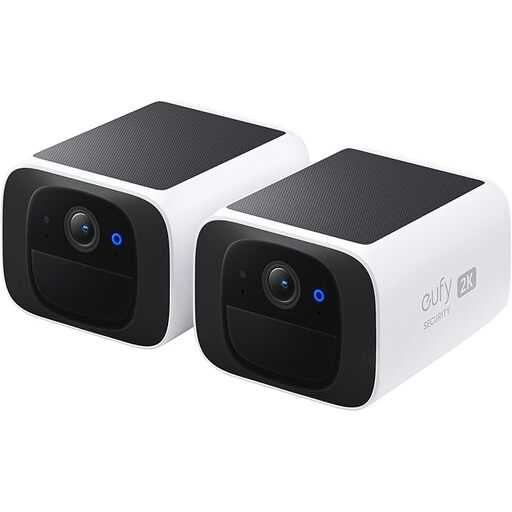
THE IDEAL PROFILE: "SET IT AND FORGET IT" SURVEILLANCE
eufy Security, eufy SoloCam S220 Outdoor Wireless WiFi Surveillance Camera, 2 Pack, 2K Resolution, Compatible with Alexa, Wi-Fi 2.4 GHz, No Monthly Fees

eufy Security, eufy SoloCam S220

The Verdict: Perfect for anyone who wants a simple and effective solution. You set it up to monitor an entrance or a driveway, and then you can forget about it. No battery to recharge, no hidden fees. Installation is child's play.

The Pitfall-Proof Feature

Its integrated solar panel solves the battery life issue: a few hours of sunlight per day are enough to power it continuously. The local storage on internal memory ensures a 100% subscription-free experience.

Key Strengths

Crisp 2K image, AI person detection to filter alerts, and above all, the fulfilled promise of "zero monthly fees."
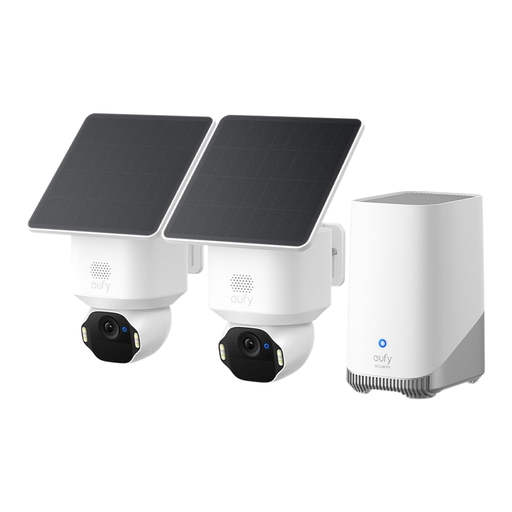
THE IDEAL PROFILE: UNCOMPROMISING 4K SECURITY
eufy SoloCam E42 (2-Cam Kit), 4K Outdoor Surveillance Camera, HomeBase S380, Solar, AI Motion Tracking, Strobe, Pan & Tilt, Face Detection, Local Storage up to 16TB, Wireless

eufy SoloCam E42 (2-Cam Kit) with HomeBase S380

The Verdict: For those who want the best of the best. The 4K resolution allows you to zoom in on details (a license plate, a face), while the motorised PTZ with smart tracking leaves no blind spots on your property.

The Pitfall-Proof Feature

Here, 4K is not a gimmick: it's paired with high-performance AI tracking. Most importantly, the included HomeBase station offers local storage expandable up to 16TB. This guarantees complete independence from cloud subscriptions.

Key Strengths

4K image quality, 360° coverage with auto-tracking, solar option, and massive local storage via the HomeBase.
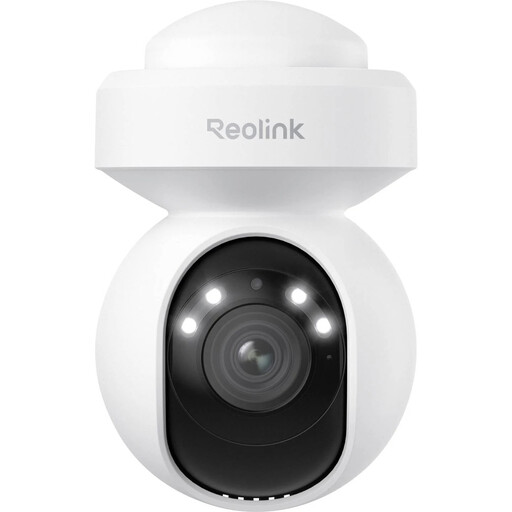
THE IDEAL PROFILE: TOTAL CONTROL WITH OPTICAL ZOOM
REOLINK E540 Outdoor WiFi Camera 2K+ 5MP – 3X Optical Zoom – Pan Tilt – White

REOLINK E540 2K+ Outdoor WiFi Camera

The Verdict: For the tech enthusiast who loves to be in control. Its PTZ motorisation and true 3x optical zoom allow you to scan wide areas and focus on a specific detail (like a license plate) without any loss of quality.

The Pitfall-Proof Feature

It avoids the trap of digital zoom (which is just cropping that degrades the image) thanks to a true optical zoom. This magnifies the image without any loss of quality. The dual power option (battery/wired) is a significant plus.

Key Strengths

Lossless 3x optical zoom, 355° PTZ motorisation, smart tracking, and dual power options.

Looking for other options?

Discover our full selection of products that meet our quality charter and current safety standards.

Your Questions, Our Answers

What is the real-world battery life of a battery-powered camera?

Battery life depends heavily on its usage. Placed in a low-traffic area, a camera can last for several months. Conversely, if it's monitoring a main entrance with dozens of alerts per day, the battery life can melt away to just a few weeks. Models with a solar-powered security camera are the best solution to stop worrying about it, provided the panel receives a few hours of direct sunlight each day.

Is an outdoor Wi-Fi camera safe from hacking?

Its security depends on two things: the reliability of the brand and your own habits. Choose reputable brands that encrypt video streams (WPA2/WPA3) and regularly publish security updates. On your end, the golden rule is: use a complex, unique password for your Wi-Fi and your user account, and enable two-factor authentication (2FA) whenever it's offered.

Is installing a solar-powered camera complicated?

No, it's actually one of their main strengths. Most models can be mounted in minutes with just two or three screws. The only point of vigilance is the location of the solar panel (whether integrated or separate): it must be placed in a sunny area, ideally facing south and away from shadows (from trees, roof overhangs, etc.) for optimal performance.