
Livraison le jour même ou le lendemain

Qualité garantie

Débloquez vos offres de bienvenue: Livraison GRATUITE | Jusqu'à -80 % | 30 jours d'essai gratuits à JoyPlus
Téléchargez l'application
Choosing a wireless outdoor security camera can often feel overwhelming. Between the marketing jargon and impenetrable spec sheets, it's easy to feel lost and end up with buyer's remorse. As a product expert at Joybuy, my mission is to help you gain some clarity. This guide breaks down the essential points to help you make an informed choice that's perfectly suited to your needs.
Let's review the pitfalls to avoid and the technical criteria that truly make a difference, ensuring your investment genuinely serves to protect your home.
The market is flooded with tempting features, but some hide unpleasant surprises. Here are three key points to keep in mind.
Many battery-powered cameras promise months of autonomy. The problem? These estimates are based on ideal usage conditions: few detections, no live streaming, etc. In reality, a camera placed in a high-traffic area (like an entryway or garden) will see its battery life drain in no time. A battery-powered camera that needs recharging every three weeks quickly becomes a chore. The solution? Check the battery capacity (expressed in mAh) and consider a camera with a solar panel for nearly uninterrupted power.
4K resolution is often touted as the ultimate seal of quality. While it offers a highly detailed image, it's not always necessary and comes with a few drawbacks: larger video files, increased battery consumption, and higher bandwidth demand. A 2K (QHD) resolution often represents the best compromise, providing enough clarity to identify a face or a license plate without saturating your Wi-Fi network. Remember that the quality of the lens and sensor is just as crucial as the pixel count.
The purchase price is sometimes just the tip of the iceberg. Many advanced features, like AI-powered motion detection (distinguishing between people, vehicles, and animals) or cloud storage for recordings, often require a paid subscription. Before you decide, check carefully if local storage (on a microSD card or via a base station) is available and if the features you care about are accessible without extra fees.
To avoid making a mistake, focus on these three parameters that determine the real-world effectiveness of your setup.
As we've discussed, 4K shouldn't be your only criterion. A 2K resolution (around 2560 x 1440 pixels) is an excellent standard today, offering a great level of detail. Also, consider it in conjunction with the field of view:
The term "wireless" refers to the data connection (Wi-Fi), but not always the power source.
A camera that floods you with notifications for every passing cat or swaying branch is more annoying than useful. AI-powered motion detection has become essential. It intelligently filters alerts to notify you only in case of a relevant detection (person, vehicle, package).
Finally, color night vision is a major plus. Thanks to a built-in spotlight, the camera can record in color at night, providing crucial details (color of clothing, a vehicle) that traditional infrared vision (in black and white) cannot capture.
To help you take action, here is a selection of products that meet different needs and budgets, all while avoiding the pitfalls we've just discussed.

Why it's a great choice: Perfect for homeowners or renters who want to secure main access points (front door, garage door) with a reliable and easy-to-install system. This surveillance kit offers an excellent price-to-performance ratio.
Its 2K resolution is a smart choice that ensures great clarity without the drawbacks of 4K. The stated battery life (up to 4 months) is realistic for moderate use, far from unrealistic promises.
100% wire-free installation, color night vision thanks to the integrated spotlight, and a siren for active deterrence.
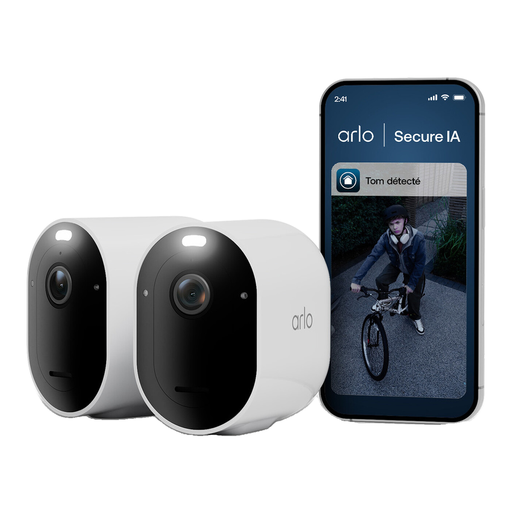
Why it's a great choice: Ideal for homes with large gardens or long facades. Its ultra-wide field of view and automatic motion tracking cover vast areas without blind spots. The perfect solution for comprehensive surveillance.
It tackles the plague of false alerts with high-performance AI detection. Its stated battery life (up to 8 months) is one of the most robust on the market for a battery-powered model, significantly extending time between recharges.
160° field of view, 2K+ HDR resolution for superior image clarity, and an auto-zoom and tracking feature.
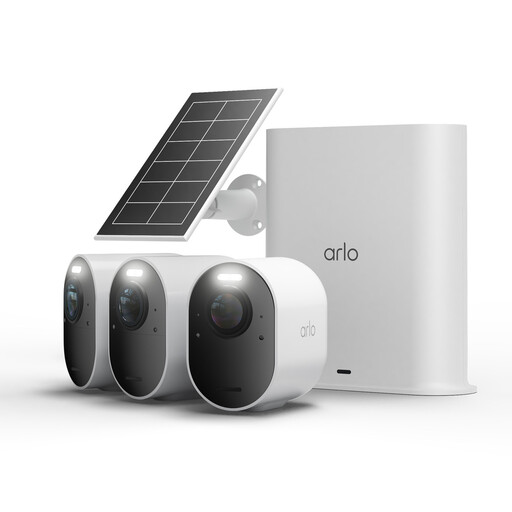
Why it's a great choice: For those who demand maximum image quality and hassle-free battery life. This premium kit is built for high performance, combining the benefits of **4K** and solar power.
It solves the battery life problem right out of the box by including a **solar panel**. The chore of manual recharging, the main drawback of battery-powered cameras, is thus a thing of the past.
4K HDR resolution, 180° panoramic field of view, and continuous power for one of the cameras thanks to the included solar panel.
If you're looking for solutions with local storage or more complex systems, discover our full range of products that meet these same quality criteria.
Battery life depends on many factors: the frequency of detections, the length of recordings, the use of color night vision or the spotlight, and outdoor temperatures (cold weather reduces battery life). For a high-traffic area, expect to recharge a battery-powered camera every 4 to 8 weeks, unless it's paired with a solar panel.
No, not always. Many models work without a subscription for essential functions (notifications and live viewing). However, a subscription is often required to access cloud video history and the most advanced AI detection features. Check if the model you're interested in offers a local storage option (on a microSD card) to keep your recordings without a monthly fee.
A Wi-Fi IP camera connects directly to your home's Wi-Fi network (usually on the 2.4 GHz frequency band, which offers better range). Setup is done through a smartphone app, which guides you step-by-step to connect the camera to your network. Just make sure you have a strong enough Wi-Fi signal where you plan to install the camera.