Protecting the area around your home, whether it's the garden, the entrance, or the garage, is a growing priority for many. However, the idea of installing a surveillance system can often be daunting, conjuring images of cables running everywhere and exorbitant monthly subscriptions. Fortunately, the wireless outdoor security camera has emerged as the ideal solution—both simple and accessible—for regaining peace of mind.
This guide is here to demystify the topic. We will break down the features that truly matter and present our selection of the best models to help you make an informed choice, perfectly suited to your home and budget.
How to Choose Your Outdoor Security Camera: The 3 Game-Changing Criteria
Before jumping on the first model on sale, it's crucial to identify the features that will make a real difference in your daily life. Here are the three key points to check to avoid making a mistake.
1. Power Source: Battery, Solar, or a Mix of Both?
The main advantage of wireless cameras is, of course, their ease of installation. But wireless means battery life, and that's where the type of power source comes into play.
- Battery-powered: The majority of models come with rechargeable batteries. Their lifespan varies from a few weeks to several months depending on usage. This is the most flexible option, but it does require some maintenance (remembering to take the camera down to recharge it).
- With a solar panel: A solar-powered security camera is paired with a small panel that continuously recharges its battery using daylight. This is the ultimate "hassle-free" solution, virtually self-sufficient and perfect for sunny or hard-to-reach locations.
2. Image Quality, Day and Night
A camera is, above all, an eye. Image clarity is therefore crucial for identifying a face or reading a license plate.
- Resolution: While Full HD (1080p) is the bare minimum today, a 4K security camera offers an unparalleled level of detail. It allows you to zoom into the image without turning faces into a pixelated mess.
- Night Vision: Standard infrared night vision (in black and white) gets the job done, but more and more models are standing out with a camera with colour night vision. Thanks to a small integrated spotlight or more advanced sensors, they display full-colour images even in low light, which is a game-changer for identification.
3. Video Storage: With or Without a Subscription?
Where and how are your recordings saved? This is a central question, as it has a direct impact on long-term costs.
- Local Storage: A subscription-free outdoor security camera stores videos on a physical medium. This could be a simple microSD card in the camera or a base station (like a HomeBase) connected to your network. The advantage? You stay in control of your data, with no monthly fees.
- Cloud Storage: Most major brands offer a paid subscription to host your videos on their servers. This solution simplifies access to your recordings from anywhere and protects them if the camera is stolen. Generally, the most advanced AI features (person, package, and vehicle recognition) are reserved for these paid plans.
Recommended Cameras for Every Need
Enough theory, let's get practical! We have scoured the market based on these criteria. Here are the models that caught our attention.
eufy Security S3 Pro 3+1 Kit: The 4K Solar and Subscription-Free Solution
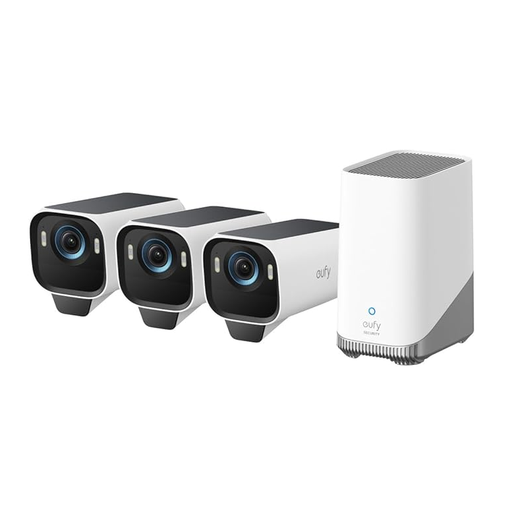
eufy Security S3 Pro 3+1 kit, 4K Wireless WiFi Surveillance Camera with Solar Panel
This wifi security camera kit is the all-in-one solution for those who want top-tier performance without the hassle.
- Why it stands out: It combines 4K resolution for razor-sharp detail with MaxColor Vision technology, which promises stunning full-colour night vision without even needing a spotlight. Each camera has its own integrated solar panel for near-infinite battery life. The system's brain, the HomeBase S380, manages everything while offering 16 GB of local storage (expandable up to 16 TB) and an AI that learns to recognise faces. The best part? It's all with no monthly fees whatsoever.
- Key features:
- 4K Ultra HD resolution.
- Near-infinite battery life thanks to solar power.
- Secure, subscription-free local storage.
- Ultra-precise motion detection (radar + infrared).
- Who is it for? For homeowners who want to make a one-time investment in a complete, ultra-high-performance, and autonomous system right out of the box, without ever hearing about hidden fees.
Arlo Essential2 XL 2-Camera Pack: Endurance Above All
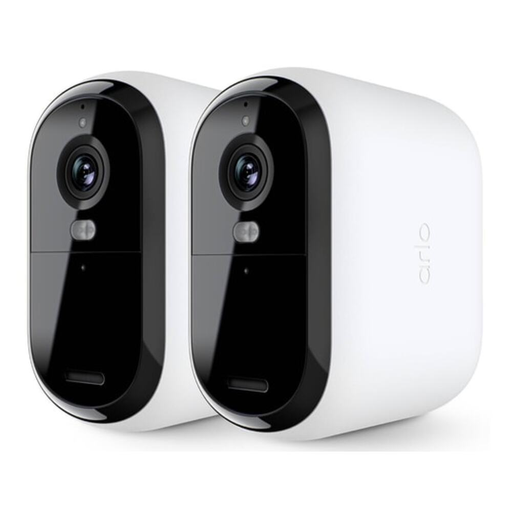
Arlo Essential2 XL 2-Pack Full HD Outdoor Cameras
With this pack, Arlo focuses on simplicity and, above all, endurance.
- Why it stands out: Its real strength is its XL battery, which promises up to four times the battery life of the brand's classic models. In practical terms, you'll almost forget they need recharging. This two-camera pack is ideal for securing multiple strategic points (like the entrance and the back of the garden). They include a spotlight for colour night vision and a siren to scare off intruders.
- Key features:
- XXL battery life for minimal maintenance.
- 100% wireless and ultra-simple installation.
- Colour night vision with spotlight.
- Two-way audio to speak to a delivery person (or an unwanted visitor).
- Who is it for? For those who want a plug-and-play solution that is easy to install and requires the least possible maintenance. It's an excellent starter kit, with the option to subscribe to Arlo Secure later to unlock advanced AI features.
eufy Security eufyCam 3 Add-on Camera: To Expand Your 4K Network
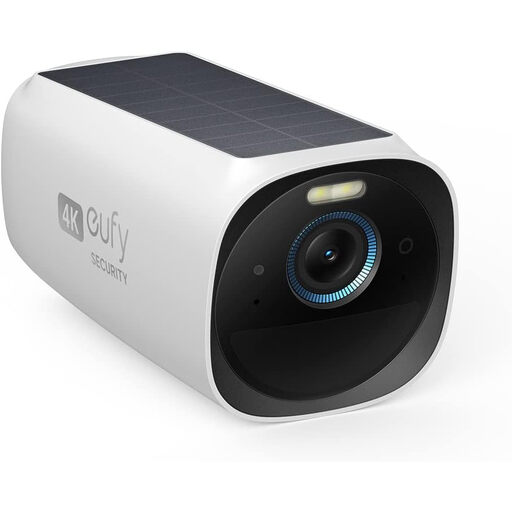
eufy Security eufyCam 3 Additional Camera, Outdoor Wireless Security Camera, 4k
Already have a eufy system? This camera is the perfect piece to complete your setup.
- Why it stands out: It has all the strengths of the eufyCam 3 range: 4K resolution, an integrated solar panel for worry-free battery life, and a weatherproof design. Crucial point: This camera does not work on its own and requires a HomeBase 3 to operate. Once paired, it benefits from all the intelligence of the station, including local storage and AI facial recognition.
- Key features:
- 4K image quality and cutting-edge night vision.
- Guaranteed battery life with the solar panel.
- Seamless integration with the eufy HomeBase 3 ecosystem.
- Still no monthly fees.
- Who is it for? For owners of a eufy system who want to expand their coverage, or for those who prefer to build their own custom setup by purchasing the HomeBase 3 and cameras separately.
What About Watching Garden Wildlife?
Monitoring your home is one thing. But if your goal is to discreetly observe the hedgehogs and foxes that visit your garden at night, your needs are different. For this purpose, there's no need to bring out the heavy artillery: more specific and much more affordable solutions, often called trail cameras, exist.
Interested? Take a look at our dedicated guide.
? Discover our selection of trail and wildlife cameras
Frequently Asked Questions
What is the real-world range of an outdoor Wi-Fi camera?
This is the critical factor. The Wi-Fi signal range depends on many variables: the power of your internet router, the thickness and number of walls it has to pass through, and interference from other devices. In practice, expect 15 to 50 metres (about 50 to 165 feet) in an open area. If your camera is too far away, installing a Wi-Fi extender or a mesh system will be essential.
Is a subscription-free camera truly effective?
Yes, without a shadow of a doubt. A camera's effectiveness has nothing to do with its business model. A subscription-free outdoor security camera that records locally (on an SD card or a base station), sends you reliable alerts, and films in high quality perfectly fulfils its surveillance mission. A paid subscription adds convenience features (cloud storage, more refined image analysis), but it is by no means essential for effective protection.
How does a solar-powered camera actually work?
It's very simple. The camera has an internal battery that is continuously recharged by a small photovoltaic panel. During the day, even on cloudy days, this panel captures ambient light and converts it into electricity. Depending on the model, a few hours of exposure per day are enough to ensure continuous operation, making it almost 100% self-sufficient.


