
Livraison le jour même ou le lendemain

Qualité garantie

Débloquez vos offres de bienvenue: Livraison GRATUITE | Jusqu'à -80 % | 30 jours d'essai gratuits à JoyPlus
Téléchargez l'application
Securing your home is a top priority for many of us. But with a market packed with options, choosing the right wireless outdoor security camera can quickly become a daunting task. Should you prioritize battery life, image quality, or connectivity?
This guide breaks down the essential criteria and presents our selection of the best models for 2026. The goal: to help you confidently choose the solution that will protect your home.
Before diving into our top picks, let's review the technical specifications that will truly make a difference in your day-to-day use.
Image clarity is paramount. A high resolution (2K or 4K) is essential for clearly identifying a face or a license plate. HDR (High Dynamic Range) technology is also a major plus, as it balances the high contrast between shadowy and brightly lit areas.
Don't underestimate night vision. More and more models now include color night vision, which is far more useful than traditional black-and-white infrared. It's a game-changer for identifying a person or vehicle in low light.
The main advantage of wireless cameras is their ease of installation. This makes the power source a crucial choice.
Most outdoor security cameras connect via Wi-Fi. It's therefore imperative to check that your signal is strong enough at your intended installation spot. For areas out of range (like a holiday home, garden shed, or construction site), a 4G camera with a SIM card is the perfect solution.
Smart features, in turn, dramatically increase the effectiveness of your surveillance:
Here are three models that showcase the market's diversity, meeting needs for both all-around performance and more specific use cases.
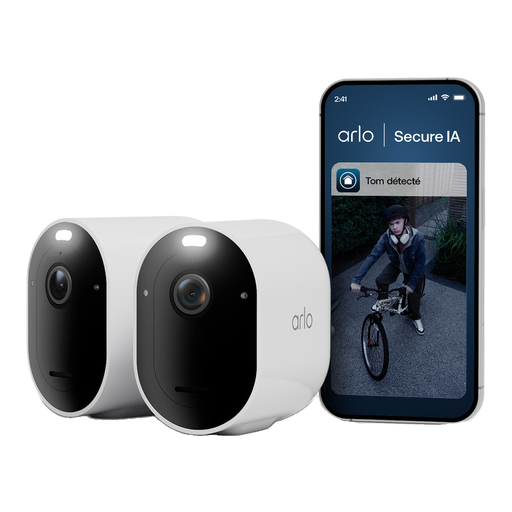
Why this model stands out: This Arlo video surveillance kit stands out for its superior image quality and smart features. It's the ideal solution for those who want comprehensive and versatile protection, capable of covering multiple areas at once.
Key features:
Who is this model for? For demanding users looking for a high-end, multi-camera system that's easy to install and features powerful AI for smart alert filtering.
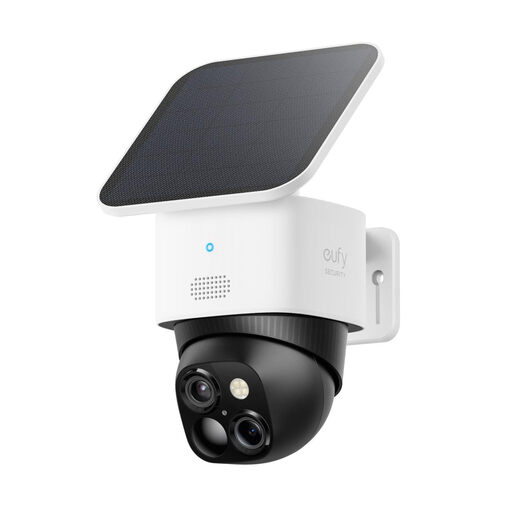
Why this model stands out: The SoloCam S340 checks all the boxes for a practical and cost-effective camera: solar power for virtually unlimited battery life, a 360° panoramic view, and no subscription fees thanks to local storage.
Key features:
Who is this model for? Ideal for those who want a "set it and forget it" solution thanks to its solar power, and for anyone looking to monitor a large area (like a garden or yard) without the hassle of a subscription.
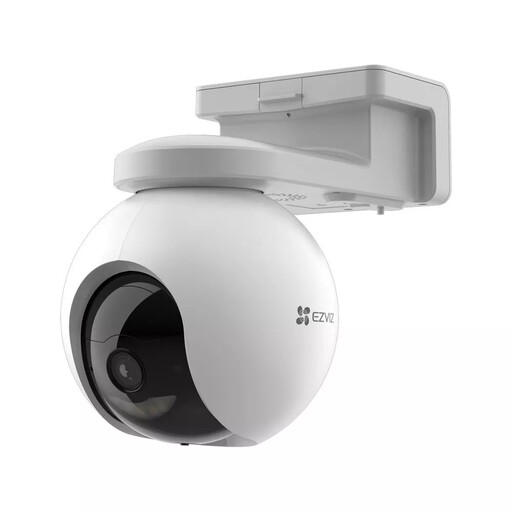
Why this model stands out: Its trump card: 4G LTE connectivity. Completely self-sufficient, it works anywhere Wi-Fi can't reach, making it the perfect solution for remote locations.
Key features:
Who is this model for? Perfect for monitoring a holiday home, construction site, warehouse, boat, or any property without reliable Wi-Fi access.
Our selection covers the most common needs, but the market is full of alternatives. If you want to compare other brands or find a model with specific features, feel free to browse our complete catalog.
Discover All Our Outdoor Security Cameras
1. Is it legal to install a security camera at home in France? Absolutely. You have the right to film the interior of your property as well as its immediate surroundings (front door, garden, driveway). However, be careful: it is strictly forbidden to film public roads or your neighbors' property. In France, the CNIL (Commission Nationale de l'Informatique et des Libertés), the data protection authority, ensures that privacy is respected.
2. Is a subscription mandatory for a security camera? Not necessarily; it all depends on the model. Many cameras allow you to store videos for free on a local microSD card. Others rely on a cloud storage service, which is usually subscription-based. This subscription often unlocks advanced features, such as more refined motion detection or an extended video history.
3. What is the range of an outdoor Wi-Fi security camera? The actual range depends on your router's power, obstacles (thick walls, trees, etc.), and interference. Generally, you can expect a range of about 50 meters (around 165 feet) in an open area. Beyond that, or if the walls are too thick, you may need to consider a Wi-Fi extender or a mesh system to ensure a stable signal.