
Livraison le jour même ou le lendemain

Qualité garantie

Débloquez vos offres de bienvenue: Livraison GRATUITE | Jusqu'à -80 % | 30 jours d'essai gratuits à JoyPlus
Téléchargez l'application
Protecting your home or business is a top priority. But with a jungle of models on the market, choosing the right wireless outdoor security camera can quickly become overwhelming. Should you opt for a Wi-Fi or 4G connection? Battery, solar, or mains power?
This guide breaks down the essential criteria and presents our selection of the best models for 2026. Our goal is to help you see clearly and make the right choice, without all the unnecessary technical jargon.
To find the perfect model for your needs, there are three fundamental aspects to consider: connectivity, power, and surveillance features.
The type of internet connection directly impacts the flexibility of your installation.
The main advantage of these cameras is their 100% wire-free design. But how are they powered? Several options are available.
The built-in technologies make all the difference in daily use.
We have selected three models that stand out for their performance and cater to specific needs.
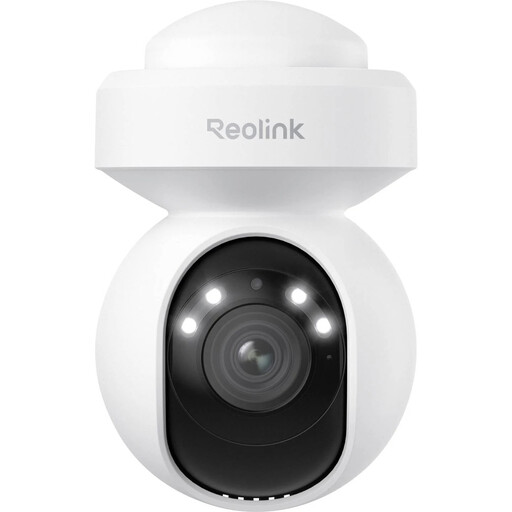
Why It Stands Out
The REOLINK E540 distinguishes itself with its 3x optical zoom, a feature still rare in this price range. Unlike digital zoom, which simply crops the image, it magnifies the scene without any loss of quality. This is a major advantage for identifying details from a distance. Its motorised Pan & Tilt (355°/50°) and 2K+ 5MP resolution allow for precise monitoring of large areas.
Key Features
Who Is It For?
Ideal for those who need to monitor a large property (garden, courtyard, car park) and demand the ability to zoom in on specific areas without sacrificing image quality. Its dual power options make it particularly versatile for installation.
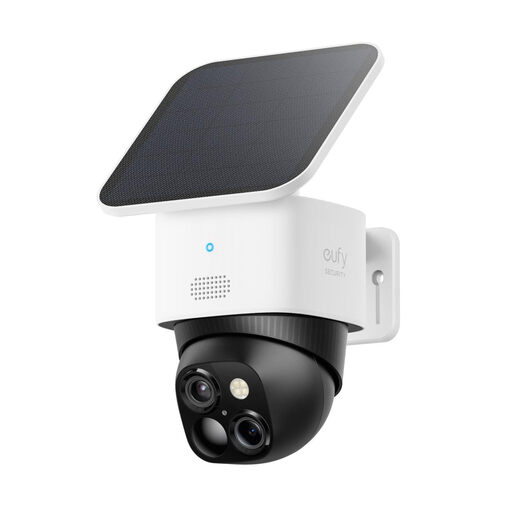
Why It Stands Out
The SoloCam S340 is a solar-powered camera designed for maximum autonomy. Its detachable solar panel continuously recharges the battery. But its real standout feature is its dual-lens system, which simultaneously offers a wide-angle overview and a zoomed-in telephoto view. With its 360° surveillance and 3K resolution, it ensures complete and highly detailed coverage.
Key Features
Who Is It For?
Perfect for those looking for a "set it and forget it" solution. It's suited for sunny locations where running a power cable is impossible or unsightly. Its dual-view is a real bonus for ensuring you don't miss a thing.
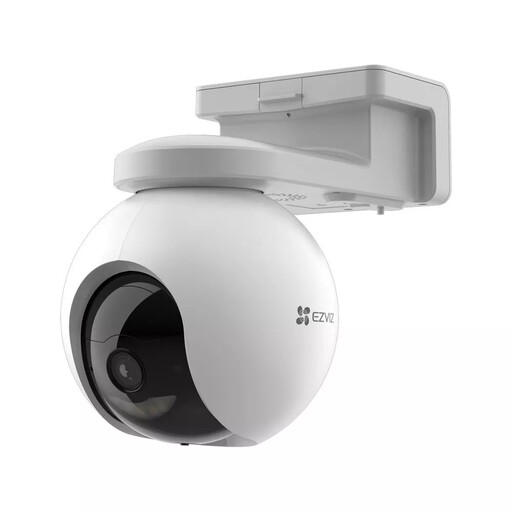
Why It Stands Out
The key advantage of the EZVIZ EB8 is its 4G LTE connectivity. This frees it from any reliance on a Wi-Fi network, making it operational anywhere with 4G coverage. Powered by a high-capacity battery (10,400 mAh), it is also motorised and offers a panoramic view with 2K resolution.
Key Features
Who Is It For?
The perfect solution for securing an isolated site without Wi-Fi coverage: a country house, a construction site, a barn, a docked boat, or even a camper van. Its built-in GPS function is a real plus for locating it in case of theft.
Our selection focuses on models that meet specific needs. If you're looking for a camera with different features or wish to explore other technologies, many alternatives are available.
? Discover our full range of outdoor security cameras
1. How does subscription-free video surveillance work?
A camera that offers subscription-free video surveillance stores video recordings on local media, most often a microSD card inserted into the device. You can then access your videos whenever you want from the manufacturer's app, with no monthly fees. The advantage: you maintain complete control over your data.
2. Is a solar-powered camera effective in winter or on overcast days?
Yes, modern solar panels are designed to work even in low light. They continue to generate electricity on cloudy days, although less intensively. The built-in battery takes over to power the camera at night and during days with no sun. In regions with very little winter sun, a manual top-up charge may be necessary once or twice during the season.
3. What is the real-world range of a wireless outdoor camera?
For a Wi-Fi outdoor camera, the range depends on the strength of your internet router and the obstacles it must pass through (thick walls, concrete slabs, etc.). In theory, it can reach several tens of metres in an open field, but this distance quickly decreases in practice. If the signal is too weak, adding a Wi-Fi extender is often the solution. For a 4G camera, the only limit is the network coverage of your mobile operator.