
Livraison le jour même ou le lendemain

Qualité garantie

Débloquez vos offres de bienvenue: Livraison GRATUITE | Jusqu'à -80 % | 30 jours d'essai gratuits à JoyPlus
Téléchargez l'application
Securing your home is a priority, but with the vast market of security cameras, it's easy to get lost. Resolution, power sources, subscriptions... the technical specifications can quickly become overwhelming. This guide is here to break down the key features and present a selection of tried-and-tested models to help you make the right choice.
Let's review the decisive criteria before suggesting a few wireless outdoor security camera options suited for every need and budget.
Before diving into a comparison, you need to know what truly matters for daily use. Here are the three points you absolutely shouldn't overlook.
A clear image is crucial for identifying a face or reading a license plate. While 1080p is the bare minimum today, a 2K camera (or higher) offers a much greater level of detail. Also, consider colour night vision. Unlike traditional black-and-white infrared, it can capture decisive details, like the colour of clothing or a vehicle, even in low light.
The main advantage of a wifi security camera is, of course, its completely cable-free installation. Most models run on a rechargeable battery, with an autonomy ranging from a few weeks to several months. For complete peace of mind, a solar security camera is a formidable option. A small solar panel, whether integrated or separate, is often enough to keep the battery topped up, which drastically reduces maintenance.
Getting alerts every time a cat passes by or the wind rustles the tree branches is a well-known source of frustration. Opt for a model equipped with person detection or vehicle detection. This AI-based technology sorts through events and saves you from false alerts. Lastly, pay attention to the business model. A subscription-free camera stores videos locally (on an SD card or a dedicated hub), while others reserve their most advanced features for a paid cloud subscription.
Here are a few models that stand out from the crowd, each catering to a specific need. This should help you find the perfect fit.
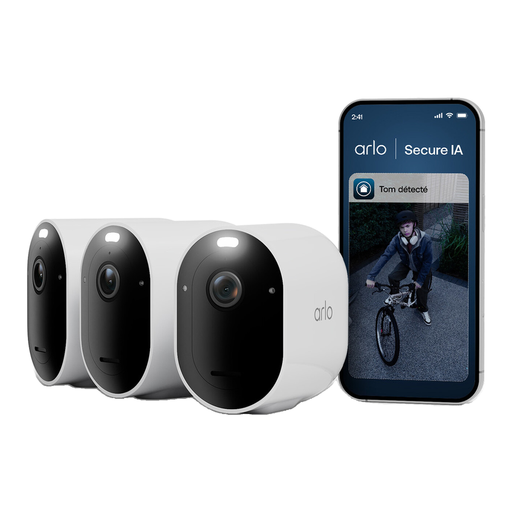
Why it stands out: This three-camera pack is for those who want a complete and ultra-high-performance security system. The 2K+ image quality with HDR ensures flawless clarity, day or night. Meanwhile, its advanced AI accurately distinguishes between people, vehicles, animals, and even packages.
Key features:
Who is it for? For those who want to equip their entire property with a high-end system, without compromising on image quality or detection intelligence.
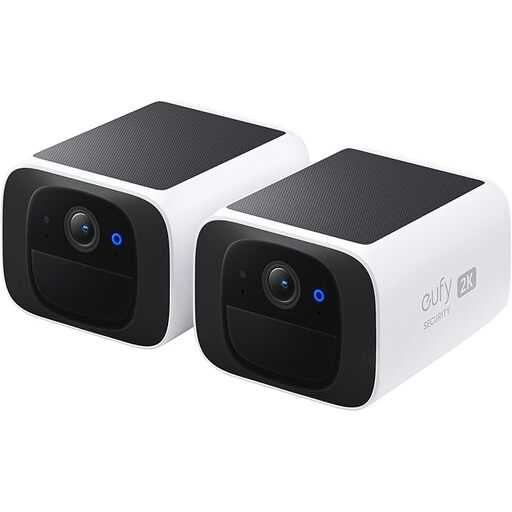
Why it stands out: The eufy SoloCam S220 focuses on autonomy and simplicity. With its integrated solar panel, just a few hours of sunlight per day are enough to power it continuously. Its key advantage: no monthly fees. Storage is handled locally, making it a very cost-effective solution in the long run.
Key features:
Who is it for? For those looking for a "set it and forget it" solution, without worrying about recharging a battery or paying for a subscription. Perfect for monitoring a specific area like an entryway or a garden.
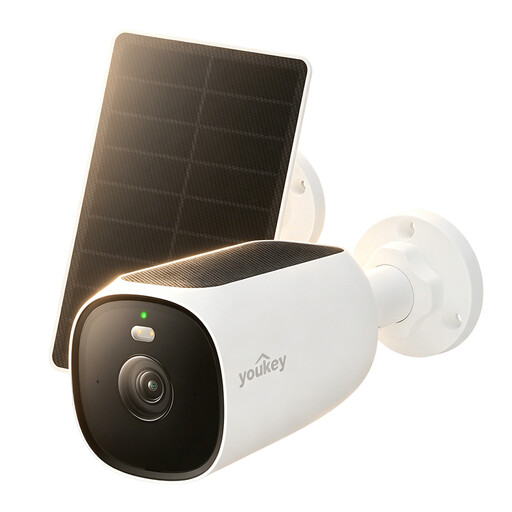
Why it stands out: The Youkey S420 tackles a major challenge: offering 24/7 continuous recording, an extremely rare feature for battery-powered cameras. To achieve this, it combines a very high-capacity battery (10,000 mAh) with a dual solar panel setup (one integrated, one separate) to ensure uninterrupted power.
Key features:
Who is it for? For those who want to miss absolutely nothing and demand round-the-clock surveillance. Its ability to record continuously while remaining self-sufficient thanks to solar power makes it a bulletproof solution for critical areas.
Our selection highlights three distinct use cases. If none of these fit your needs or if you simply want to explore other models, our full catalogue is here for you.
Discover our full range of battery-powered outdoor cameras
Installation is designed to be simple. Start by charging the battery to 100%. Then, download the manufacturer's app on your smartphone and follow the guided setup to connect the camera to your wifi network. Before mounting it to the wall, test it in the chosen location to ensure the Wi-Fi signal is strong enough and the viewing angle is perfect. Mounting hardware is almost always included.
It all depends on the model. A subscription-free camera records videos locally, on a MicroSD card or a dedicated hub. Subscription-based models, on the other hand, store footage in the cloud and often unlock premium features (more advanced detection, custom activity zones, etc.). It's up to you to decide if these services are worth the monthly investment.
The range depends on the strength of your Wi-Fi router, obstacles (thick walls, trees, etc.), and the frequency band used (2.4 GHz or 5 GHz). The 2.4 GHz band has a longer range and penetrates walls better, while the faster 5 GHz band has a more limited range. Pro tip: before you drill any holes, test the Wi-Fi signal quality at the exact installation spot with your smartphone.