Joybuy Insights

How to Choose a Wireless Outdoor Security Camera and Avoid Pitfalls

Protecting your home is a top priority, and wireless technology has made video surveillance more accessible than ever. However, the wireless outdoor security camera market is flooded with misleading marketing promises. To help you cut through the noise and invest with confidence, we've broken down the three pitfalls you must avoid and the technical specifications that truly matter.

  • The Myth of "Unlimited" Battery Life: The promise is appealing: a solar-powered camera that recharges itself for complete peace of mind. In reality, its effectiveness is entirely dependent on direct sunlight—a highly variable factor depending on your location and the season. A poorly angled panel or a long, overcast winter could leave your camera offline just when you need it most.
  • The Hidden Subscription Trap: You think you've scored a great deal, only to find that the most useful features—like cloud storage and smart detection—are locked behind a monthly subscription. Over two or three years, these fees can easily double the initial cost of your camera.
  • The Blurry "Night Vision" Trap: While most cameras offer night vision, the quality varies dramatically. The majority rely on basic infrared, which produces a grainy, black-and-white image where identifying a face or license plate is next to impossible.

Essential Criteria to Check Before You Buy

To avoid falling for these marketing ploys, focus on objective technical criteria. These are the factors that will guarantee your system's true effectiveness.

Power Source: Battery, Solar, or the Winning Combo?

"Wireless" gives you the freedom to install your camera anywhere, without worrying about electrical wiring. However, how you power it remains a critical decision.

  • Battery-Powered: The most flexible option. Here, battery life is everything. Look for a high-capacity battery (over 5000 mAh) to avoid constant recharging. "XL" models can last for several months on a single charge, depending on detection frequency.
  • With a Solar Panel: Assisted autonomy. A solar camera is an excellent choice for minimizing maintenance. It's ideal if the camera's location receives a few hours of direct sunlight daily. For a primary residence with good sun exposure, this is a perfectly viable solution.
  • The Complete Kit: The all-in-one solution. Some packages bundle multiple cameras with their own dedicated solar panels. This is the ideal setup for complete and virtually self-sufficient surveillance of an entire property.

Image Quality: More Than Just Pixels

For a video to be truly useful, the image must be perfectly clear.

  • 2K Resolution as the Standard: A 2K camera (approximately 2560 x 1440 pixels) provides a spectacular leap in detail compared to Full HD (1080p). This difference is crucial for zooming in to identify a face or a distant detail without the image turning into a pixelated blur.
  • Color Night Vision: This is the major advancement in recent years. Unlike infrared, color night vision uses an integrated LED spotlight to illuminate the scene and capture footage in full color, even in complete darkness. This makes identification far simpler and provides an immediate deterrent effect.

Intelligence and Connectivity: The Brains of Your Camera

A good camera doesn't just record; it analyzes and communicates.

  • Smart Detection (AI):AI motion detection (Artificial Intelligence) enables the camera to distinguish between people, vehicles, animals, and the simple movement of leaves in a tree. The result: an end to false alerts. You're only notified when it truly matters.
  • Wi-Fi or 4G: The essential connection. Always check the strength of your Wi-Fi signal at the intended camera location. For sites without an internet router (like a vacation home, construction site, or detached garage), a 4G security camera with its own SIM card is the only truly independent option.
  • The Ecosystem: Alexa, Google, and More. Check for compatibility with smart home ecosystems like Alexa compatible or Google Assistant. This will allow you to control the camera with your voice and integrate it into your smart routines (for example, turning on lights when motion is detected).

Recommended Models Worth Considering

Instead of an endless catalog, here are three solutions that meet specific needs and tick all the boxes on our checklist.
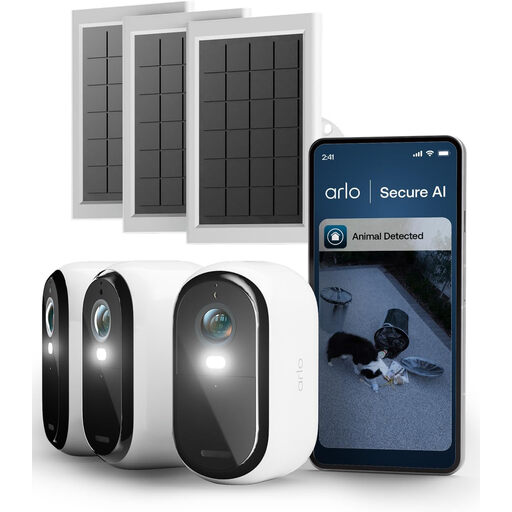
IDEAL FOR: ABSOLUTE PEACE OF MIND
Arlo VMK3380-100EUS 2K WiFi Outdoor Essential 3 Security Camera, 3-Camera and 3-Solar Panel Kit, White

Arlo VMK3380-100EUS 3-Camera 2K & 3-Solar Panel Kit

WHO IS IT FOR? For homeowners who want complete coverage (front of house, garden, garage) with a turnkey solution. This kit secures multiple strategic areas without the hassle of recharging.

THE PITFALL-PROOF FEATURE

This kit bypasses the battery life trap. Each camera is paired with its own solar panel, ensuring continuous recharging and making the system reliable, even during periods of low sunlight.

THE KEY ADVANTAGE

An ultra-comprehensive all-in-one package: 3 2K cameras, color night vision, and 3 solar panels. The deterrent effect is enhanced by an integrated siren and spotlight.
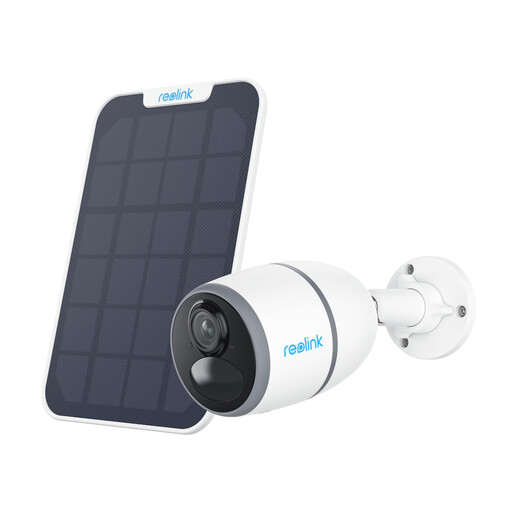
IDEAL FOR: REMOTE SITES WITHOUT WI-FI
Reolink GO Series G330 Solar Camera 4G 4MP 2K with SIM Card, LTE, Solar Panel Included, Night Vision, AI Person/Vehicle Detection, Two-Way Audio, IP65 Waterproof, Alexa Compatible

Reolink GO Series G330 4G 2K Solar Camera

WHO IS IT FOR? The perfect solution for monitoring a cabin, construction site, warehouse, or any location without a Wi-Fi connection. Thanks to 4G, it's 100% autonomous and independent of your home internet router.

THE PITFALL-PROOF FEATURE

This model completely eliminates dependency on Wi-Fi. It works anywhere a 3G/4G mobile signal is available. The included solar panel also removes the risk of a dead battery.

THE KEY ADVANTAGE

Its 4G LTE connectivity makes it fully autonomous (requires a SIM card). The solar panel is included for uninterrupted power. AI detection differentiates between people and vehicles.
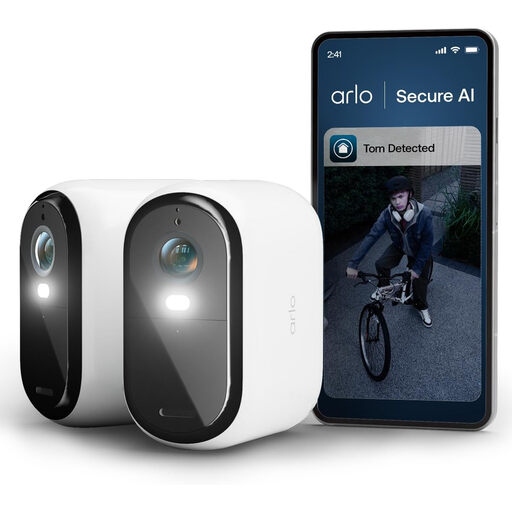
IDEAL FOR: THE BEST BALANCE OF PERFORMANCE AND BATTERY LIFE
Arlo VMC3282-100EUS Wireless WiFi Outdoor Security Camera Essential 3 2K XL, 2-Camera Pack, 24-Month Battery Life, Color Night Vision, Siren and Two-Way Audio, White

Arlo Essential 3 2K XL, 2-Camera Pack

WHO IS IT FOR? The smart choice for those who want excellent image quality and virtually zero maintenance, without needing to install a solar panel. Perfect for an apartment with a balcony or for monitoring key access points of a house.

THE PITFALL-PROOF FEATURE

Its XL battery demolishes the problem of frequent recharging. Arlo claims up to 4 times the battery life of standard models, which drastically reduces maintenance.

THE KEY ADVANTAGE

Its XXL battery life lets you forget about recharging for months. The 2K image quality and color night vision ensure usable footage, day or night.

Need a Different Model?

Our selection doesn't cover every scenario. Explore our complete comparison of cameras that meet our standards for quality and reliability.

Frequently Asked Questions

What is the real-world battery life of a battery-powered camera?

The battery life advertised by manufacturers is often calculated under ideal conditions. In the real world, it can range from a few weeks to several months. It all depends on the frequency of detections, the length of recorded clips, the temperature (cold weather drains batteries faster), and the Wi-Fi signal strength. For a reliable indicator, look at the battery's capacity, expressed in milliampere-hours (mAh): the higher the number, the better.

Is a subscription mandatory?

Not always. Most models offer live viewing and motion notifications for free. However, advanced features (cloud video storage, AI motion detection to filter alerts, custom activity zones, etc.) are almost always part of a paid subscription plan. This is a crucial point to verify before you buy to avoid any unpleasant surprises.

Is installing a wireless camera really that simple?

Yes, the physical installation is a breeze because there are no power cables to run. You just need to screw a mount to the wall. The software setup is done on your smartphone: download the manufacturer's app and follow the steps to connect the camera to your Wi-Fi network. Before you drill any holes, check two things: that the Wi-Fi signal is strong enough at your chosen location, and that the height (generally 2 to 3 metres) provides an optimal viewing angle while keeping the camera out of easy reach.