
Livraison le jour même ou le lendemain

Qualité garantie

Débloquez vos offres de bienvenue: Livraison GRATUITE | Jusqu'à -80 % | 30 jours d'essai gratuits à JoyPlus
Téléchargez l'application
Protecting your home is one thing, but navigating the jungle of wireless outdoor security cameras is another. Between tempting marketing promises and often opaque technical jargon, it's easy to make a misstep. My role as a product expert at Joybuy is to help you see things more clearly. This guide breaks down the 3 most common pitfalls and gives you the keys to a successful purchase that's perfectly tailored to your needs.
Spec sheets often boast impressive features that, in practice, turn into disappointments or hidden costs. Here are the main things to watch out for.
To make the right choice, focus on the specifications that truly matter for the day-to-day effectiveness of your setup.
This is the starting point, as it determines your entire installation.
Don't be blinded by the race for pixels (2K, 4K camera). A truly usable image depends on a winning combination of three factors:
How your camera records and analyses footage is a crucial point.
Rather than a product catalogue, we've selected models that address specific use cases, keeping in mind the criteria and pitfalls we've just discussed.
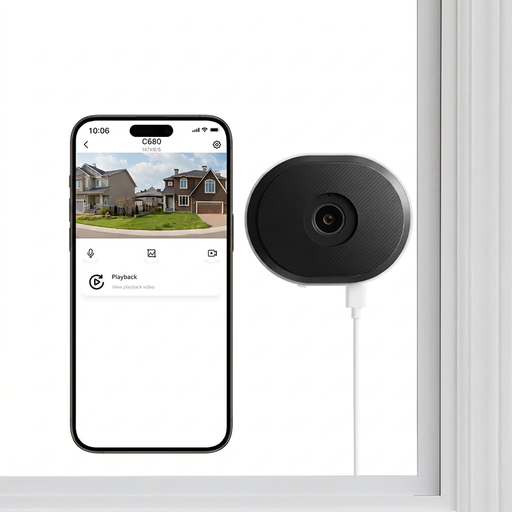
The use case: This camera is uniquely designed to film outdoors... from indoors, through a window. It's the perfect solution for apartment renters who aren't allowed to drill into their building's exterior. Installation takes just a few seconds, with no tools required.
It's specifically designed for filming through glass, neutralising reflections and night vision issues with dedicated optical technology. Its microSD port allows for local storage, freeing you from any subscription fees.
Discreet and effective surveillance through a window, with zero drilling. Its dual-band (2.4/5 GHz) WiFi connection ensures a stable link.
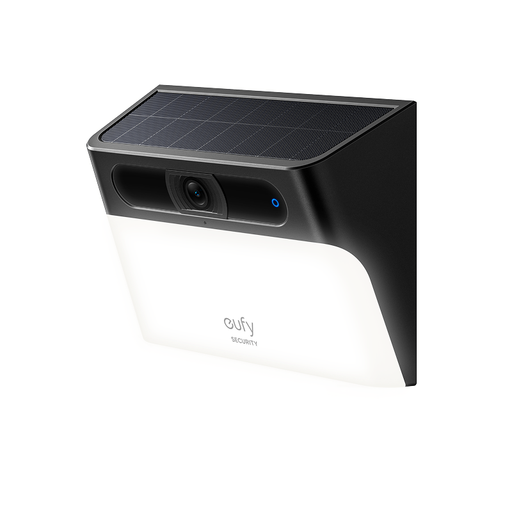
The use case: The ultimate "set it and forget it" solution. This 3-in-1 model combines a designer wall light, a 2K camera, and a solar panel. It's ideal for lighting and securing an entryway, driveway, or patio without ever worrying about recharging.
It completely solves the battery life problem thanks to its solar panel, which continuously recharges the battery. True to the eufy philosophy, it operates without any subscription, with internal storage for recordings.
"Perpetual" battery life thanks to solar power and a total absence of subscription fees. Its colour night vision is high-performing, and it also features AI motion detection.

The use case: For discerning homeowners who want active, blind-spot-free surveillance over a large property. Its motorised 360° pan-and-tilt, optical zoom, and auto-tracking feature make it a true digital watchdog, day and night.
Its colour night vision is effective thanks to its spotlights, and most importantly, its zoom is optical: it magnifies the image without any loss of quality, unlike digital zoom. The microSD port (up to 512GB) provides massive recording capacity, again with no monthly fees.
The 3x optical zoom for identifying details at a distance without image degradation, combined with intelligent auto-tracking of people and vehicles.
Discover our full selection of cameras that meet our quality criteria and current standards.
Yes, but under strict conditions. Your camera must only film within the boundaries of your own property (e.g., your garden, driveway, or doorstep). Filming public spaces or your neighbour's property is strictly prohibited. You must also inform anyone entering your property (visitors, delivery drivers, etc.) of the surveillance system, typically with a clear sign or sticker.
It all depends on its location and activity level. In a low-traffic area, a single charge can last for several months. Conversely, if it's triggered dozens of times a day monitoring an entrance, expect to recharge it every few weeks. Don't forget the impact of weather: cold temperatures tend to significantly reduce the performance of lithium-ion batteries. This is where solar-powered models really shine, as they overcome this limitation.
In most cases, no. A subscription is mainly justified if you need to store several weeks of video history in the cloud or unlock highly advanced, brand-specific AI features. For everyday use—receiving alerts, watching the live feed, and reviewing recent events—a subscription-free camera with a microSD card slot is not only sufficient but also much more cost-effective.