
Livraison le jour même ou le lendemain

Qualité garantie

Débloquez vos offres de bienvenue: Livraison GRATUITE | Jusqu'à -80 % | 30 jours d'essai gratuits à JoyPlus
Téléchargez l'application
Securing your home or business is a priority, but the security camera market can be overwhelming. Between marketing promises and real-world performance, it's easy to make the wrong choice. As a product expert at Joybuy, my mission is to help you see things more clearly. Together, let's break down the criteria that truly matter when choosing the wireless outdoor security camera you need, and most importantly, how to avoid the most common pitfalls.
Before diving into spec sheets, let's identify the three traps that too often turn a promising purchase into a real headache.
To make the right choice, three technical points must be examined closely. These are what will determine the real-world effectiveness of your camera day-to-day.
This is the first point to confirm. Your choice will depend on the camera's location and the level of autonomy you desire.
solar security camera: This is the solution for near-total autonomy. A small solar panel keeps the battery continuously charged. It's the ideal solution for well-exposed locations and for saying goodbye to the chore of recharging.How your camera transmits images is fundamental.
outdoor WiFi camera: This is the most common standard. It connects to your home network. Make sure the Wi-Fi signal is strong enough where you plan to install the camera. A weak signal will result in frequent disconnections and degraded video quality.4G security camera: Essential for locations without Wi-Fi or electricity, such as a second home, a construction site, an isolated warehouse, or a farm. It works with a SIM card and a mobile data plan, offering autonomous surveillance wherever a mobile network is available.A good camera doesn't just film; it analyses what it sees.
Person detection: An intelligent feature that distinguishes humans from other movements (animals, tree branches, cars). It drastically reduces the number of false alerts: you're only notified when a human presence is confirmed.outdoor PTZ camera (Pan-Tilt-Zoom): These models can rotate horizontally (Pan), tilt vertically (Tilt), and zoom. A single PTZ camera can thus cover a very large area, like a large garden or a car park, replacing several fixed cameras.Rather than aiming for a one-size-fits-all model that doesn't exist, it's better to find the one that perfectly fits your situation. Here are our recommendations for three typical scenarios.
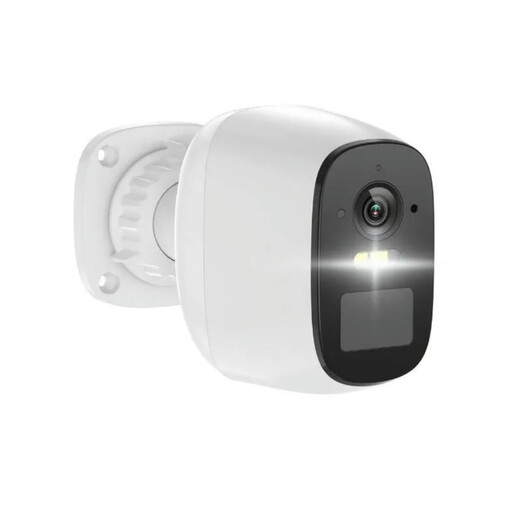
Why this choice: Ideal for securing the entrance or garden of a primary residence. Its installation is simple, with no wiring, and it offers the right balance between modern features and ease of use.
It runs on a rechargeable battery (5200 mAh) and is compatible with a solar panel (optional), thus avoiding the limited battery life trap. Storage can be done locally on a microSD card, which frees you from dependency on a cloud subscription.
PIR human presence detection for relevant alerts. Colour night vision and an integrated siren for active deterrence.
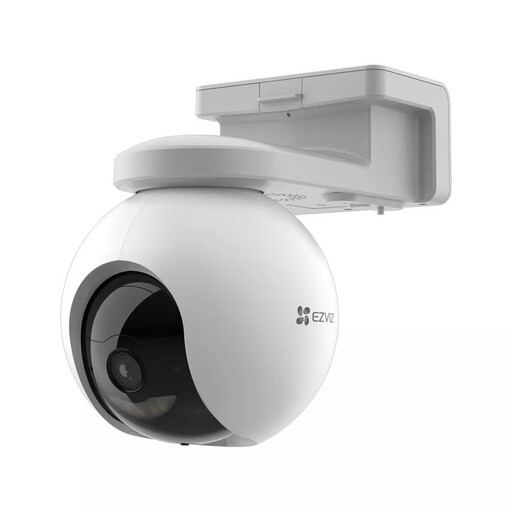
Why this choice: The ultimate solution for monitoring a site without Wi-Fi access: a second home, a farm shed, a construction site, or even a boat. Its 4G connectivity makes it completely independent of a local network.
It solves the dual problem of connectivity and power. The 4G LTE connection frees it from Wi-Fi, and its 10400 mAh battery, compatible with a solar panel, ensures extended autonomy.
Motorised panoramic view (PTZ) to cover a wide area. Built-in GPS to locate the camera. 2K resolution and colour night vision.
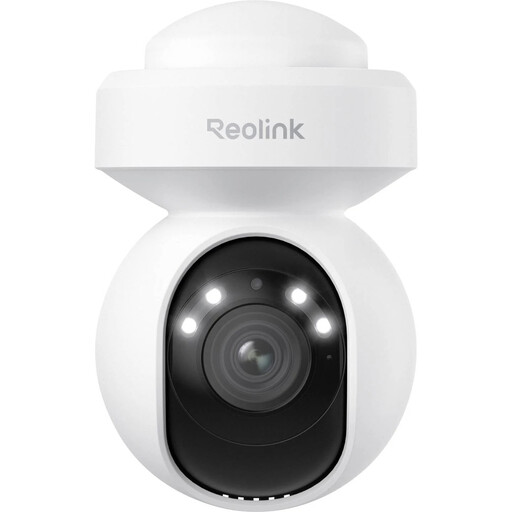
Why this choice: For the most demanding users who want total control and ultra-detailed images. Ideal for monitoring large spaces like a car park, a small business courtyard, or a large garden, with the ability to see far away without loss of quality.
It shatters the concept of basic night vision with colour vision thanks to integrated spotlights. Local storage on a microSD card (up to 512 GB) offers a rock-solid alternative to cloud subscriptions.
3x optical zoom to magnify the image without quality loss, unlike digital zoom. Smart auto-tracking of people and vehicles.
Our editorial team has selected a full range of products that meet our quality standards and comply with current regulations.
The battery life advertised by manufacturers is often optimistic, as it's measured under ideal conditions. In practice, it depends on several factors: the frequency of detections, the duration of recordings, the use of night vision or the spotlight, and extreme temperatures (cold reduces battery performance). For a high-traffic area, expect shorter battery life. Adding a solar panel is often the most convenient solution for a set-it-and-forget-it experience.
Yes, provided you follow certain rules. You have the right to film the inside of your property, including your garden, driveway, or garage. However, it is strictly forbidden to film public spaces (like the street or pavement) or your neighbours' property. Data protection authorities (like the ICO in the UK or state laws in the US) regulate these uses. Be sure to aim your camera so that it only films your private property.
Not necessarily. Many models, including those presented here, offer a local storage option on a microSD card. This allows you to record event videos without monthly fees. A cloud subscription then becomes a convenience or an extra security option (saving images off-site in case the camera is stolen), but it is not essential for its operation. Always check for a microSD card slot if you want to avoid subscriptions.