
Livraison le jour même ou le lendemain

Qualité garantie

Débloquez vos offres de bienvenue: Livraison GRATUITE | Jusqu'à -80 % | 30 jours d'essai gratuits à JoyPlus
Téléchargez l'application
Protecting your home or business is a top priority, but choosing the right security camera often turns into a headache. Technical jargon, an overwhelming number of models, the fear of hidden fees… it's easy to get lost. Do you need solar power? Is a subscription mandatory? What image resolution is actually useful?
As product experts, our mission is to bring you clarity. This guide demystifies the market for wireless outdoor security cameras and gives you all the tools to make an informed decision that fits both your needs and your budget.
Before you dive into comparison charts, let's review the features that truly matter day-to-day. Here are the key points to evaluate.
The term "wireless" can sometimes be misleading. While it does mean a Wi-Fi connection (no network cable), the question of power remains central.
A camera is only useful if its footage is usable. Resolution is a primary indicator: 2K (QHD) or 4K (UHD) models offer a much higher level of detail than Full HD 1080p, which is crucial for identifying a face or a license plate.
Colour night vision is also an increasingly popular feature. Unlike traditional black-and-white infrared vision, it allows you to distinguish colours (clothing, vehicles) even in low-light conditions, providing information that can prove crucial.
Many brands push you to sign up for paid subscriptions to store recordings in the cloud. Fortunately, alternatives exist for those who prefer a subscription-free solution.
Modern cameras go far beyond simple monitoring. Smart motion detection uses AI to differentiate between humans, vehicles, and animals, which drastically reduces false alerts caused by wind or flying leaves.
Other features enhance interaction and coverage:
In light of these criteria, here are three models that have caught our attention. Each meets a specific need, but all share a common goal: to provide effective and easy-to-implement security.
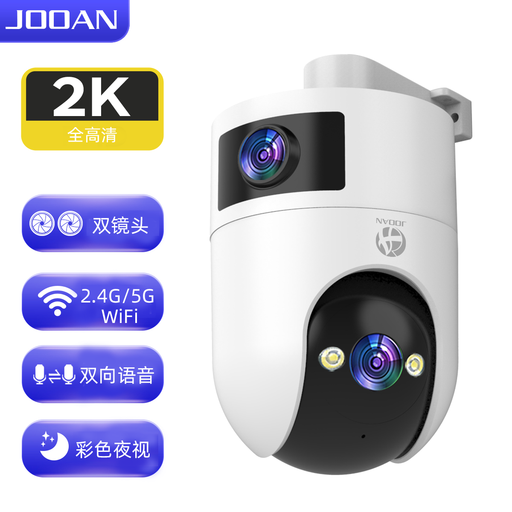
Why It Stands Out: Its standout feature is a dual-lens system. It combines a fixed camera for general surveillance and a motorised PTZ camera to zoom and track movement. This approach allows you to keep an eye on the entire scene while focusing on suspicious activity, all visible on a dual-screen display in the app.
Advantages:
Who Is It For? For those who need to monitor a large outdoor area (garden, yard, car park) and require both a wide overview and the ability to track specific targets.
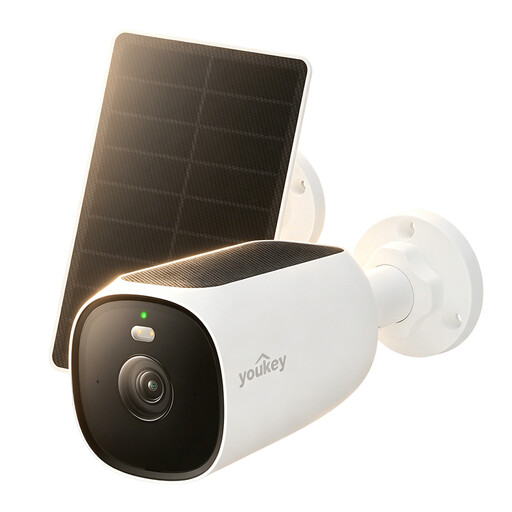
Why It Stands Out: The Youkey S420 is designed for absolute autonomy. It combines a high-capacity 10,000?mAh battery with a dual solar panel system (one integrated and one external) to maximise energy capture. It's the ultimate "set it and forget it" solution.
Advantages:
Who Is It For? Ideal for those who need to monitor areas without easy access to an electrical outlet. It's the perfect solution for a second home, a large property, a shed, or a farm entrance.
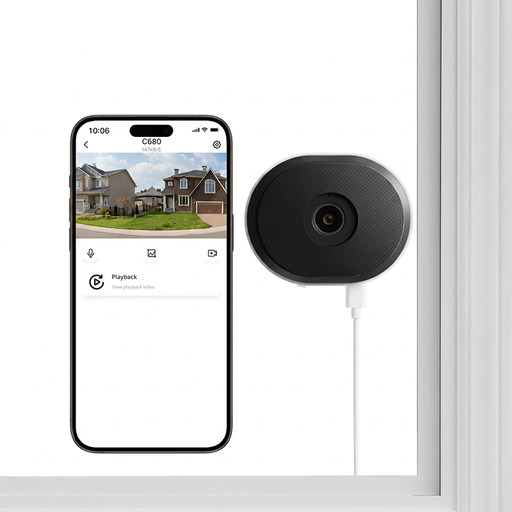
Why It Stands Out: The ZOSI C680 tackles a real challenge: how to monitor the outdoors... from the inside? Its anti-reflection technology is specially designed to film through a window (even double-glazing) without the image being ruined by reflections from the sun or indoor lights. Its easy installation without drilling makes it perfect for renters.
Advantages:
Who Is It For? For apartment renters, shopkeepers wanting to monitor their storefront from inside, or anyone who cannot or does not want to install a camera outdoors.
Every situation is unique. If these three models don't check all your boxes or if you're looking for a more comprehensive setup, other solutions are available.
To explore a wider range of equipment, including multi-camera systems and dedicated recorders, feel free to browse our security recorder category.
Yes, in most cases, it's essential. The term "wireless" refers to data transmission. A Wi-Fi IP camera uses your home network to send alerts and allow you to view the video stream remotely on your smartphone. Some models can record locally to an SD card even if the Wi-Fi goes down, but a connection is still required for all remote features.
The principle is simple: it combines a rechargeable battery with a small photovoltaic panel. The panel captures sunlight to continuously recharge the battery. This allows the camera to operate autonomously, day and night, without being plugged into the mains. Efficiency depends on the amount of sunlight, but recent models with large batteries are designed to last for several days without sun.
Absolutely. One of the main advantages of wireless models is their easy installation. Most only require a few screws to mount the bracket. Models like the ZOSI C680, designed to be placed behind a window, don't even require any drilling. After that, you just need to follow the instructions in the mobile app to connect it to your Wi-Fi network.