
Livraison le jour même ou le lendemain

Qualité garantie

Débloquez vos offres de bienvenue: Livraison GRATUITE | Jusqu'à -80 % | 30 jours d'essai gratuits à JoyPlus
Téléchargez l'application
Protecting your garden, driveway, or entryway is a top priority for many homeowners and renters. But the thought of drilling through walls and running cables across the garden can be daunting. Fortunately, the wireless outdoor security camera is a game-changer: it's a flexible and easy-to-install solution for keeping an eye on your property.
With an overwhelming number of options on the market, it's hard to know where to start. This guide is here to shed light on the essential criteria and introduce you to the models that matter, helping you make an informed choice that's perfectly suited to your needs and budget.
Before you jump on a specific model, it's crucial to understand the features that will truly make a difference in your day-to-day use. Here are the points to consider to guide your decision.
A camera's primary job is to see—and see well. High resolution (Full HD, 2K, or 4K) is therefore essential for identifying a face or reading a license plate without squinting. And since most intrusions happen at night, the quality of the night vision is an absolutely critical criterion. More and more models are incorporating colour night vision, often supported by a small spotlight. The result? Footage that is far more usable than the traditional black and white of infrared.
Wireless means battery-powered. Battery life varies enormously from one model to another, from a few weeks to several months. It all depends on the frequency of detections and your use of the live stream. To never worry about recharging again, some models are compatible with a solar panel (sold separately), which provides near-continuous power.
Smart motion detection is the key to avoiding being bombarded with unnecessary notifications every time a leaf falls. Modern systems combine infrared sensors (PIR) and artificial intelligence to differentiate between humans, animals, or cars. Two-way audio is another major asset: it allows you to exchange a few words with a delivery person or scare off an intruder with your voice.
Then there's the crucial question of storing recordings. Two options coexist:
To help you see more clearly, we've sifted through several options available on the market. Here is a selection of three models that meet very different needs.
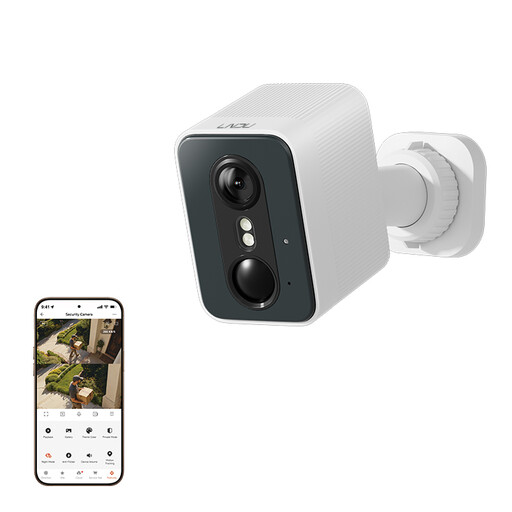
Why it stands out: The LNDU CL01 focuses on impeccable 4K image quality and reliable alerts. Its dual-detection technology, which combines a PIR sensor and radar, drastically reduces false alarms. Its biggest advantage? It includes 128GB of local storage, freeing you from any paid subscription.
Highlights:
Who is it for? This is the ideal choice for those who demand the best image quality and want an all-in-one solution without the hassle of a monthly subscription.
See details for the LNDU 4K camera
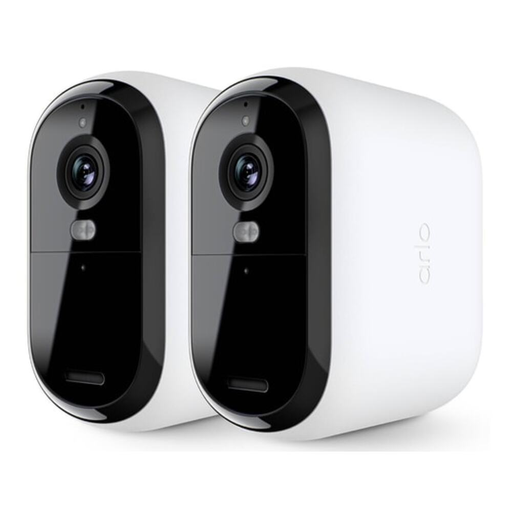
Why it stands out: Arlo is a leading name in home security. This two-pack of Essential 2K XL cameras makes a strong impression with its XL battery, which promises up to four times the battery life of standard models. It's the solution designed for minimal maintenance and extended coverage.
Highlights:
Who is it for? Perfect for those who want to cover several strategic areas (like the entryway and garden) with a reliable, simple system that you can forget about recharging for months on end.
See details for the Arlo Essential2 XL pack
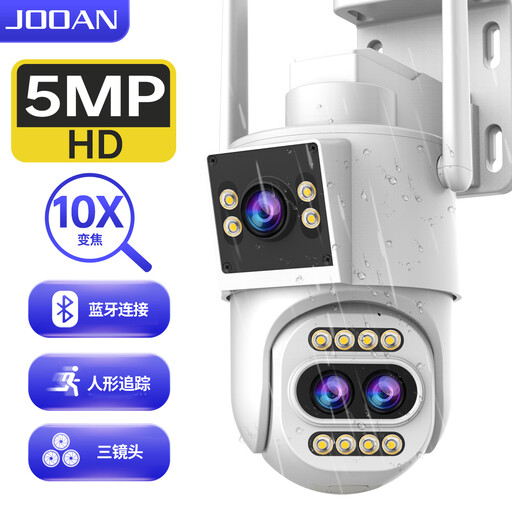
Why it stands out: The JOOAN W10Z-U plays in a different league with its triple-lens system and optical zoom. It combines a fixed wide view and a mobile view (PTZ: Pan-Tilt-Zoom) to track a target or inspect a detail up close. Its 10x optical zoom is a rare feature on consumer-grade models, guaranteeing long-distance clarity that digital zoom can't match.
Highlights:
Who is it for? It's aimed at users who need to monitor large areas (large garden, car park, courtyard...). Its ability to zoom and track movement makes it a much more powerful surveillance tool than a fixed camera.
See details for the JOOAN W10Z-U camera
The models in this guide are designed for use around a home. To monitor an isolated plot of land, a construction site, or for wildlife observation in the forest, you will need different equipment.
For these uses, we recommend checking out our selection of outdoor game security cameras, also known as trail cameras, which are designed for autonomy and discretion in the wild.
Let's be clear: the figures advertised by manufacturers are often very optimistic. Under real-world conditions, battery life heavily depends on the number of detections, the length of recordings, live view usage, and even the weather (cold is the enemy of batteries). Aim for a range of 2 to 6 months for moderate use; that's more realistic.
No, and this is a crucial point. Many models, like the LNDU camera in our selection, include a microSD card slot that allows for free local storage. Other brands, like Arlo, offer a free basic service but reserve their most advanced features (smart detection, extended video history...) for a paid subscription. Be sure to check this point before you buy!
Yes, that's their biggest advantage. Generally, you just need to fix the mount to the wall, screw the camera onto it, and then connect it to your Wi-Fi network from your smartphone app. The only real precaution to take: make sure your Wi-Fi signal is strong enough at the chosen location before you start drilling