Securing your home or business has become simpler than ever thanks to the wireless outdoor security camera. Flexible, affordable... on paper, the solution looks perfect. But in the marketing jungle, between vague technical promises, hidden subscriptions, and gimmicky features, it's easy to get lost and end up with buyer's remorse.
Our mission? To help you cut through the noise. This guide breaks down the criteria that really matter for choosing a model suited to your needs and, most importantly, for avoiding the most common pitfalls.
The 3 Pitfalls to Avoid Before Buying a Security Camera
Marketing can be misleading. Here are three points of caution that will save you time and money.
- The "100% Wire-Free" Myth: A word of caution! Many cameras are sold as "wireless" simply because they use Wi-Fi. However, most need to be constantly plugged into a power outlet, which negates any installation flexibility. A TRULY wireless outdoor security camera must run on a battery or, for complete energy independence, be paired with a solar panel.
- Disguised Subscriptions: A camera advertised as subscription-free can quickly become a source of frustration. Some manufacturers intentionally cripple their products: without paying for their cloud service, you get no video history or smart detection. The smart move? Prioritise models with a microSD card slot. This guarantees full control over your data, with no hidden fees.
- Cut-Rate Night Vision: Basic infrared night vision results in grainy, blurry, black-and-white images, making it impossible to identify a face or a license plate. For effective 24/7 security, colour night vision isn't an option—it's a necessity. Thanks to higher-performance sensors and often a small LED spotlight, it delivers crisp, colourful images, even in the middle of the night.
The Technical Criteria That Make a Difference
To make an informed choice, focus on these three fundamental parameters.
1. Power Source: The Key to Flexibility
Your choice of power source will determine where and how you can install your camera.
- Rechargeable Battery: The most flexible solution for placing your camera exactly where you want it. Battery life can last several months, but will heavily depend on its activity. The only drawback: you'll have to remember to take it down for recharging.
- With Solar Panel: The pinnacle of autonomy. The solar panel, included or optional, continuously recharges the battery. A few hours of sunlight per day are enough to make it completely independent. This is the "set it and forget it" solution.
- Mains Powered: Although less flexible, this power source ensures uninterrupted operation, a key advantage for the most sensitive areas. It's almost standard on PTZ (Pan-Tilt-Zoom) models, which are more power-hungry.
2. Connectivity: Wi-Fi or 4G?
How your camera connects to the internet is crucial.
- Wi-Fi: The standard choice. Before buying, simply check that your router's signal reaches the spot where you plan to install the camera. Dual-band models (2.4 GHz and 5 GHz) are a plus for stability. As a reminder, 2.4 GHz has a longer range and better wall penetration, while 5 GHz is faster at short range.
- 4G: The essential backup solution for areas beyond Wi-Fi range: a second home, garden shed, construction site, garage, stable... Equipped with a SIM card and a small data plan, it becomes 100% autonomous and no longer depends on your local network.
3. Resolution and Storage: Seeing and Saving the Evidence
A great image is useless if it can't be easily recorded and reviewed.
- Resolution: Forget Full HD (1080p)—it's outdated. Aim for at least 2K (3 or 4 Megapixels) resolution. It's the ideal compromise for identifying a face or reading a license plate without breaking the bank. 4K, which requires more storage and bandwidth, remains reserved for the most demanding needs.
- Storage: For a truly subscription-free experience, a microSD card slot is your best ally. It frees you from cloud dependency by recording everything locally. Paid cloud storage still has its use: keeping your recordings safe if the camera itself is stolen or vandalised.
Our Recommended Camera Picks
Rather than an endless list, here are three models that meet specific needs, in line with the criteria we've just discussed.
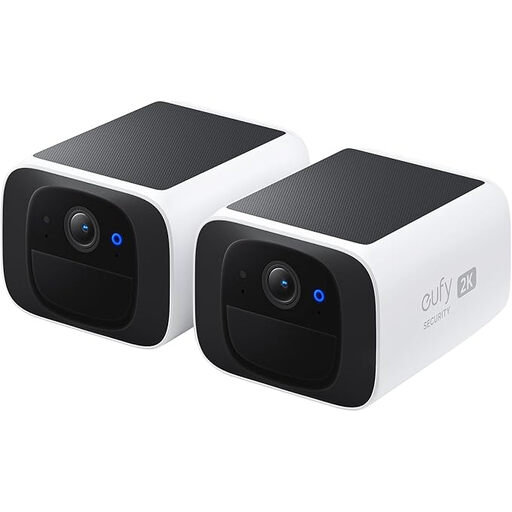
IDEAL FOR: TOTAL AUTONOMY
Why it stands out: This is the perfect model for those seeking a "set it and forget it" solution. Ideal for monitoring a driveway, garden, or entrance without ever worrying about the battery or a subscription.
How it avoids the pitfalls
It's a TRUE solar camera. Its integrated panel ensures virtually unlimited autonomy, busting the "fake wireless" myth. And of course, it works perfectly without any subscription, with 100% local storage.
Its key strengths
Integrated solar power for maximum autonomy. 2K resolution for crisp images. No monthly fees, ever.
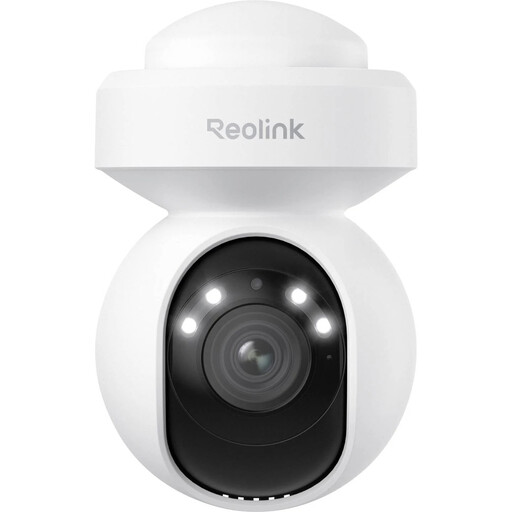
IDEAL FOR: MONITORING LARGE AREAS
Why it stands out: Essential for large gardens or commercial car parks. Its motorisation and zoom allow you to scan a very wide area with a single camera and automatically track a moving target.
How it avoids the pitfalls
Its zoom is optical (3x), not digital: the image remains perfectly sharp even when zoomed in. Compatible with microSD cards up to 512 GB, it's the champion of local storage without a subscription.
Its key strengths
355° motorised coverage and 3x optical zoom. Smart auto-tracking of people and vehicles. Colour night vision.
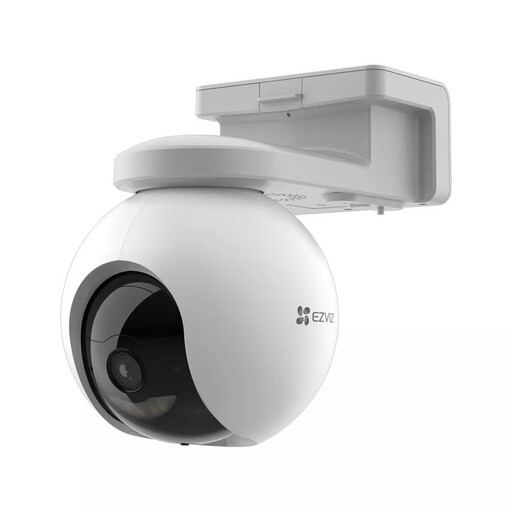
IDEAL FOR: AREAS WITHOUT WI-FI
Why it stands out: This is the ultimate solution for locations without Wi-Fi. Perfect for a remote cabin, a boat in a harbour, a construction site, or a garage, it operates completely autonomously on the 4G network.
How it avoids the pitfalls
As a 4G camera, it completely bypasses the range limitations of Wi-Fi. Its high-capacity battery, compatible with a solar panel (optional), gives it total independence.
Its key strengths
4G LTE connectivity for installation anywhere. 10400mAh battery and built-in GPS. Person detection and motorised tracking.
Looking for other options?
We have compiled a complete selection of cameras that meet our strict selection criteria and current standards.
Frequently Asked Questions
Is a subscription-free camera really 100% free?
Yes, for all its basic functions. A model sold as "subscription-free" must allow you to view the live feed, receive alerts, and record locally (on a microSD card) without ever paying a dime. The subscriptions offered are always optional and cover advanced services (long-term cloud storage, AI video analysis, etc.), but are never necessary for the camera to function properly.
What is the real-world battery life of a battery-powered camera?
Battery life depends heavily on usage: frequency of detections, length of recorded clips, weather, Wi-Fi signal strength... Expect a wide range, from a few weeks to 6 months. To never have to think about it again, the solar panel option is unbeatable: it recharges the battery continuously and makes the camera almost autonomous year-round.
Is it complicated to install an outdoor camera yourself?
Not at all! Wireless models are designed for easy DIY installation in minutes. The process is always the same:
- Charge the battery.
- Download the manufacturer's app on your smartphone.
- Follow the instructions to connect the camera to your network (Wi-Fi or 4G).
- Fix the mount to the wall with a few screws. The entire operation rarely takes more than 20 minutes.