
Livraison le jour même ou le lendemain

Qualité garantie

Débloquez vos offres de bienvenue: Livraison GRATUITE | Jusqu'à -80 % | 30 jours d'essai gratuits à JoyPlus
Téléchargez l'application
Protecting your home or business premises is a top priority. The market is flooded with solutions, but how can you navigate the options and choose the right wireless outdoor security camera without falling for marketing ploys? As a product expert for Joybuy, my mission is to help you see things more clearly.
Before you make a purchase, let's break down the 3 most common traps that can turn a good investment into a real headache.
To avoid these unpleasant surprises, focus on objective technical specifications. Here are the three non-negotiable points to scrutinise.
The absence of cables is an undeniable advantage, but it raises the crucial question of power. Your choice will depend directly on the intended location and your usage.
High resolution is good, but it isn't everything.
This is often the catch hidden behind the promise of a subscription-free security camera.
Rather than an endless list, here are a few models that tick all the boxes for specific user profiles.
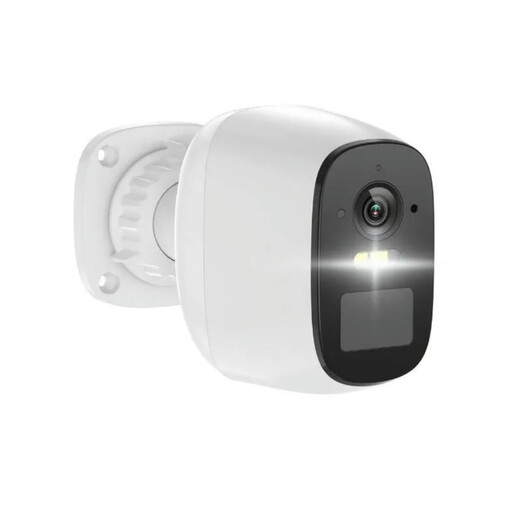
User profile: Perfect for a first-time setup. Completely wireless thanks to its rechargeable battery, it can be installed in minutes to keep an eye on an entrance or garden. Its integration with voice assistants and the Tuya ecosystem makes it particularly easy to use day-to-day.
It offers local storage on a microSD card (up to 256 GB), freeing you from any subscription to save video clips. Its PIR sensor, which detects humans, limits false alerts and thus preserves battery life.
100% wireless installation and compatibility with a solar panel (sold separately) for extended battery life.
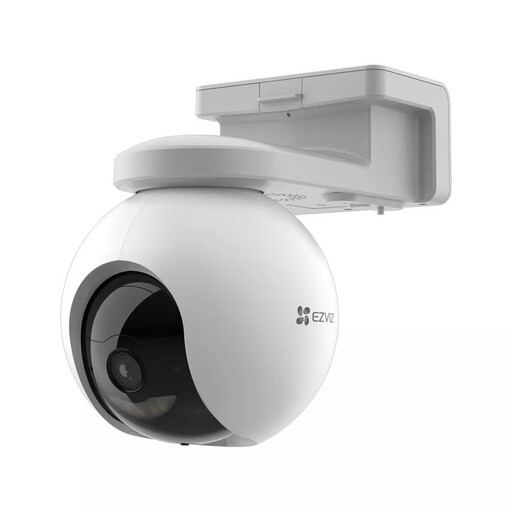
User profile: This is THE solution for locations without Wi-Fi. Thanks to its SIM card port, this camera connects directly to the 4G LTE network. It's perfect for a second home, an agricultural plot, or a construction site requiring fully autonomous surveillance.
It bypasses the connectivity problem by operating without Wi-Fi. Its high-capacity battery (10,400 mAh), compatible with the EZVIZ solar panel, meets the challenge of autonomy on a remote site. Local storage on a microSD card is, of course, included.
4G connectivity and PTZ motorisation for 360° panoramic coverage with no blind spots.
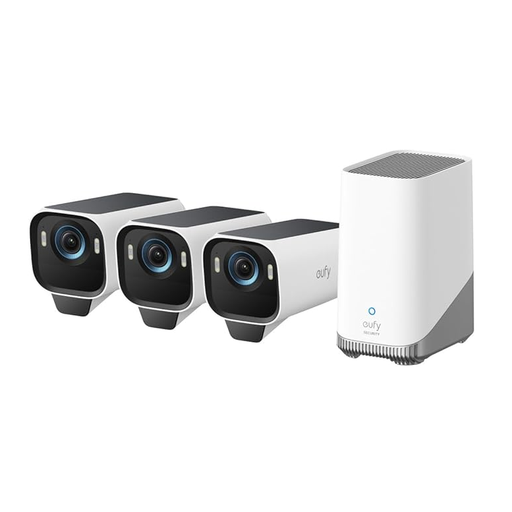
User profile: This outdoor surveillance kit is for those who want a turnkey, comprehensive, and ultra-high-performance solution. It includes three 4K cameras and a HomeBase station for impeccable image quality and a centralised ecosystem that simplifies everything.
It ticks all the boxes: integrated solar power solves the battery life issue. The HomeBase S380, with its 16 GB of local storage (expandable up to 16 TB!), guarantees a truly subscription-free experience, including for advanced AI features like facial recognition.
4K resolution, continuous solar power, and massive local storage for absolute peace of mind, with no hidden fees.
We have curated a complete and up-to-date selection of products that meet our strict selection criteria and security standards.
Cold weather directly impacts the performance of lithium-ion batteries. A camera rated for 6 months of battery life in mild weather will often only last 2 to 3 months during a harsh winter with frequent detections. To counteract this, opting for a solar security camera is the best solution. It provides a maintenance charge even on overcast days.
It all depends on your usage. Live streaming is the most data-intensive. For standard use (recording short clips on detection, about 10 to 20 per day), a 2 to 5?GB per month plan is usually sufficient. Modern cameras use efficient video compression codecs (like H.265) to optimise data consumption.
Yes, installation is often regulated by law to protect the right to privacy. You are generally permitted to film within your property lines (your home's facade, garden, private driveway). However, it is typically forbidden to film public spaces (the street, the pavement) or your neighbours' property. If you employ domestic staff, you may be required to inform them of the cameras' presence. For businesses, specific registrations may be required. Please check your local laws and regulations, as they vary by country and region.