Joybuy Insights

How to Choose the Right Wireless Mouse: A Complete Buyer’s Guide

A wireless mouse promises a clutter-free desk and complete freedom of movement. However, the market is flooded with models featuring often misleading specifications. Between the lure of "universal" ergonomics and obscure technical jargon, it's easy to end up with an accessory that's uncomfortable or ill-suited to your needs.

As a Product Expert at Joybuy, my role is to help you see things more clearly. Let's break down the pitfalls to avoid and the criteria that truly matter, so your next office mouse is a sound investment, not a source of regret.

The 3 Pitfalls to Avoid When Buying a Wireless Mouse

Before you even start looking at models, you need to know how to see past the marketing claims that often lead to a poor choice.

  1. The myth of "universal" ergonomics: Many mice are labelled "ergonomic" without justification. A shape designed for a large right hand will be a nightmare for a left-handed person or someone with small hands. A true ergonomic mouse must adapt to your body and grip, not the other way around.
  2. Confusion over connectivity: Buying a 2.4 GHz mouse thinking you can connect it to a tablet without a USB-A port is a classic mistake. Likewise, a Bluetooth mouse can have slight latency which, while unnoticeable for office work, may annoy some users. Understanding this distinction is crucial.
  3. The hidden cost of batteries: A battery-powered model might seem budget-friendly at first. But in reality, the recurring cost of disposable batteries weighs heavily on your wallet, not to mention the environmental impact. A rechargeable mouse often proves to be a much smarter choice in the long run.

The Essential Criteria for Making the Right Choice

For a successful purchase, focus on these three points that will make all the difference in your daily use.

Connectivity: 2.4 GHz Dongle, Bluetooth, or Both?

This is the first technical detail to confirm.

  • 2.4 GHz Connection (with USB dongle): This is the simplest and most stable solution. Plug the small receiver (dongle) into a USB port, and the mouse is instantly recognized (Plug and Play). It's the ideal solution for a fixed workstation.
  • Bluetooth Connection: No dongle needed, which frees up a valuable USB port. This is the preferred solution for ultrabooks, tablets, or if you're aiming for a minimalist setup.
  • Dual Connectivity (2.4 GHz + Bluetooth): The best of both worlds. These multi-device mouse models allow you to switch between several devices with a single click (for example, your desktop PC via the dongle and your laptop via Bluetooth).

Ergonomics: The Shape That Adapts to You (Not the Other Way Around)

Comfort is not an option. After several hours, a poorly-suited mouse can cause strain or even pain.

  • Ambidextrous Mouse: Symmetrical in design, it's suitable for both right- and left-handed users for common office tasks.
  • Ergonomic Mouse for Right/Left-Handers: Its shape is sculpted to perfectly fit the palm and position the fingers naturally. Essential for intensive use.
  • Vertical Mouse: It places the wrist and forearm in a neutral, "handshake" position. A vertical mouse is often recommended for people suffering from wrist pain (carpal tunnel syndrome), as it limits forearm pronation.
  • Left-Handed Mouse: A true left-handed mouse goes far beyond a simple ambidextrous model. It has an inverted ergonomic shape and navigation buttons placed for the left thumb.

Power Source: Rechargeable vs. Batteries, the Showdown

  • Battery-Powered Models (AA or AAA): The advantage is being able to swap the battery in a flash when it runs out. The downside: the long-term cost and environmental impact.
  • Rechargeable Models: They have a built-in lithium-ion battery, usually rechargeable via a USB-C port, which has become the standard. This is a more economical and eco-friendly solution in the long run. Battery life varies from a few weeks to several months depending on the model.

Top Wireless Mouse Recommendations

Here is our selection, designed for different user profiles and based on the criteria we've just discussed.
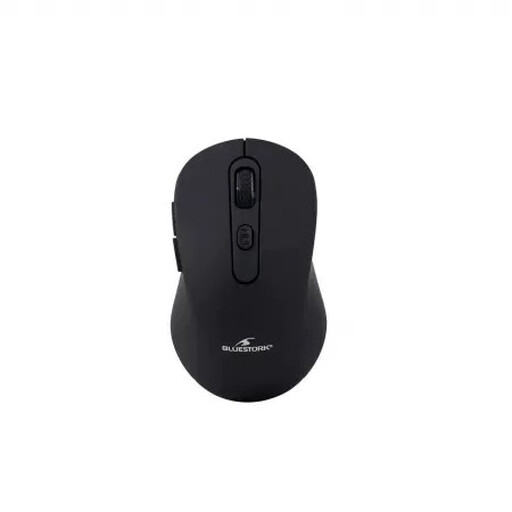
IDEAL FOR: THE MULTI-DEVICE USER
Office Mouse-2.4Ghz+Bluetooth-Rechargeable - 4800 DPI - Black

Office Mouse-2.4Ghz+Bluetooth-Rechargeable - 4800 DPI - Black

Why we love it: Perfect for those who juggle multiple devices: the desktop PC at the office (connected via the 2.4 GHz dongle) and the laptop or tablet on the go (via Bluetooth).

Why it's a great deal

No more dilemmas! Its dual connectivity gives you the choice between 2.4 GHz and Bluetooth. The built-in battery frees you from the hassle and cost of batteries.

Key Features

Versatility: 2.4 GHz + Bluetooth connection. Cost-effective: Rechargeable battery. Precision: Adjustable 4800 DPI sensor.
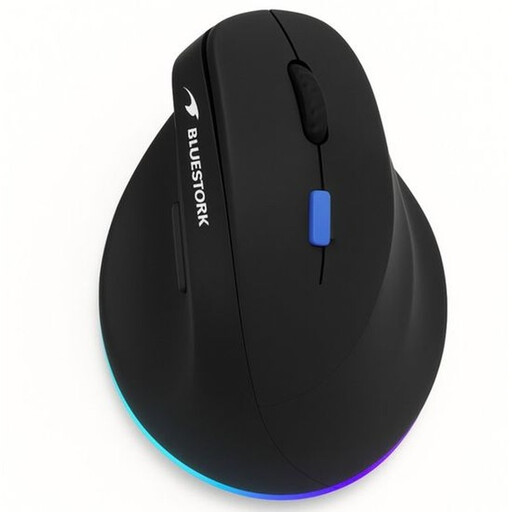
IDEAL FOR: THE COMFORT-CONSCIOUS PROFESSIONAL
Ergonomic mouse right-handed-Blue touch-2.4G+BT-4800DPI-Black

Ergonomic Vertical Mouse for Right-Handers - 4800 DPI

Why we recommend it: Designed for those who spend entire days in front of their screen. Its unique vertical design relieves wrist strain by promoting a natural forearm posture.

Why it's a smart choice

It doesn't promise "universal" ergonomics; it offers a targeted and effective solution for a specific problem: comfort for right-handers who work long hours.

Key Features

Vertical Design: Reduces wrist strain. Dual Connectivity: 2.4 GHz and Bluetooth. Rechargeable: Built-in battery with USB-C port.
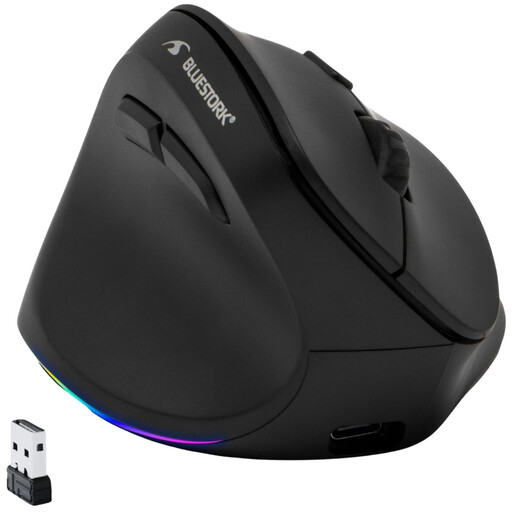
IDEAL FOR: THE LEFT-HANDED USER
Ergonomic Mouse Left-Handed-4800DPI-Wireless Rechargeable-RGB

Ergonomic Vertical Mouse for Left-Handers - Rechargeable

Why it's a no-brainer: Finally, a model that makes no compromises for left-handers! Its vertical shape and buttons are specifically placed for the left hand, offering a level of comfort that a simple ambidextrous mouse can never match.

The End of Compromise

It shatters the "one-size-fits-all" ergonomics myth by catering to a demographic too often overlooked by manufacturers.

Key Features

True Left-Handed Design: Adapted shape and buttons. Vertical Ergonomics: Natural wrist posture. Rechargeable: No more batteries.

Still not convinced?

Explore our full selection of mice, all tested and approved by our experts according to the criteria in this guide.

Wireless Mice: Your Frequently Asked Questions Answered

What is the lifespan of a wireless mouse?

It all depends on the build quality and your usage. The switches (the "clicks") are rated for millions of actuations. As for the battery, a rechargeable model will handle several hundred charge cycles. For typical office use, a well-made wireless mouse will easily last you 3 to 5 years.

How do I connect a Bluetooth wireless mouse without a dongle?

It's very simple. Enable Bluetooth on your computer, tablet, or smartphone. Turn on your mouse, then put it into "pairing" mode (usually by pressing and holding a dedicated button, often located on the bottom of the mouse). It will appear in the list of detected Bluetooth devices. All you have to do is select it to complete the connection.

Is a silent mouse really useful?

Absolutely! In an open-plan office, a library, or just at home in the evening so you don't disturb anyone, a silent mouse is a game-changer. Its muffled clicks preserve the peace and quiet for those around you. It's also an excellent way to stay focused by eliminating a source of auditory distraction.