
Livraison le jour même ou le lendemain

Qualité garantie

Débloquez vos offres de bienvenue: Livraison GRATUITE | Jusqu'à -80 % | 30 jours d'essai gratuits à JoyPlus
Téléchargez l'application
A great image is captivating, but poor audio can ruin everything. For content creators, vloggers, and journalists, clear sound isn't an option—it's a necessity. The built-in microphone on your smartphone or camera quickly shows its limits, especially when you're on the move or in a noisy environment. Investing in a wireless lavalier mic is the best way to elevate your production quality.
But with an overwhelming number of options on the market, it's hard to know where to start. This guide is here to help you make sense of it all and choose the gear that’s truly right for your needs, based on essential criteria like compatibility, sound quality, and battery life.
Before we dive into our top picks, let's review the key factors that should guide your decision.
This is the number one priority: make sure the microphone is compatible with your equipment. A wireless mic for smartphones won't necessarily have the same connectors as a mic for cameras. Be sure to check the included adapters:
A good wireless mic kit will always include multiple adapters to ensure maximum versatility.
For a clear and intelligible voice, two aspects are crucial. On one hand, there's the recording quality itself, often indicated in bits (e.g., 24-bit or 32-bit float). A 32-bit float recording offers such a wide dynamic range that it prevents audio clipping (distortion), even in very loud environments.
On the other hand, there's active noise reduction. A mic with noise reduction is a major asset for a vlogging mic or an interview mic used outdoors. This technology uses algorithms to isolate the voice and reduce background noise (wind, traffic, crowds), ensuring a flawless result without spending hours in post-production.
Nothing is more frustrating than a battery dying mid-shoot. Pay close attention to the battery life of the transmitters (TX) and the receiver (RX), as well as the capacity of the charging case. Most models come with a case that not only protects the gear but also recharges it multiple times, ensuring a full day of stress-free use.
The transmission range is also a key factor, especially for dynamic shoots. A range of 100 to 250 meters with a clear line of sight is now the standard for consumer-grade professional wireless mic systems, offering complete freedom of movement.
Here are a few models that caught our eye, selected for their performance, smart design, and suitability for different needs and budgets.
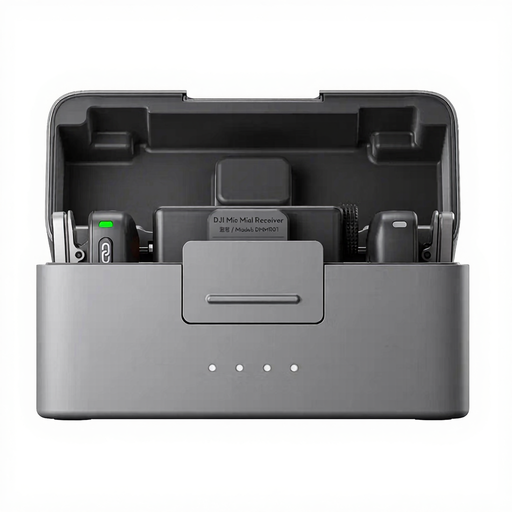
Why it stands out: A complete, ready-to-use solution for recording two sound sources simultaneously. Its easy pairing and ultra-compact charging case make it the ideal travel companion.
Key Features:
Who is it for? Vloggers, journalists, and creators who frequently conduct interviews and need a reliable, portable, and easy-to-use two-person system.
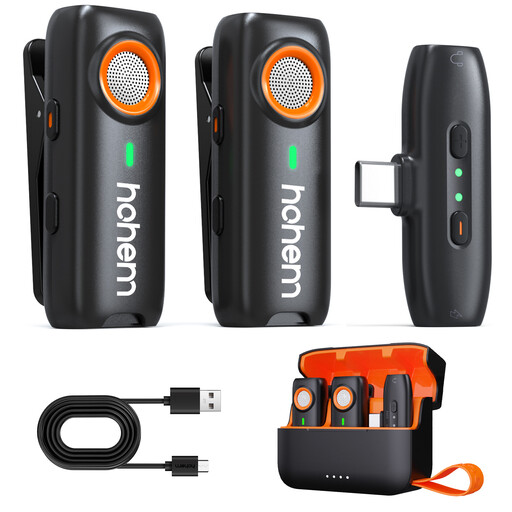
Why it stands out: This model is distinguished by its smart features, including three-level active noise reduction and the ability to record a backup track on a TF card (microSD).
Key Features:
Who is it for? Smartphone creators looking for an affordable and versatile solution with practical bonuses like remote control and backup recording.
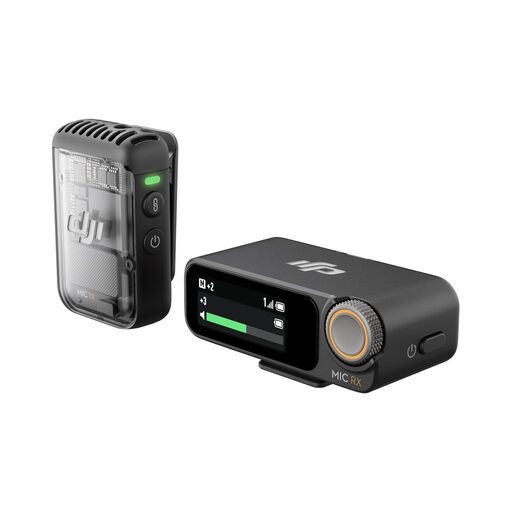
Why it stands out: The DJI Mic 2 goes all-in on audio quality with its internal 32-bit float recording. This technology preserves every sonic detail, even during unexpected volume spikes, offering unparalleled flexibility in post-production.
Key Features:
Who is it for? Demanding solo creators who prioritize audio quality above all else. It's the peace-of-mind choice for those who shoot in unpredictable sound environments and want to ensure they never miss a take due to clipped audio.
If the models presented don't quite meet your needs, or if you want to explore other types of audio solutions, many alternatives are available.
? Explore our full range of wireless audio recorders to find the perfect gear for you.
1. How do I connect a wireless lavalier mic to a smartphone? Most modern kits are "plug-and-play." Simply plug the receiver (RX) into your phone's port (USB-C or Lightning) using the provided adapter. The transmitter (TX), which captures your voice, will then automatically connect to the receiver. No extra software is needed.
2. Is a mic with noise reduction really useful for vlogging? Yes, and it's a major advantage. When you're vlogging outdoors, you're inevitably exposed to wind, traffic, and ambient noise. A good noise reduction feature reduces these disturbances in real time. The result: your voice is much clearer and more pleasant for your audience to listen to, without you having to spend hours on audio editing.
3. What's the difference between an RF mic and a standard wireless mic? The term RF mic (Radio Frequency) historically refers to professional systems that use radio waves to transmit sound, giving them a long range and a very stable connection. Today, most quality consumer-grade wireless lavalier mics are based on this technology. The terms "wireless mic" and "RF mic" are therefore often used interchangeably to describe these systems.