
Livraison le jour même ou le lendemain

Qualité garantie

Débloquez vos offres de bienvenue: Livraison GRATUITE | Jusqu'à -80 % | 30 jours d'essai gratuits à JoyPlus
Téléchargez l'application
4K video is great. But if your audio sounds like it's coming through a dial-up modem, your video loses all its impact. For content creators, vloggers, and mobile journalists, audio quality is no longer an option: it's what makes or breaks your content. The built-in microphone on your smartphone or camera quickly shows its limitations, especially outdoors or as soon as you move away from it. The wireless lavalier mic then becomes essential for capturing a clear, professional voice in any situation.
To help you make an informed decision, here are the key points to check and our selection of the best models available right now.
Before you buy, there are a few technical points to verify to ensure your investment perfectly matches your needs.
This should be your first check: connectivity. A wireless mic for a smartphone won't connect the same way as a wireless mic for a camera.
Make sure the kit includes all the necessary adapters to switch seamlessly between your different devices.
A lavalier mic with noise reduction is a must-have if you shoot outdoors or in noisy environments (expos, busy streets, etc.). This technology uses algorithms to isolate your voice and cancel out distracting background noise like wind, traffic, or ambient conversations. For a vlogging mic or interviews, this feature literally transforms the final quality of your production.
Nothing is more frustrating than a battery dying mid-shoot. Check the battery life of the transmitters, but also that of the charging case that comes with them. A good combined battery life (often over 15 hours with the case) will save you from a lot of stress during long creation days.
Wireless range is just as crucial. A range of 50 metres is a good baseline, but models that go up to 100 metres or more will offer you maximum flexibility. This allows you to move away from the camera without fearing any audio dropouts.
Let's get down to business with a few models that particularly caught our attention.
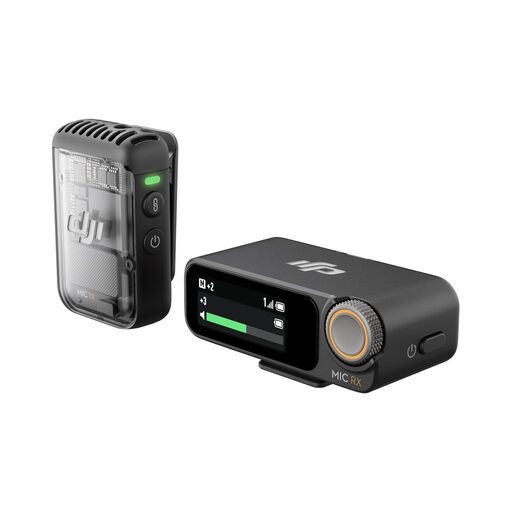
Why it stands out The DJI Mic 2 is an all-in-one solution that prioritises quality and reliability. Its internal 32-bit float recording is a true safety net: it captures perfect audio even if the source levels are clipping, offering incredible flexibility in post-production. It can even be used as a completely standalone recorder.
Highlights
Who is it for? For demanding creators, videographers, and journalists looking for rock-solid reliability and impeccable audio quality, with the peace of mind that comes with backup recording.
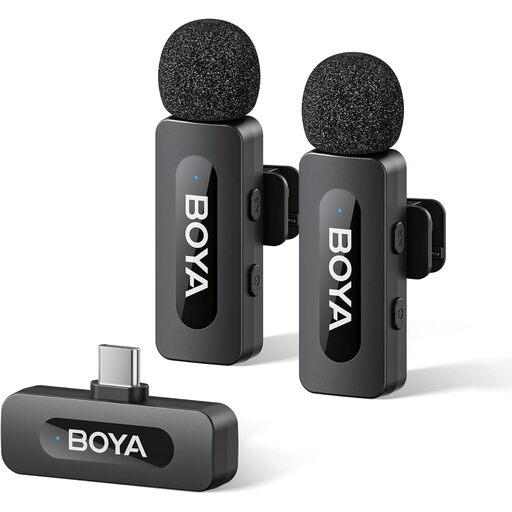
Why it stands out The wireless mic kit BOYA BY-V20 is all about simplicity and efficiency. Its receiver connects directly to your device's USB-C port, making it extremely convenient for owners of Android smartphones or recent iPhones. With its one-click noise reduction, it's the ideal companion for beginners.
Highlights
Who is it for? For mobile creators (TikTok, Reels, YouTube Shorts) who want an affordable and incredibly effective plug-and-play solution to instantly boost their sound quality.
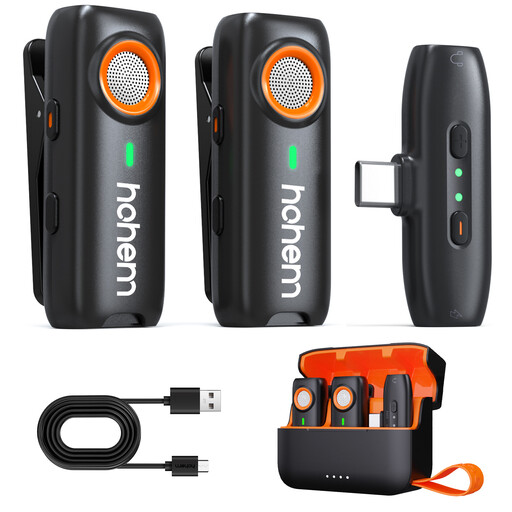
Why it stands out This model from hohem plays the versatility and smart features card. It offers three levels of DSP noise reduction to adapt precisely to the sound environment. The icing on the cake is the ability to add a TF card for backup recording and the remote shutter function, making it a true Swiss Army knife.
Highlights
Who is it for? For versatile vloggers and creators who like to maintain control over their audio and will appreciate its clever features like backup recording and the remote shutter.
Our selection covers the most common needs, but the market is full of other gems. To explore other configurations, connections, or budgets, take a look at our complete collection.
? Explore our full range of wireless microphones
It couldn't be simpler; modern kits are designed for it. You plug the receiver into your phone's port (USB-C or Lightning), turn on the transmitter (the small pack you clip onto yourself), and that's it! Pairing happens automatically in seconds, and your smartphone immediately uses the external mic.
Yes, and it's essential as soon as you step out of a perfectly quiet studio. For a vlogging mic outdoors, an interview in a café, or even a recording at home with a bit of echo or fan noise, noise reduction cleans up the audio. The result: your voice comes through clearly and professionally, without you having to spend hours fighting with it in post-production.
It's a matter of use case. A lavalier mic is omnidirectional: it picks up sound from all around it. Since it's placed very close to your mouth, it isolates your voice perfectly. Conversely, a directional (or "shotgun") mic is like an audio zoom lens: it focuses on the sound coming from the front and ignores noise from the sides and rear. The former is perfect for your voice, the latter for targeting a more distant sound.