
Livraison le jour même ou le lendemain

Qualité garantie

Débloquez vos offres de bienvenue: Livraison GRATUITE | Jusqu'à -80 % | 30 jours d'essai gratuits à JoyPlus
Téléchargez l'application
In video, poor quality audio is unforgiving. It alone can ruin the most beautiful shoot. For content creators, journalists, and other visual professionals, the wireless lavalier microphone has become an indispensable ally. The problem: the market is a jungle of marketing promises, where it's easy to make a mistake and regret it.
Our mission is to help you see things more clearly. Let's break down the most common pitfalls and the essential criteria for making the right choice, without getting it wrong.
The 3 classic pitfalls when buying a wireless mic:
To avoid being misled, focus on these key technical specifications. They are the true measure of your future microphone's performance and versatility.
First and foremost, inspect the receiver's connectivity. This is what ensures your smartphone mic or wireless camera mic will work flawlessly.
A good wireless mic kit should clearly list compatible devices and include all necessary adapters for use right out of the box.
Battery life is measured on two levels:
Good noise reduction should be able to dampen ambient background sounds (air conditioning, distant traffic, etc.) while preserving the natural clarity and timbre of the voice. More advanced models often offer multiple levels of reduction, allowing you to adapt to the environment. Be wary of systems with a single "on/off" mode, which can be too aggressive in quiet conditions.
Because every creator has different needs, here are our recommendations for three distinct user profiles.
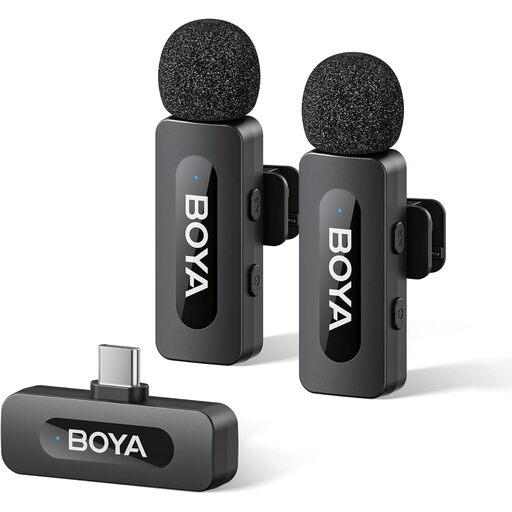
Why we chose it: Perfect for getting started with smartphone content creation on a budget. This kit includes two transmitters, ideal for interviews or two-person videos, and plugs directly into a USB-C port, which greatly simplifies setup.
It sidesteps the compatibility trap by focusing entirely on a direct USB-C connection, with no complex adapters needed for recent Android devices.
Dual-transmitter kit at an accessible price. One-click activatable noise reduction for busy sound environments.

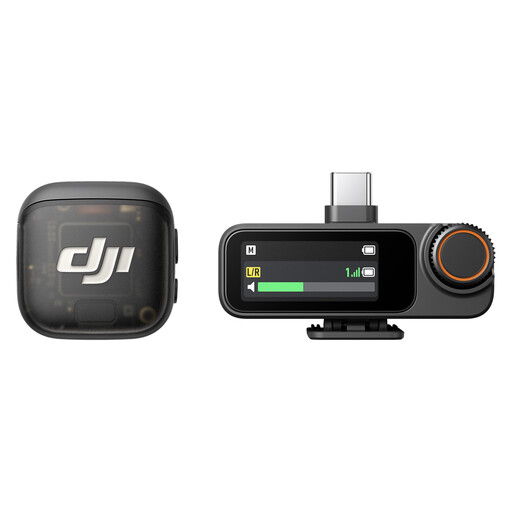
Why we chose it: For the solo creator seeking professional-grade audio quality and rock-solid reliability. The DJI Mic 3 is a benchmark for its build quality, ease of use, and advanced features.
It guards against the risk of clipped or unusable audio with its internal 32-bit float recording. This *backup* feature is a real lifesaver: it records a safety track that's impossible to clip, saving you in post-production.
Professional audio quality with adaptive gain. Intelligent and effective noise reduction. Broad compatibility (iPhone, Android, camera) with included adapters.
Why we chose it: This **wireless mic kit** is built for intensive use and multi-person setups. With two transmitters and a charging case, it's perfect for journalists, podcasters, and videographers conducting interviews.
It solves the problem of on-the-go battery life. The charging case ensures that both transmitters and the receiver are always ready for action, even on long shoot days. No more low-battery anxiety.
All-in-one solution for interviews. Charging case for extended battery life and secure storage. All the professional features of the DJI Mic 3.
Discover our full selection of products that meet our selection criteria and current standards.
For a recent Android smartphone or an iPhone 15 (and later models), a receiver with a USB-C plug will connect directly. For older iPhones, you'll need a receiver with a Lightning plug or an MFi (Made for iPhone) certified adapter. Always make sure the kit you're considering includes the right connector for your device.
The lifespan depends on the build quality and how it's maintained. The built-in lithium-ion battery is often the first component to show signs of wear after a few years (typically 3 to 5 years, depending on use). To extend its life, avoid frequent full discharges and do not store it in environments with extreme temperatures (very hot or very cold).
It depends on your shooting environment. If you primarily film indoors in a quiet location, it's not essential, and it's sometimes better to disable it for a more natural sound. However, for a wireless vlogging mic used outdoors (on the street, in a park, at an event, etc.), good noise reduction becomes indispensable for isolating your voice and ensuring a clean, usable audio track.