
Livraison le jour même ou le lendemain

Qualité garantie

Débloquez vos offres de bienvenue: Livraison GRATUITE | Jusqu'à -80 % | 30 jours d'essai gratuits à JoyPlus
Téléchargez l'application
To stand out, a flawless image is no longer enough. For content creators, journalists, and videographers, sound has become the name of the game. Clear, crisp audio is what separates an amateur video from a production that inspires confidence. The problem: the jungle of wireless lavalier mics can quickly become a headache.
This guide is here to demystify the options and help you choose the equipment that's perfectly suited to your needs, whether you're shooting interviews, vlogs, or short-form social media content. We'll break down the essential criteria before presenting a selection of top models for 2026.
Before diving into our selection, let's review the features that truly make a difference. Here are three key points to check to ensure you make the right choice.
This is the starting point: your microphone must be able to connect to your gear. The connectivity of a wireless mic for smartphones is obviously not the same as that of a mic for cameras.
The number one goal of a good microphone is flawless voice capture. While the quality of the capsule is paramount, the onboard sound processing technologies play an equally crucial role. A mic with noise reduction is essential for shooting outdoors or in noisy environments (exhibitions, busy streets).
Opt for models equipped with a Digital Signal Processing (DSP) chip. This allows for active filtering of background noise like wind or traffic, while preserving voice intelligibility. Some microphones even offer multiple levels of noise reduction to adapt to any situation.
Wireless means freedom, but that freedom is conditioned by two factors: battery and transmission distance.
Let's get down to specifics with a selection of models that caught our attention, suitable for all profiles and budgets.
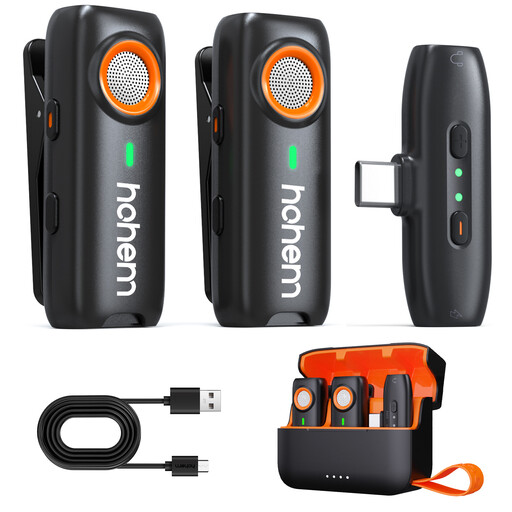
Why It Stands Out
This model is all about versatility and security. It features 3-level DSP noise reduction to adapt to both quiet environments and windy outdoor settings. Its real trump card is its backup recording function to a TF card (not included): a fail-safe feature that saves your audio take if something goes wrong. In case of interference, a local audio copy is saved on the transmitter.
Key Features
Who Is It For?
Mobile content creators (vloggers, YouTubers) who have back-to-back recording sessions and want a reliable solution with a backup option to secure their takes.
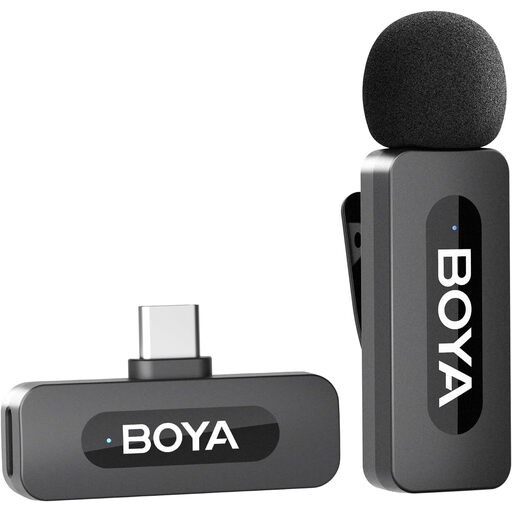
Why It Stands Out
The BOYA BY-V10 is the champion of simplicity. You plug it in, and it works. Its receiver connects directly to the USB-C port of an Android smartphone or a recent iPhone, making it operational in seconds. The noise reduction is activated with a single press, making it an incredibly effective and accessible tool, even for complete beginners.
Key Features
Who Is It For?
Smartphone users looking for a plug-and-play USB-C mic for Android or iPhone for stories, short videos, or video calls with high-quality sound.
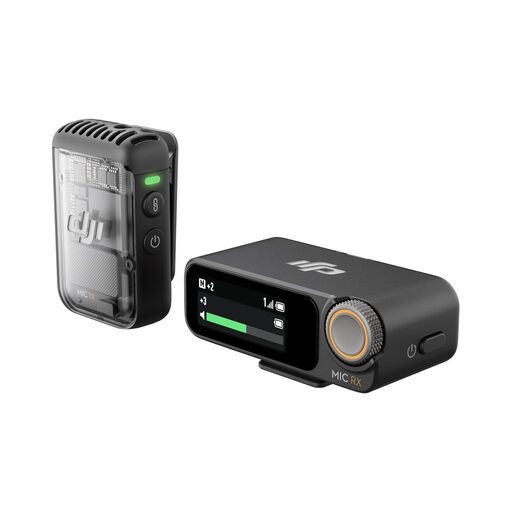
Why It Stands Out
Stepping up in quality, the DJI Mic 2 is a benchmark for creators who make no compromises on audio quality. Its secret weapon? Internal 32-bit float recording, a technology that handles the most extreme volume peaks without ever clipping. No more distorted audio! Its intelligent noise reduction, touted by DJI as highly effective, promises to isolate the voice with formidable efficiency.
Key Features
Who Is It For?
Videographers, journalists, and semi-pro or professional content creators who demand impeccable audio quality and rock-solid reliability, especially for an interview mic in challenging conditions.
This selection is just a glimpse into the world of audio. If you have different needs (e.g., two transmitters for an interview) or simply want to explore more possibilities, feel free to take a look at our catalog.
For a complete overview, explore our full collection of microphones and audio recorders.
It all depends on your smartphone's connector. For models with a USB-C or Lightning port, simply plug the receiver directly into the port. The phone will instantly recognize it as an external microphone. For older phones with a jack, you will need to use an adapter (usually TRRS) and connect the receiver via a 3.5mm cable.
Absolutely. It's practically an essential feature. During an outdoor vlog, wind, traffic, or crowd noise can quickly drown out your voice. A noise-reducing mic uses algorithms to isolate the vocal frequency and reduce parasitic sounds, resulting in a much cleaner and more professional output without spending hours in post-production.
Direct recording is the classic mode: the sound captured by the transmitter is sent wirelessly to the receiver, which then sends it to the camera or smartphone. Internal recording, available on models like the DJI Mic 2 or the hohem, is a true lifesaver. The transmitter records an audio copy of everything it captures onto its own memory (internal or SD card). In case of a wireless signal dropout or interference, you have a perfectly intact local backup copy. It provides complete peace of mind.