
Livraison le jour même ou le lendemain

Qualité garantie

Débloquez vos offres de bienvenue: Livraison GRATUITE | Jusqu'à -80 % | 30 jours d'essai gratuits à JoyPlus
Téléchargez l'application
Karaoke is the promise of a great party... until technical difficulties get in the way. Crackling audio, dropping microphones, and a hair-pulling setup: these small technical issues can quickly turn a celebration into a disaster. Finding the perfect wireless karaoke speaker—one that's powerful, easy to use, and tailored for your events—can sometimes feel like an uphill battle.
As product experts, our mission is to clear the path for you. This guide is designed to give you clear-cut selection criteria and introduce you to models that stand out for their versatility and reliability. The goal? To let you focus on what matters: singing your heart out and having fun!
Before you check out, here are the essential points to verify to make the right choice.
Don't get mesmerised by the watts (W)! While power is a primary indicator, it's far from the whole story. A good professional karaoke machine or a party speaker worthy of the name must, above all, deliver rich, balanced sound.
The heart of the matter for a modern system? Flexibility. A good Bluetooth karaoke speaker doesn't just offer a simple wireless connection; it must be a true Swiss Army knife.
If your speaker is destined to be on the move, whether in the garden or at a friend's house, battery life and portability become crucial criteria.
Let's get down to business with our selection of models that caught our eye. There's something for every taste: from karaoke for adults at home to parties with friends and even small stage performances.
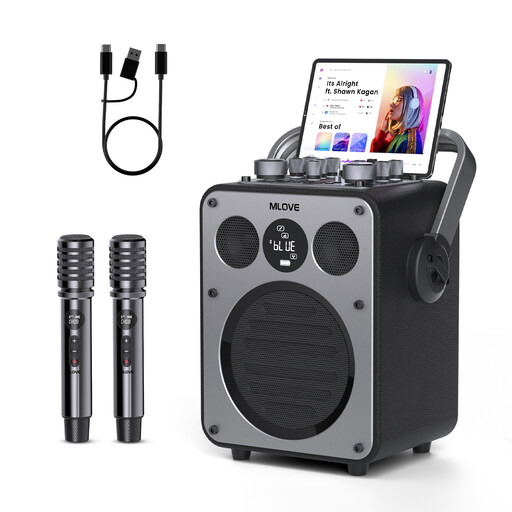
Why it stands out: The Rangers D5 is more than just a speaker: it's a true mobile PA system. With its 200 W and trolley design, it was built to fill large spaces, both indoors and out. Delivered with all its accessories, it's a turnkey solution, ready to party out of the box.
Key Features:
Who is it for? For party hosts, event organisers, and anyone who wants a pro-level, powerful, and easy-to-transport karaoke machine for unforgettable parties, at home or outdoors.

Why we love it: The Rangers S1 plays the mobility and versatility card. More compact and lighter than the D5, it's the perfect companion for mobile musicians and smaller gatherings. Its record-breaking battery life and modern connectivity make it a prime ally for all your musical adventures.
Key Features:
Who is it for? For amateur musicians, street performers, or families looking for a lightweight, long-lasting, and well-equipped karaoke system to accompany themselves with an instrument.
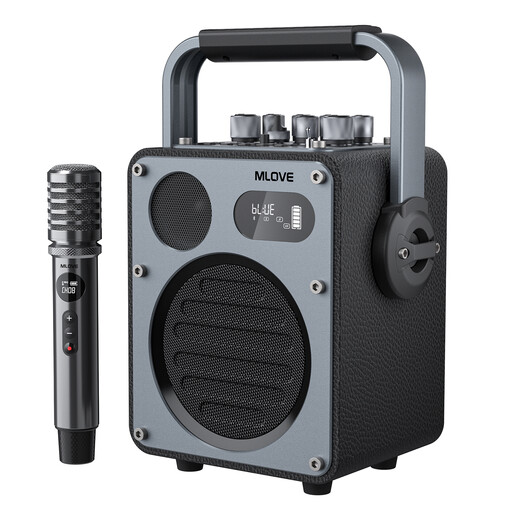
Its winning features: The Rangers D4 is the union of sound and style. Its chassis, blending wood and zinc alloy, gives it a very successful retro-chic look. Its advanced features, like OTG streaming or compatibility with wireless instruments (via an optional transmitter), will appeal to the most demanding users.
Key Features:
Who is it for? For content creators, musicians who want to record or stream live, and karaoke enthusiasts who make no compromises on design and technology.
Our selection highlights versatile models that are particularly skilled for karaoke. However, the portable PA system market is much broader.
To explore a wider range of speakers and audio equipment for all budgets and needs, feel free to browse our PA & Stage category.
It all depends on the location! For a medium-sized living room (20-40 m?), 50 to 100 W is more than enough. To provide sound for larger spaces, a community hall, or a garden, it's better to aim for 150 W and up. This will give you plenty of power in reserve without having to crank the volume to the max and degrade the sound.
Absolutely! Most recent models are designed to be versatile. Speakers like the MLOVE Rangers S1 and D5, for example, have an instrument input (6.35 mm jack) for plugging in a guitar, keyboard, or any other electronic instrument. This is ideal for musicians who like to accompany themselves live.
It's very simple. The microphones communicate with the speaker via a radio link, without any cables, for complete freedom of movement. This connection is most often made using UHF (Ultra High Frequency), a technology known for its stability and good range, or sometimes via Bluetooth. In most cases, pairing is automatic: turn on the microphone and the speaker, and you're all set.